
Last updated September 20, 2026
Free on-site gate assessment - hinges, posts, and your LiftMaster or Nice gate operator checked before anything is quoted
The assessment is free and the quote is the invoice.

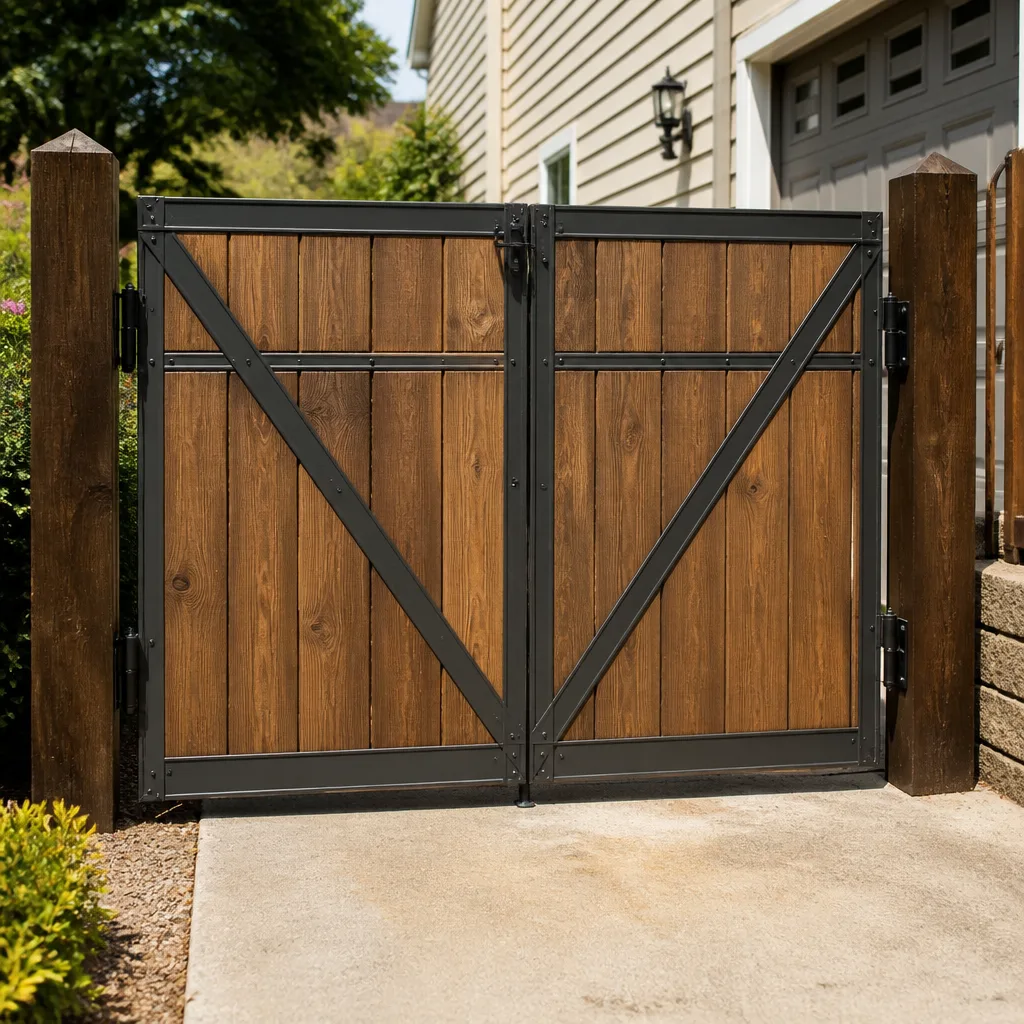


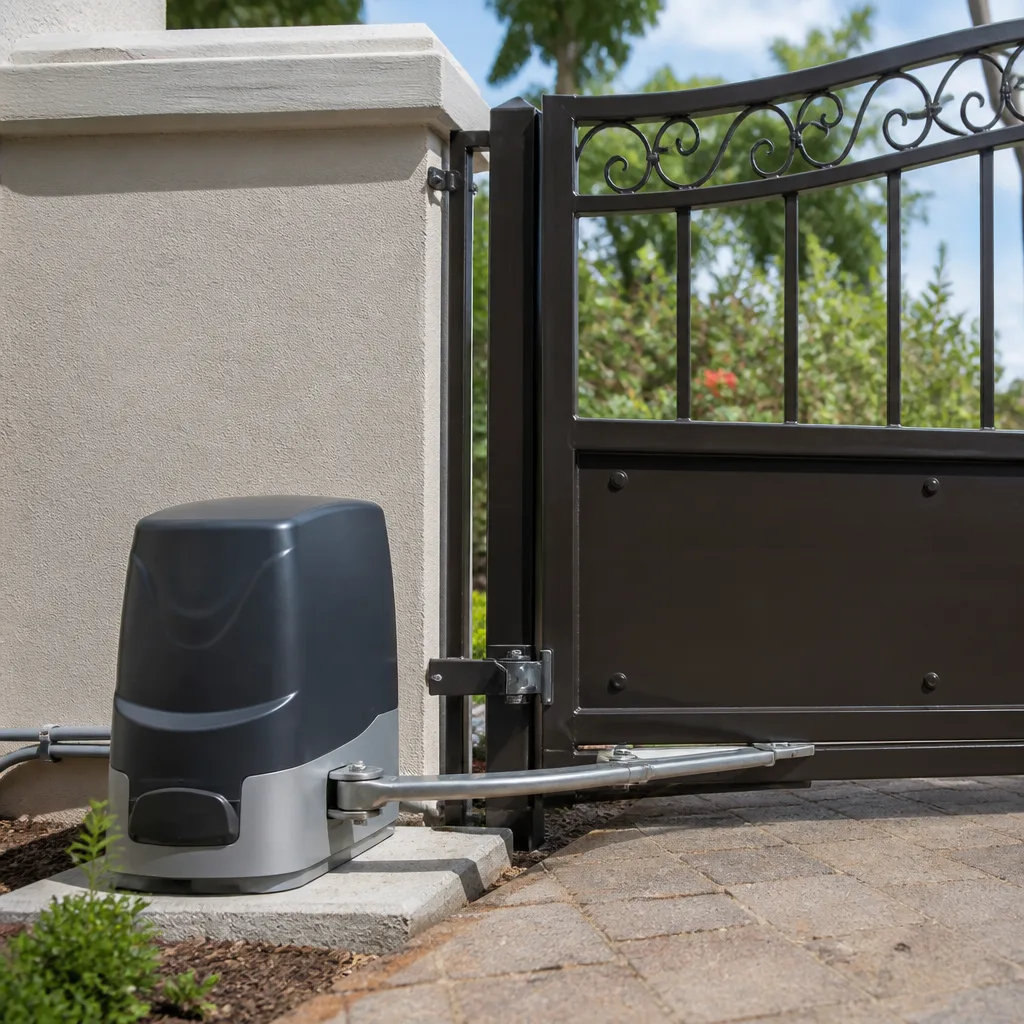
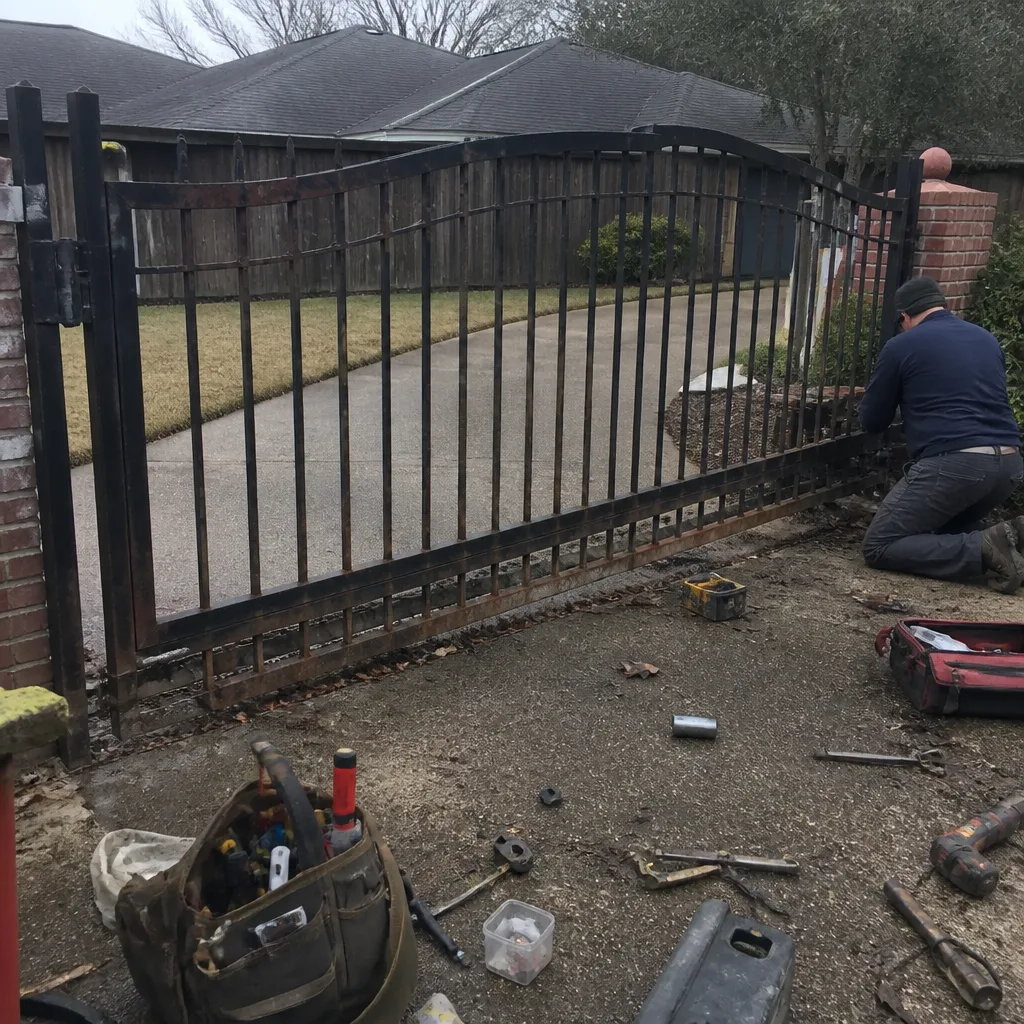 Before
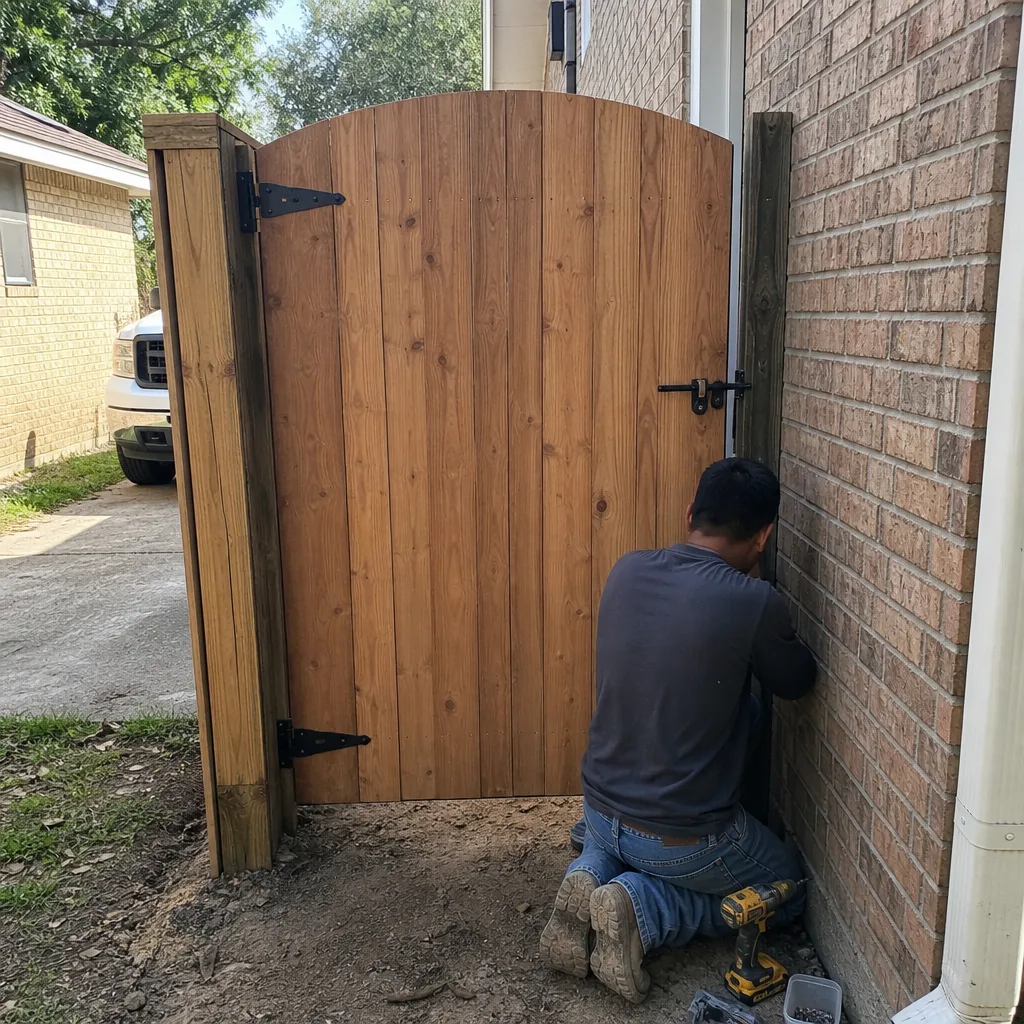 After
After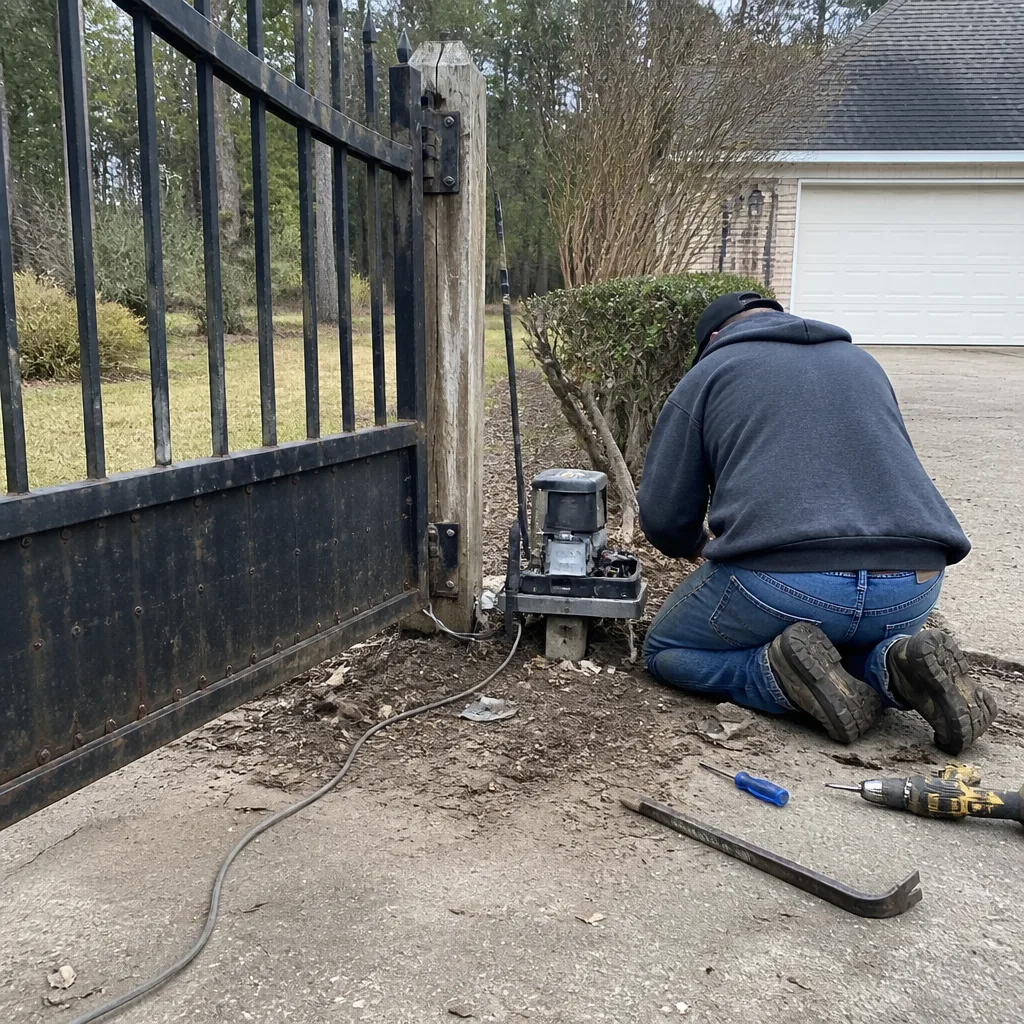 Before
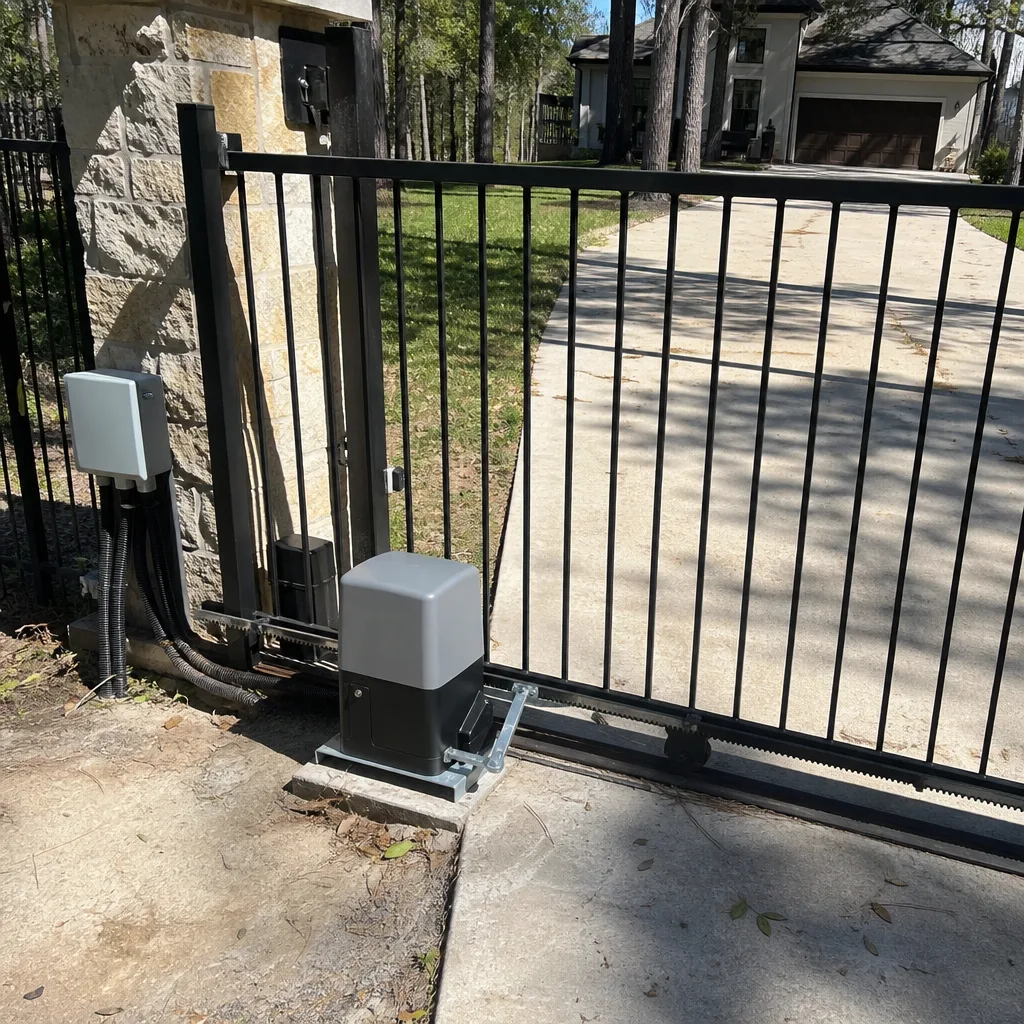 After
After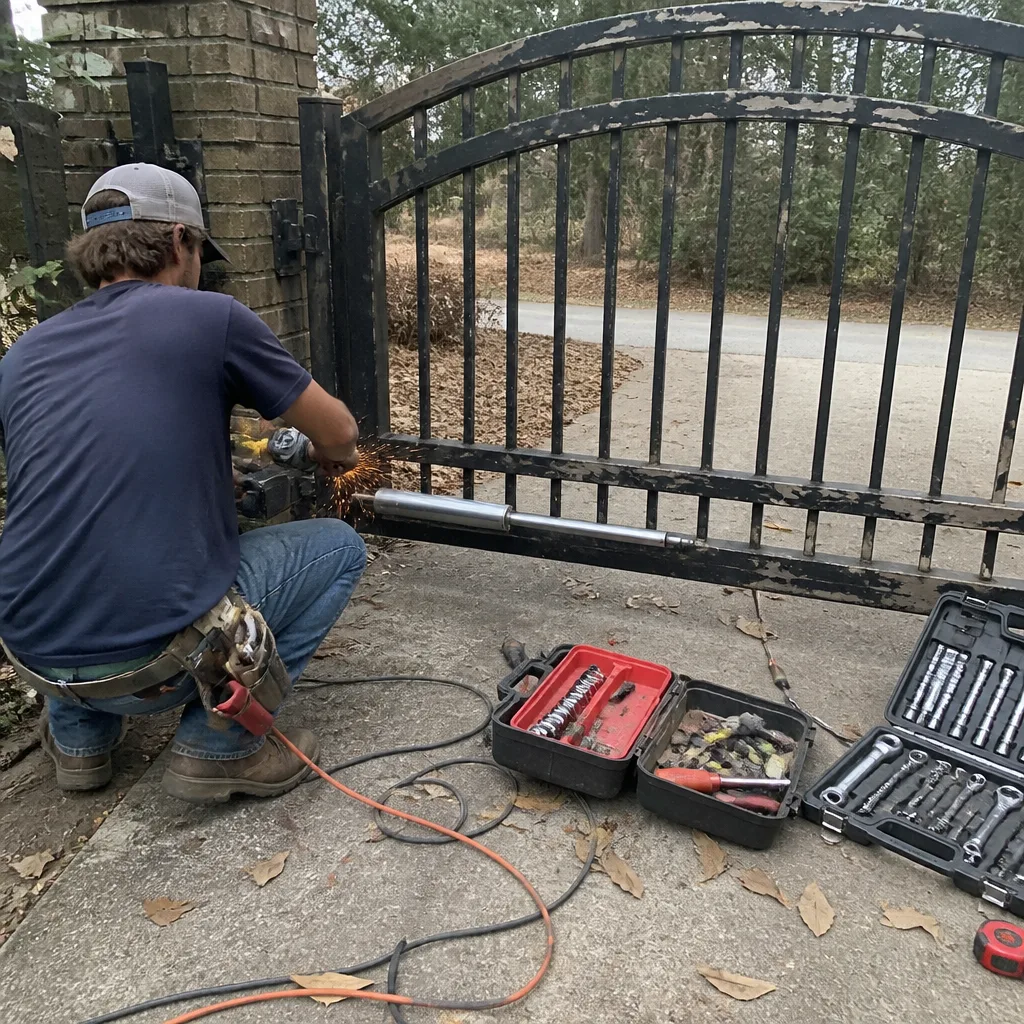 Before
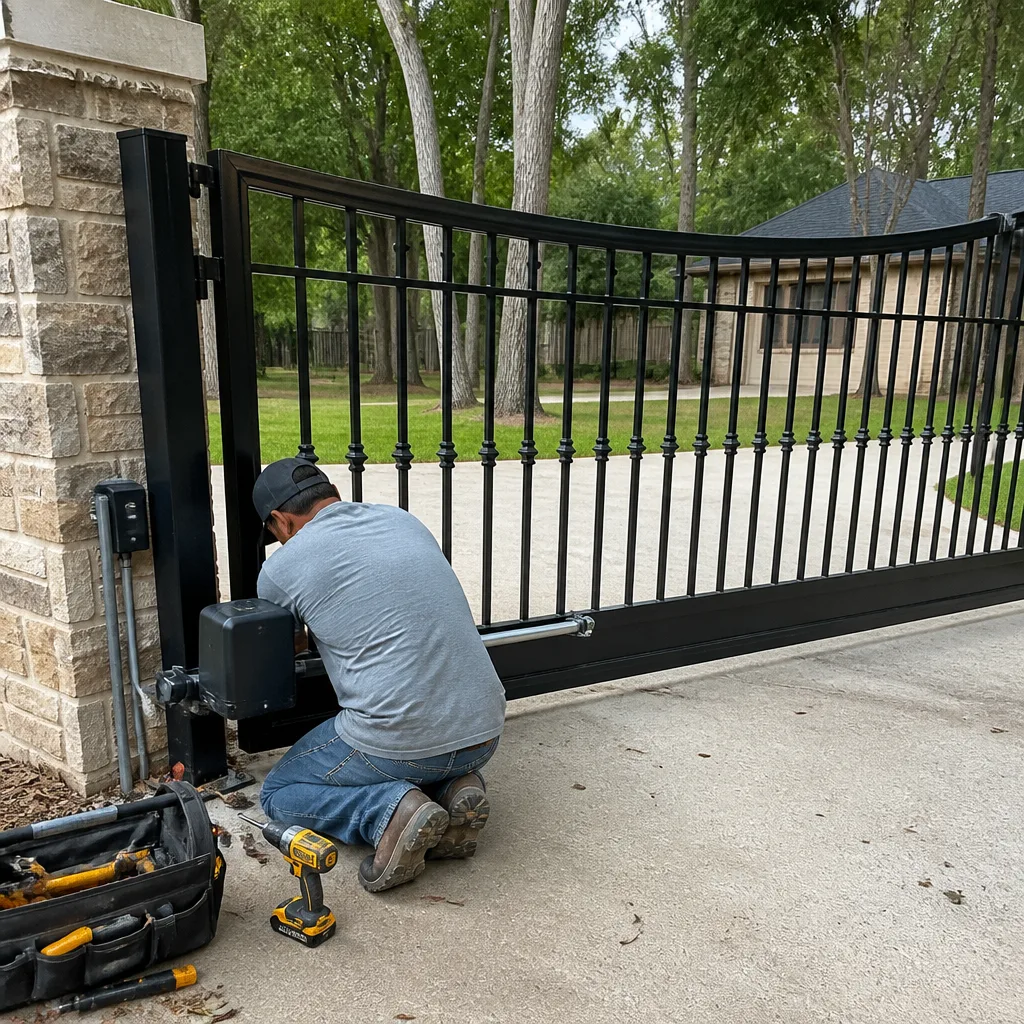 After
AfterGate Repair Maintenance Checklist for Tomball Homeowners
The most expensive gate repair call is the second one. It’s the call you make six months after a technician “fixed” the gate, when it fails again and a different company sends a different tech who spends the first hour rediscovering what the first tech found but never wrote down. You paid for that discovery twice. This guide gives you a maintenance checklist that prevents that second bill: a set of specific measurements, readings, and documentation habits that establish what “normal” looks like on your gate. For professional help when issues arise, our Gate Repair services are available throughout the Tomball area. Most Tomball homeowners have never been shown how to do this. By the time you finish reading, you’ll know which checks you can do with a flashlight and a camera, which ones need a multimeter, and exactly what to record so no technician ever starts from zero on your property again.
Quick Answer
A proper gate maintenance routine for Tomball homeowners records baseline measurements, not just chores. You need monthly visual checks of hinges, wheels, and photo-eyes; quarterly lubrication with climate-appropriate products; seasonal drainage and expansion checks timed to Texas heat and rain cycles; and a dated photo log that documents limit-switch positions, motor amp draw, and hinge torque so any future repair starts from your gate’s documented normal.
Table of Contents
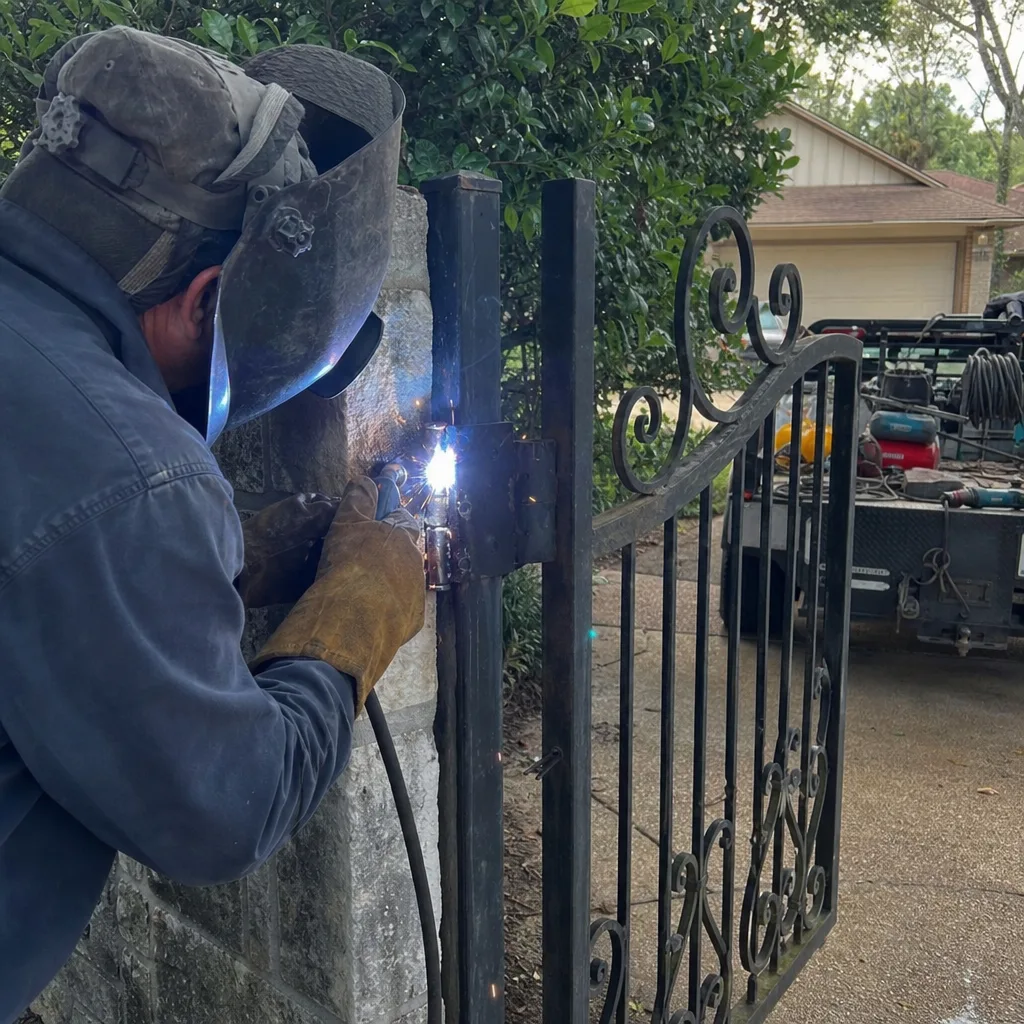
- Why a Maintenance Checklist Without Baseline Readings Is Just a Chore List
- What You Need: The $40 Toolkit That Covers 90% of Checks
- The Monthly Visual Checklist: 10 Minutes, Zero Tools
- The Quarterly Checklist: Measuring What Matters
- The Seasonal Timing Guide for Tomball’s Climate
- How to Build a Gate Log That Any Technician Can Use
- The Three Maintenance Tasks That Void Operator Warranties
- Common Mistakes to Avoid
- When to Call a Professional
- Frequently Asked Questions
- The Bottom Line
BeforeAfterWhy a Maintenance Checklist Without Baseline Readings Is Just a Chore List
Walk through any Tomball subdivision with iron driveway gates and you’ll find homeowners who lubricate their hinges twice a year and still end up with a $600 repair bill. The lubrication wasn’t the problem. The problem is that “lubricate the hinges” means nothing without knowing how much resistance those hinges had when they were healthy. If a hinge was taking 18 inch-pounds of torque to swing in January and now takes 35, the lubrication didn’t fail: the bearing is wearing, and you can catch it before it seizes.
Here’s what we mean by a baseline. When a gate is operating correctly, every moving part has a measurable “normal.” The motor draws a certain amperage when opening. The limit switch stops the gate at a specific position. The hinges resist with a predictable amount of torque. If you’ve never recorded those numbers, you can’t detect drift. You only notice the failure after it happens, and by then the repair is always more expensive than the early intervention would have been.
Our owner, Adrian Vance, learned this on commercial access-control sites starting in 2014. On those jobs, every visit left a written record of amperage, limit positions, and safety-device status, because if the gate failed three months later, the service company needed to answer one question: what changed? Residential gate owners rarely get that same documentation. Most gate repair in Tomball comes with a verbal summary and an invoice. That’s why the checklist below includes specific measurements wherever a measurement exists. If you record them monthly, any technician who works on your gate in the future can compare current readings against your log and see exactly what drifted.
A note on Tomball’s climate, because it drives failure patterns here more than most homeowners realize. Tomball sits in a humid subtropical zone. That means summer days above 95°F with high humidity, sudden downpours that flood gate-track channels, and a freeze event every few winters that catches uninsulated gate operators. Your baseline readings won’t mean much unless they’re recorded alongside the weather conditions on the day of measurement. Motor amperage on a 97°F August afternoon will read differently than the same motor on a 55°F January morning. The log format we describe below accounts for that.
What You Need: The $40 Toolkit That Covers 90% of Checks
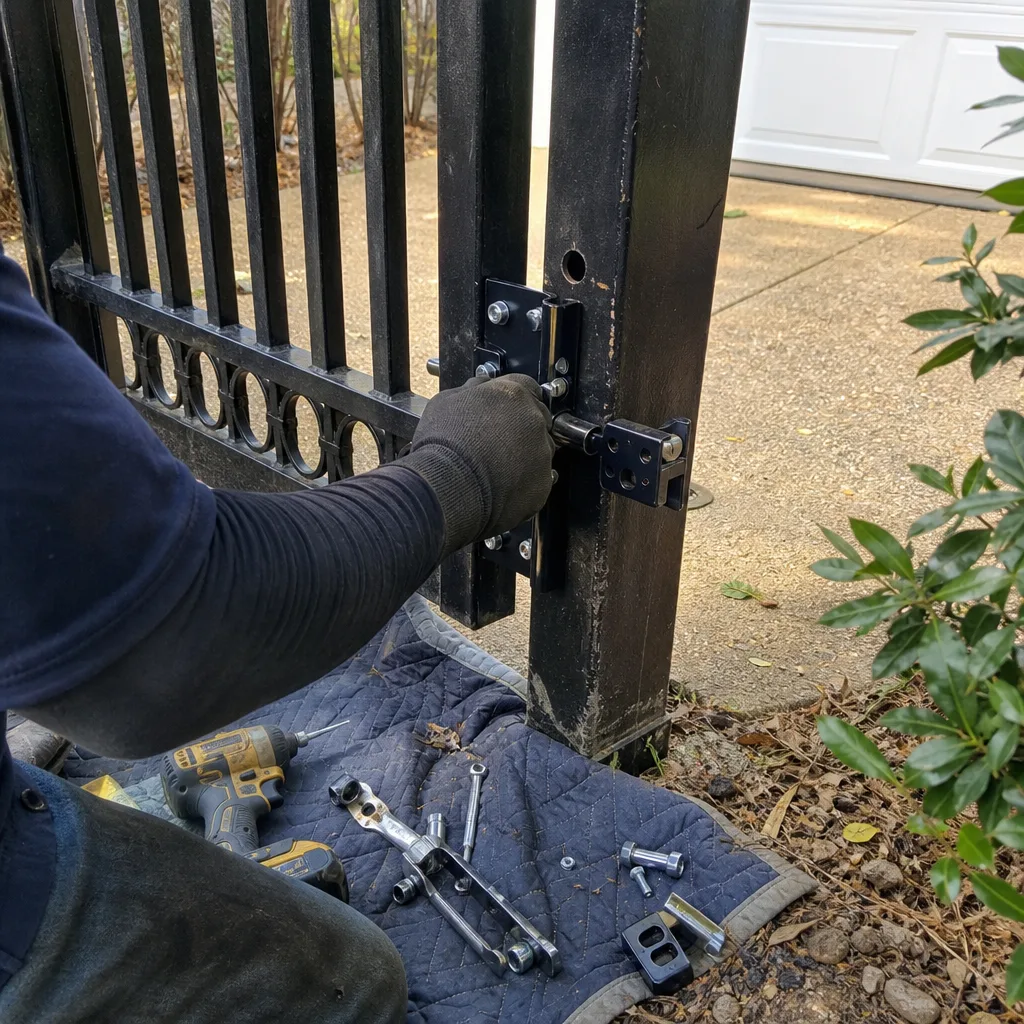
You don’t need a technician’s van worth of equipment to maintain a residential gate. Three tools cover most of the measurements in this guide. Everything else is a camera and a notebook.
- Clamp meter with AC/DC amperage (roughly $25-$35). This measures the electrical current your gate motor draws while operating. Drift in amp draw is the earliest reliable warning sign of a motor that’s working harder than it should, which means something mechanical is resisting. The $25 models are fine for this. You don’t need true-RMS accuracy for a baseline log.
- Digital caliper or quality tape measure (roughly $10-$15). You’ll use this to measure gaps, track alignment, and record the exact position of limit stops. If you already own a tape measure, skip the caliper.
- Infrared surface thermometer (optional, roughly $15). Useful for spotting a motor or capacitor that’s running hotter than usual. Not essential for the basic log, but helpful in summer when ambient temps already stress the equipment.
For hinge torque specifically, a proper torque wrench that reads inch-pounds costs $40-$60 and only works on hinges with accessible nuts. Most Tomball residential gates use decorative strap hinges welded to the post, which don’t have a fastener to measure. For those, the practical measurement is swing resistance: how much force it takes to move the gate by hand, recorded as a subjective rating (1 to 5) with the same person testing every time. Imperfect, but consistent enough to flag drift.
What you will not do with any of these tools is attempt to repair a failed operator or bypass a safety device. We’ll say this plainly in the sections below, but if your gate motor or wiring is involved in any way beyond taking a measurement, stop and call someone who works on gate motors and openers in Tomball professionally. High-tension springs, worn cables, and energized operator boards are not homeowner maintenance territory.
The Monthly Visual Checklist: 10 Minutes, Zero Tools
This is the routine you can do every 30 days with a flashlight and your phone camera. The point of the monthly check isn’t to fix anything. It’s to catch change early and add a photo to your gate log. Ten minutes, no tools, no disassembly.
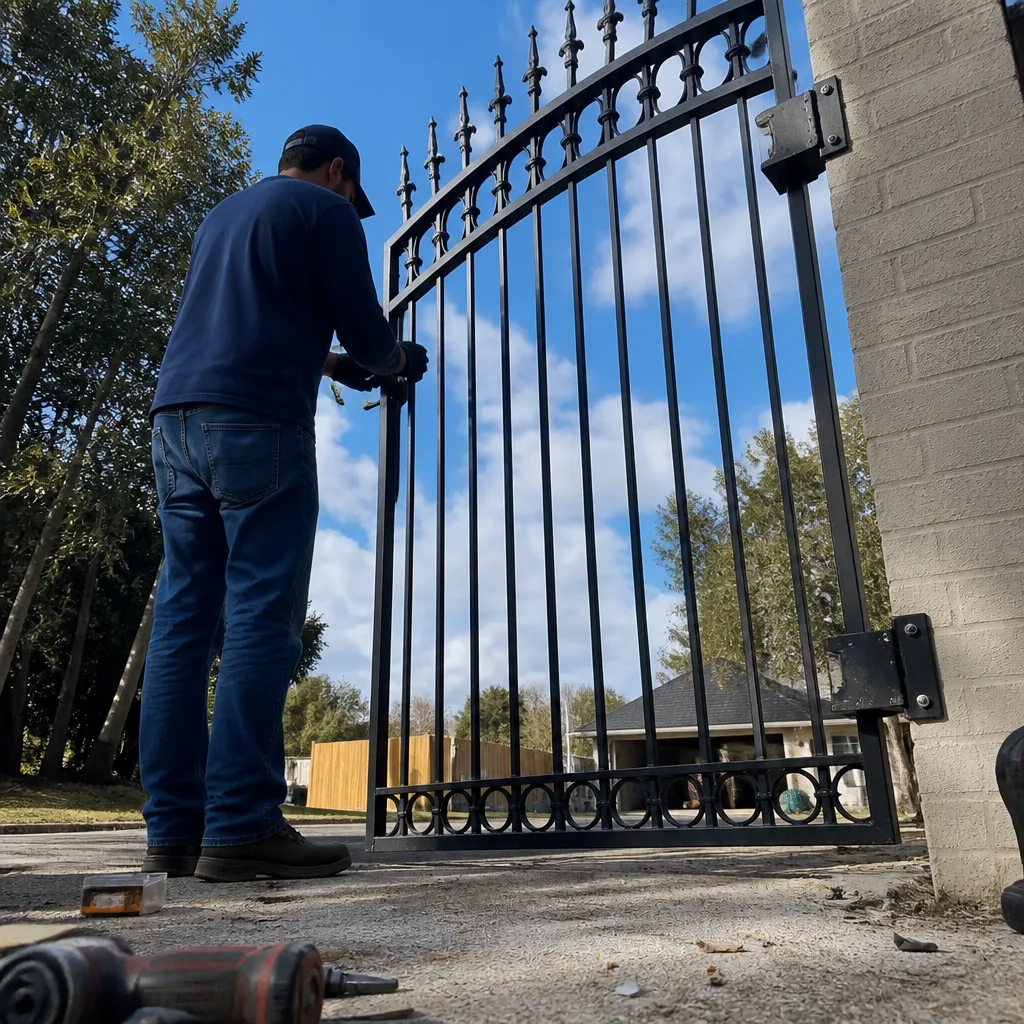
- Hinge inspection (2 minutes). Look at each hinge on the gate and the post. You’re checking for three things: rust trails staining downward from the pivot point (indicates internal wear), a visible gap between the hinge body and the post (indicates loosening), and sag in the gate leaf (stand back and look at the top rail: it should be level). Photograph any hinge that looks different from last month.
- Wheel and track check (2 minutes, sliding gates). Roller wheels wear into a flat spot over time, and when they do, the gate starts to shudder at the same spot on every cycle. Run the gate through one full cycle and watch the wheels. A flat-spotted wheel is visible as a rhythmic thump. Clear debris from the track channel with a gloved hand, not a pressure washer.
- Photo-eye alignment (1 minute). Every automated gate in Tomball should have a photo-eye pair: the small infrared transmitter and receiver mounted low on each side of the opening. If either is caked with dust, pollen, or mud splash, the gate may refuse to close or reverse mid-cycle. Wipe both lenses with a dry cloth. If the small indicator LED is blinking instead of solid when the beam is unbroken, the eyes have drifted out of alignment. Note it in your log.
- Battery indicator on the keypad (30 seconds). If your keypad has a low-battery warning, catch it now before it dies and locks you out. Replace the battery once a year on a schedule (see the seasonal guide below) regardless of the indicator.
- Listen to the cycle (1 minute). Run the gate open and closed once. A smooth, consistent hum is normal. A change in pitch, a grinding note, or a hesitation at a specific point in travel are all early warnings. Your ears are the cheapest diagnostic tool on the property. Record any change in the log, even if you can’t identify the source.
- Photograph the gate’s closed position (1 minute). Stand in the same spot every month and take the same photo of the gate in its fully closed position. This single image, repeated monthly, creates a time-lapse record of sag, drift, and ground shift. Tomball’s clay-heavy soils expand and contract with moisture cycles, and gate posts move more than homeowners expect. A photo sequence proves it.
The monthly photo is the backbone of your gate log. One image per month, same angle, same position, plus any photos of the anomalies you found during the other five steps. That’s the entire log. We’ll show you how to structure it in the gate log section below.
The Quarterly Checklist: Measuring What Matters
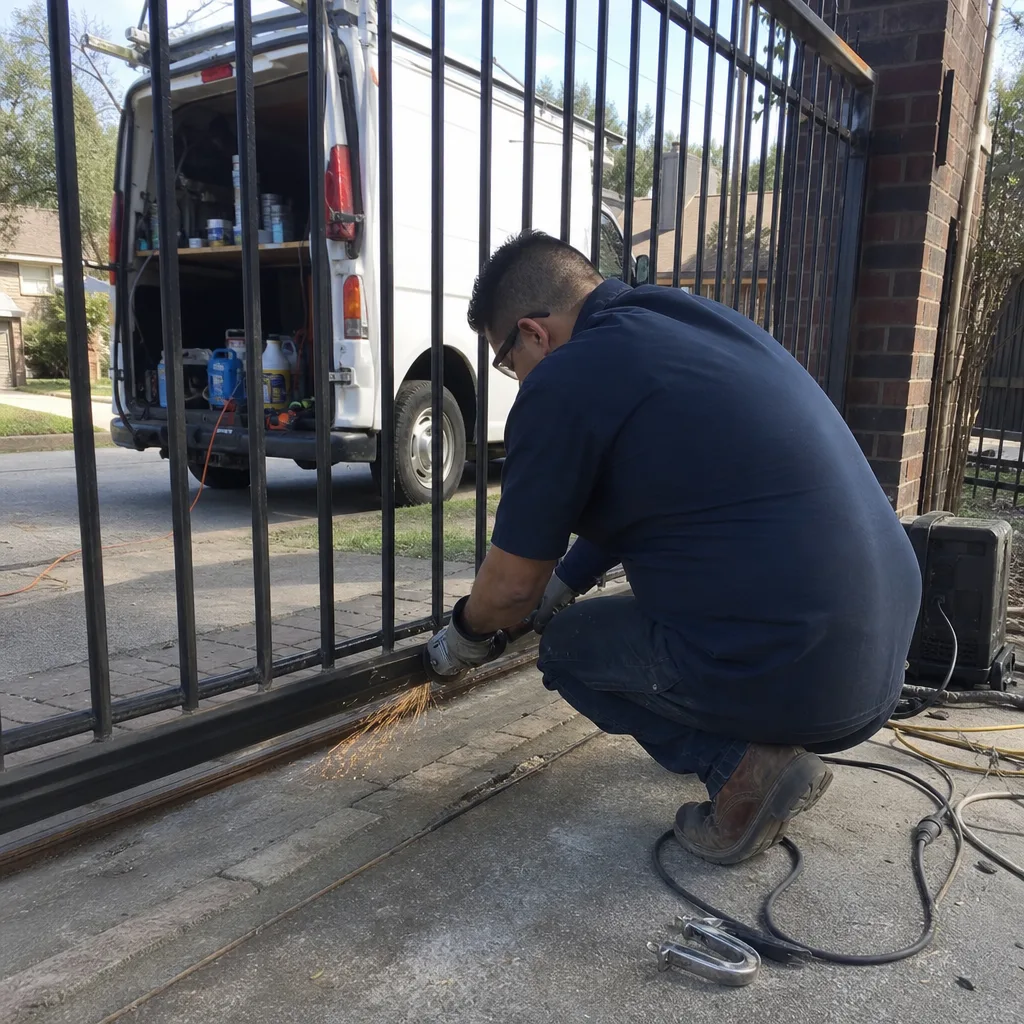
Every three months, add the measurements. These are the numbers that turn your maintenance log from a photo album into a diagnostic record. This takes 30 minutes the first time and 20 minutes after that. One note before we start: if any of these measurements requires you to open the operator housing, disconnect a wire, or remove a cover plate that isn’t a clearly labeled service panel, skip it and note “unable to measure” in your log. The measurement isn’t worth a shock.
- Motor amp draw (10 minutes, requires clamp meter). Set your clamp meter to AC amps, clamp it around one of the motor’s power leads inside the operator housing (or around the supply wire at a junction box if you can access it safely without opening the housing), and cycle the gate while watching the reading. Record the peak amperage during the open cycle and the close cycle separately. For a typical residential swing-gate operator in a Tomball subdivision, a healthy motor draws between 3 and 6 amps under normal load. The exact number matters less than the consistency: if your gate has read 4.8 amps for six months and suddenly reads 7.2, something mechanical is binding. If you can’t access the motor leads safely, measure at the power supply and accept that the reading includes transformer draw. Consistency from the same measurement point is what counts.
- Limit-switch position documentation (5 minutes, requires camera and measuring tool). The limit switches on your operator determine where the gate stops in the open and closed positions. They’re usually mechanical cams or magnetic reed switches on the motor’s travel mechanism. You’re not adjusting them; you’re recording where they are. Photograph the limit cams (or read the position indicator if it’s digital) and note the measurement. If the gate’s open or closed position has drifted by even an inch since last quarter, the limit setting has moved, and that means the mechanical stop has shifted or the cam has slipped. This is the single most-commonly missed indicator in residential gate installations in Tomball and surrounding areas: nobody records limit positions, so nobody knows when they’ve moved.
- Hinge/wheel resistance rating (5 minutes, requires hands and a consistent tester). Disengage the operator (every residential gate operator has a manual release handle or key, usually a knob or lever on the back of the motor housing) and push the gate through its full travel by hand. Rate the effort on a 1-to-5 scale: 1 is finger-push easy, 5 requires shoulder force. Record the number alongside the ambient temperature. A swing gate that’s a 2 in January should be a 2 or maybe a light 3 in August after thermal expansion; if it’s a 4, something is binding.
- Photo-eye beam test (5 minutes). With the gate open and stationary, break the photo-eye beam with your hand (or a broom handle). The operator should refuse to close, or should reverse immediately if it’s already closing. If the gate closes through a broken beam, your safety device has failed. Do not operate the gate in automatic mode until this is fixed. This is not a maintenance suggestion; it’s a safety requirement for any automated gate. In our experience, photo-eye failures on Tomball residential gates are nearly always a $15 alignment issue, not an electrical fault, but neither one is something to live with for weeks.
- Battery voltage on backup systems (5 minutes, if equipped). If your operator has a battery backup, check its voltage with a basic multimeter set to DC volts. A fully charged 12V battery should read between 12.6 and 13.1 volts. Below 12.2, it’s not holding a full charge. Replace it before hurricane season or before the first hard freeze, whichever comes first. A dead battery in a power outage is exactly when you need the gate to work.
Record all five measurements in the same format every quarter. The consistency of the record is what makes it useful, not the precision of any single reading. A $30 clamp meter used the same way every time will catch drift just as reliably as a $300 Fluke used inconsistently.
The Seasonal Timing Guide for Tomball’s Climate
Tomball’s maintenance calendar doesn’t match a generic “spring and fall” schedule. The climate here has a specific rhythm: warm and humid spring, brutal summer heat, a fall that stays warm well into October, a short and usually mild winter with occasional hard freezes, and year-round afternoon thunderstorm potential. Here’s when each task actually matters on a Tomball gate.
Late April to early May (pre-heat lubrication). This is the most important lubrication window of the year. Apply a lithium-based grease to hinge pins and roller-wheel bearings before the first sustained 90°F stretch, not during it. The goal is to have fresh lubricant in place before heat expansion and humidity combine to swell metal components and dry out old grease. Lubricate in late April, then again in mid-September when the worst heat passes. Some Tomball homeowners ask whether a heavy oil is better than grease for gate hinges. Use grease on hinge pins and wheels; oil on chains if you have a chain-drive sliding gate. Grease stays put in summer heat. Oil runs off and leaves metal dry in two weeks.
Mid-October to early November (pre-rain drainage check). Tomball’s heaviest rain events typically arrive in spring and fall, but the ground saturation that damages gate foundations builds in the fall as hurricane-season remnants push through. Before the first sustained wet period, check that water drains away from both gate posts, that the track channel on a sliding gate isn’t filling with compacted leaves and soil, and that the operator housing’s weather seal is intact. A small weep hole at the bottom of a hollow gate post that has filled with soil is doing nothing. Clear it.
Early January (post-holiday cycle check). Gates work harder between Thanksgiving and New Year’s than any other month: more visitors, more package deliveries, more open-close cycles in a single month than the previous three combined. In early January, check your gate log for any new symptoms and do a full quarterly measurement. If a motor was going to fail from accumulated wear, it often shows the first sign during this heavy-use period.
Before the first freeze (usually late December or January). If your gate operator has a battery backup, test it when the first hard freeze is forecast. Cold weather cuts battery capacity roughly in half, and a battery that tested fine at 70°F may not hold enough charge to open the gate at 28°F. Also check that your operator’s gearbox has the correct amount of lubrication: too little grease and cold-start torque spikes, too much and the old grease thickens enough to stall the motor. If you’re not sure what “correct” looks like, photograph the gearbox with the cover off and compare it month to month. Any change in grease appearance is worth noting.
How to Build a Gate Log That Any Technician Can Use
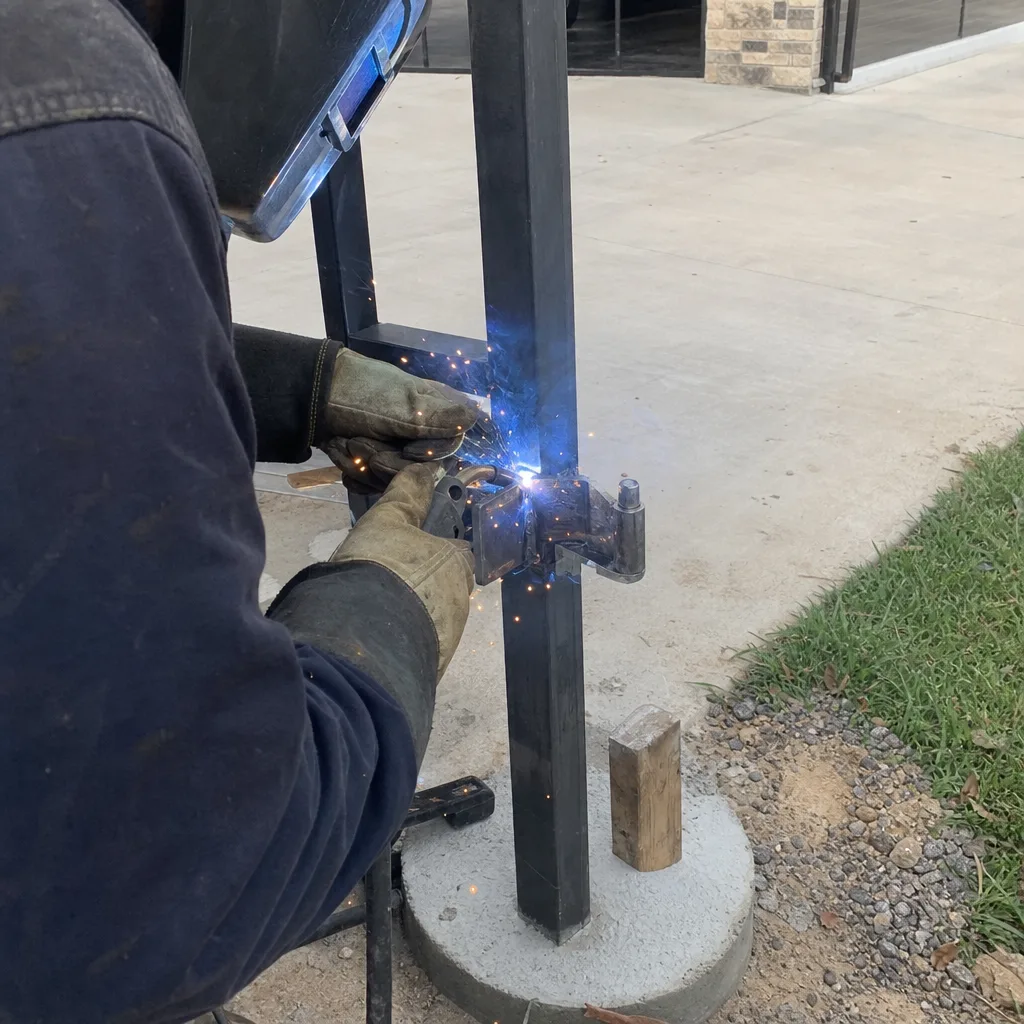
The gate log is a folder on your phone or a notebook in the garage. It needs three things every time you add an entry: a date, a photo, and a one-sentence note about what the photo shows. That’s the whole system. Anything more complicated will get abandoned by month three. Anything less won’t be useful to a future technician.
Here’s an example of two months of a properly kept Tomball gate log.
March 14, 2026. Monthly check. Gate closed position photo. Hinges clean, no rust trails. Gate cycles smoothly, no change from last month. Amp draw 4.6A open / 4.8A close at 71°F. Limits photographed, both unchanged. Photo-eye solid LED, hand test passed. Nothing to report.
June 2, 2026. Monthly check. Gate closed position photo. Hinge on north (driveway side) shows first rust trail from pivot, previous photo shows clean at same angle. Amp draw 5.1A open / 5.4A close at 88°F, moderate humidity. Slight grind at mid-travel that wasn’t there in May. Photo-eye solid, hand test passed. Watching hinge and noise.
That June entry is exactly what a Vance Gate Repair Tomball home customer brought us in 2025, and it’s why the repair took 45 minutes instead of two hours. The rust trail on the hinge told us the bearing was starting to take on moisture. The amp draw creeping up at a higher ambient temperature was normal, but the combination of rust and new noise pointed to the hinge before we ever tested it. Had she not kept the log, the symptom would have been “the gate is starting to make a sound sometimes.” That’s a much more expensive diagnostic starting point.
For the log to work, every photo needs to be of the same thing from the same angle. Stand in the same spot for the closed-position photo. Photograph the same limit switches, not just “the motor.” Photograph the same hinge every month, even if it’s the only one. The power of the log is in comparison, and comparison only works when the reference image matches.
The written record you leave for a technician should include: the date, the ambient temperature, the amp draw, the hinge/resistance rating, any limit-switch change, and any new noise or symptom. If you keep that record, any future technician can see exactly what normal looked like on your gate before the problem started. That’s the same photography-and-documentation habit we use on every job under The Haven Standard, Clause 4: documented photo evidence on every visit. Homeowners can run the same system without needing a technician’s tools.
The Three Maintenance Tasks That Void Operator Warranties
Most Tomball homeowners don’t read the fine print on their gate operator warranty until the operator fails and the manufacturer asks for maintenance records. Here’s what that fine print usually says. We’ve summarized the three most common warranty-killers we see on residential operators, including units from Ghost Controls, BFT, and Linear, which are among the brands installed most often in Tomball-area subdivisions. For Gate Repair Permits, Codes & Inspections in TX: What You Need to Know, see our dedicated guide.
1. Running the gate with the manual release left disengaged for routine use. The manual release is for power outages and emergencies, not for daily manual operation. Ghost Controls and BFT both state in their operator manuals that using the gate as a manual swing gate on a daily basis accelerates wear on the drive mechanism and voids the warranty on the gearbox and motor. Homeowners sometimes disengage the motor during a repair delay and never re-engage it properly, then run the gate by hand for months. If the gearbox wears during that period, the manufacturer will deny the claim.
2. Lubricating the motor or gearbox with penetrating oil such as WD-40. Penetrating oils are not lubricants for gate operators. They strip away the gear grease and leave the gearbox running metal-on-metal. If a BFT or Linear operator fails within the warranty period and the service center opens the gearbox to find the grease thinned and contaminated, the claim is dead. Only lubricate what the manufacturer says to lubricate, with the product their manual specifies. If the manual doesn’t specify, don’t lubricate it.
3. Operating the gate with a failed or bypassed safety device. If your photo-eyes fail and you tape the beam or bypass the circuit to keep the gate running, you haven’t just created a safety hazard. You’ve voided the warranty on the entire operator for every manufacturer on this list. We say this without softening it because we’ve had to deliver the news too many times: an operator that runs for six weeks with a bypassed safety device is not covered, even if the eventual failure was an unrelated motor fault.
The simplest way to protect your warranty is to keep the gate log we described above. When a manufacturer requests maintenance records, a dated log with photos and readings is strong evidence that the gate was maintained correctly. Without it, you’re relying on the goodwill of a claims adjuster. With it, you have a documented record that shifts the conversation from “how do we know you maintained it” to “your record shows proper maintenance, let’s look at the failed part.”
Common Mistakes to Avoid

- Lubricating on a fixed calendar schedule regardless of the actual conditions. Some Tomball homeowners grease everything twice a year and call it maintenance, even if the hinges have been squeaking for two months. Lubrication is a response to observed need and seasonal changes, not a ritual. Grease before the heat arrives and after it leaves; if you hear a dry hinge in March, that’s a signal to inspect, not to ignore until the scheduled April lube.
- Pressure washing the gate track or operator housing. A pressure washer forces water into bearings, electrical connections, and gearboxes. It creates the exact corrosion problem you’re trying to avoid. Use a brush and a bucket of water instead. This mistake is especially common in Tomball subdivisions where homeowners pressure wash driveways and sidewalks and treat the gate track as an extension of the concrete.
- Ignoring a slow drift in gate open/close position because “it still works.” A gate that stops six inches short of fully open this month will stop two feet short in four months. Drift means something mechanical or electrical is changing. Record it in the log and troubleshoot it while it’s small. By the time it stops closing altogether, the cause is likely a failed limit switch, a stripped gear, or a shifted post. All three of those are more expensive than the earlier symptom would have been.
- Adjusting the limit switches every time the gate drifts instead of investigating why it drifted. Limit switches don’t move on their own. If your gate’s stopping point changed, the switch moved because something allowed it to. Reset the switch and ignore the cause, and you’ll reset it again in six weeks, then replace the part it was masking.
- Leaving the manual release in the wrong position after a power outage. After an outage, homeowners sometimes re-engage the operator partially, which leaves the gate trying to drive against a half-engaged release mechanism. That half-engaged state will destroy the gearbox in short order. After every outage, fully re-engage the release and run one complete cycle by hand to confirm.
- Failing to address drainage around gate posts. Tomball’s clay soil swells when wet and contracts when dry, creating seasonal movement that pushes gate posts out of plumb. A post that drains poorly stays saturated longer, and the movement compounds. The fix is often as simple as grading soil away from the post base or adding a gravel sump. Left unaddressed, a shifting post eventually binds the gate or breaks the operator.
When to Call a Professional
There’s a line between homeowner maintenance and professional work, and for automated gates, that line is bright. If your monthly check finds a photo-eye that won’t hold alignment, a gate that trips its breaker, or a motor that smells hot after normal use, stop and call a pro. Learn to spot problems earlier with Gate Repair Warning Signs: A Tomball Homeowner’s Reference Guide. We’ve seen too many Tomball residents try to swap a capacitor or adjust a gearbox themselves and turn a $150 repair into a full operator replacement.
If the manual operations are smooth but the operator is misbehaving, that’s an electrical or logic problem. If the gate resists manual movement when disengaged, that’s mechanical. Either way, gate motor and opener repair in Tomball is an area where you want the service record that comes with professional work. Vance Gate Repair Tomball offers free estimates in Tomball, and every repair gets a documented photo record before we leave. Call (346) 248-7685 if any of these conditions apply: the gate is moving on its own, the motor is hot enough to smell, the photo-eye test fails, or the gate slams at either end of travel. The estimate is free and comes with a written price before any work begins, under Haven Standard Clause 1.
Frequently Asked Questions
Lubricate hinge pins and roller-wheel bearings twice a year in Tomball: once in late April before the summer heat sets in, and once in mid-September after the worst heat passes. Use a lithium-based grease on hinge pins and wheels, and apply oil to chains only if you have a chain-drive sliding gate. Two applications per year is sufficient for most residential gates, but if you hear a dry hinge between scheduled lubrications, address it at the time rather than waiting for the calendar. Call (346) 248-7685 if you’re not sure which lubricant your specific operator warranty allows.
A grinding noise means metal is wearing against something it shouldn’t be. Run the gate through one cycle and listen for whether the noise happens at a specific point in travel or throughout the entire cycle. A point-specific grind usually means a roller wheel or a gearbox wear pattern; a constant grind usually means the motor itself or a misaligned drive. Disengage the operator and move the gate by hand. If the grind persists with the motor disengaged, the problem is mechanical. If it disappears, the problem is in the drive system. Either way, record the noise in your gate log and schedule a diagnostic rather than continuing to run the gate. Continued operation typically converts a minor mechanical wear issue into a failed bearing or stripped gear.
You can and should perform all visual inspections, monthly and quarterly measurements, lubrication, and photo-eye cleaning yourself. What you shouldn’t attempt is any work that requires opening the operator’s electrical housing, adjusting or replacing limit switches, repairing a gearbox or motor, or working with the high-tension components of a gate’s mechanical system. Those tasks carry both a safety risk and a warranty risk if done incorrectly. The measurements in this guide are safe to take; the adjustments they inform you about are not safe to perform without the right training and tools.
Heat affects gates two ways in Tomball: the metal components expand slightly, which increases mechanical resistance, and the motor’s performance drops slightly at high ambient temperatures. The combination can make a gate move noticeably slower in July and August than in January. Record the ambient temperature in your gate log every time you take a measurement, and compare amp draw readings at similar temperatures. If the gate is slower at the same temperature month over month, that’s wear. If it’s slower only when the temperature climbs, that’s normal thermal behavior.
Test them every month. With the gate open and stationary, break the beam by passing your hand through it. The operator should refuse to allow the gate to close, or should reverse immediately if it’s already closing. If it closes through the broken beam, your photo-eyes have failed, and you should not operate the gate in automatic mode until they’re fixed. The photo-eyes are the infrared safety beam that stops the gate if anything, including a child or pet, crosses the path. A failed photo-eye is a safety issue, not a convenience issue. This is the one test on the monthly checklist we tell every Tomball homeowner to prioritize above all others.
In our experience across Tomball subdivisions, the most common gate failure we see is moisture-related hinge corrosion combined with post shift from clay soil movement. The two feed each other: shifting posts throw hinges out of alignment, misaligned hinges wear unevenly, and the worn hinge boots let moisture into the bearing surface. The corrosion accelerates the wear, the wear increases resistance, and the motor starts drawing more amps until something fails. The monthly hinge visual check and the quarterly swing-resistance rating in this guide are both calibrated to catch exactly this Tomball-specific failure pattern early. Call (346) 248-7685 if your hinge check shows rust trails or your resistance rating has crept up.
The Bottom Line
A gate maintenance routine without recorded baseline measurements catches nothing early because no one knows what “early” looks like on your specific gate. The checklist in this guide gives you the baseline: monthly visual checks with photos, quarterly measurements with a clamp meter and a consistent resistance rating, seasonal lubrication and drainage work timed to Tomball’s actual weather patterns, and a dated log that any technician can read. If you take nothing else from this guide, take the camera: photograph your gate’s closed position monthly, photograph your limit switches quarterly, and write down your amp draw. Those three records turn a vague maintenance chore into a diagnostic tool that pays for itself the first time it prevents a second discovery call. Vance Gate Repair Tomball has been documenting every job this way since Adrian Vance started the company in 2014. For more guides & resources, visit our blog.ommercial access-control documentation habits to residential gates across Tomball. The gate log in this guide is the same system, scaled for a homeowner with a phone camera and ten minutes a month.
Written by Adrian Vance, Owner at Vance Gate Repair Tomball, serving Tomball since 2014.