
Last updated September 20, 2026
Free on-site gate assessment - hinges, posts, and your LiftMaster or Nice gate operator checked before anything is quoted
The assessment is free and the quote is the invoice.
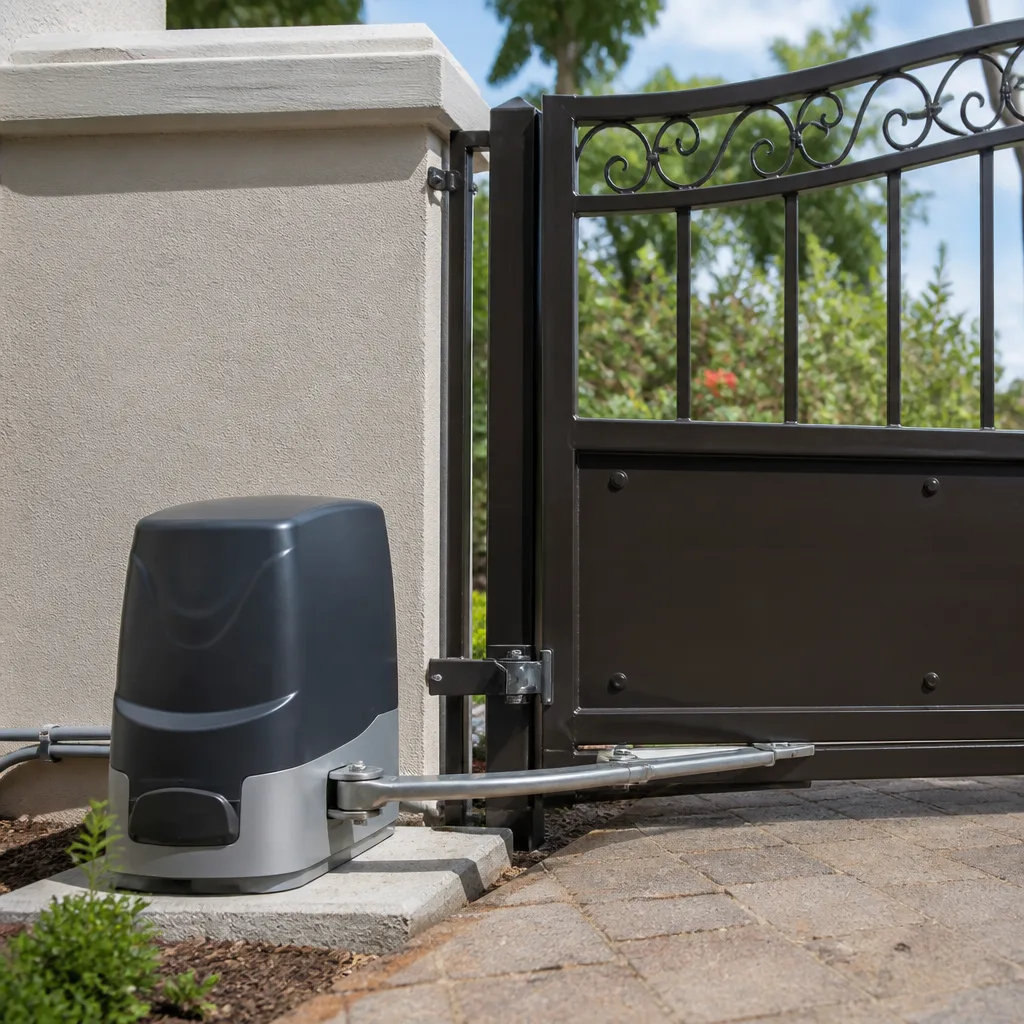
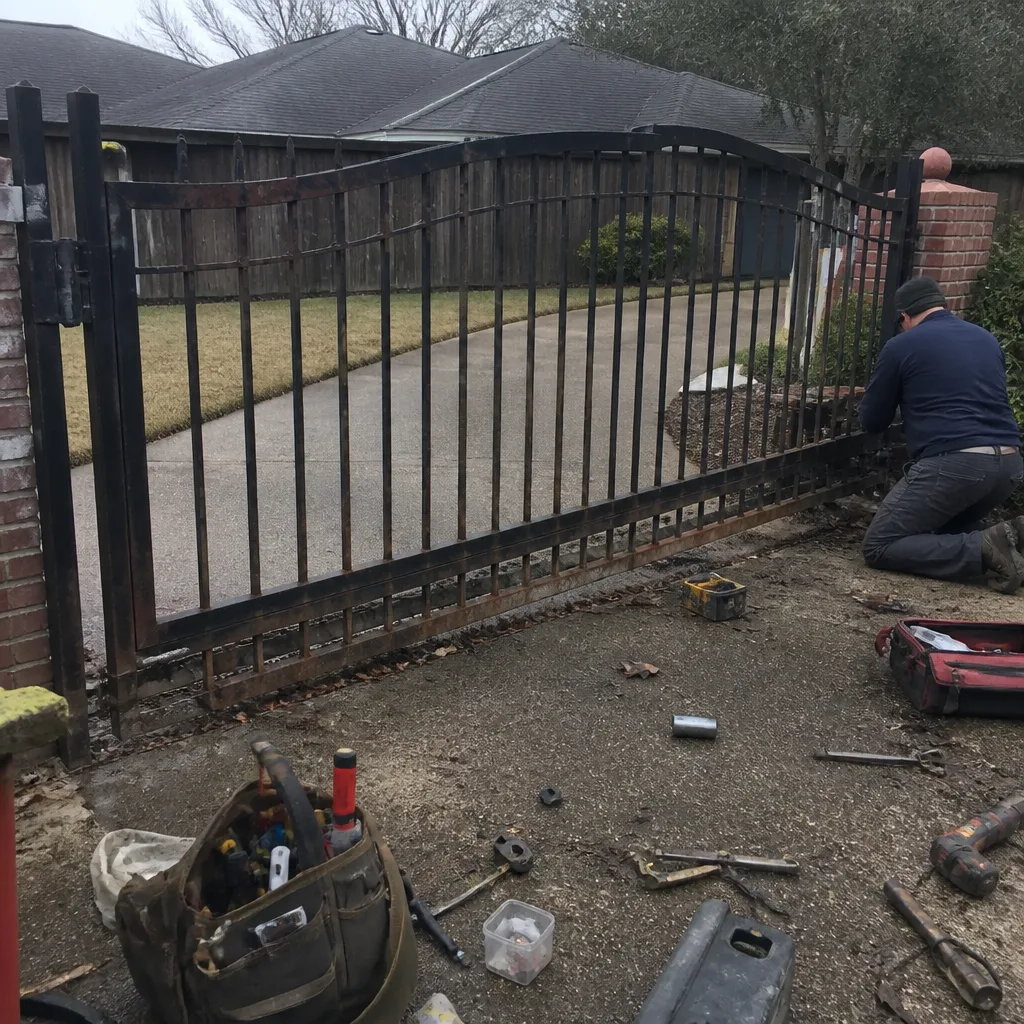 Before
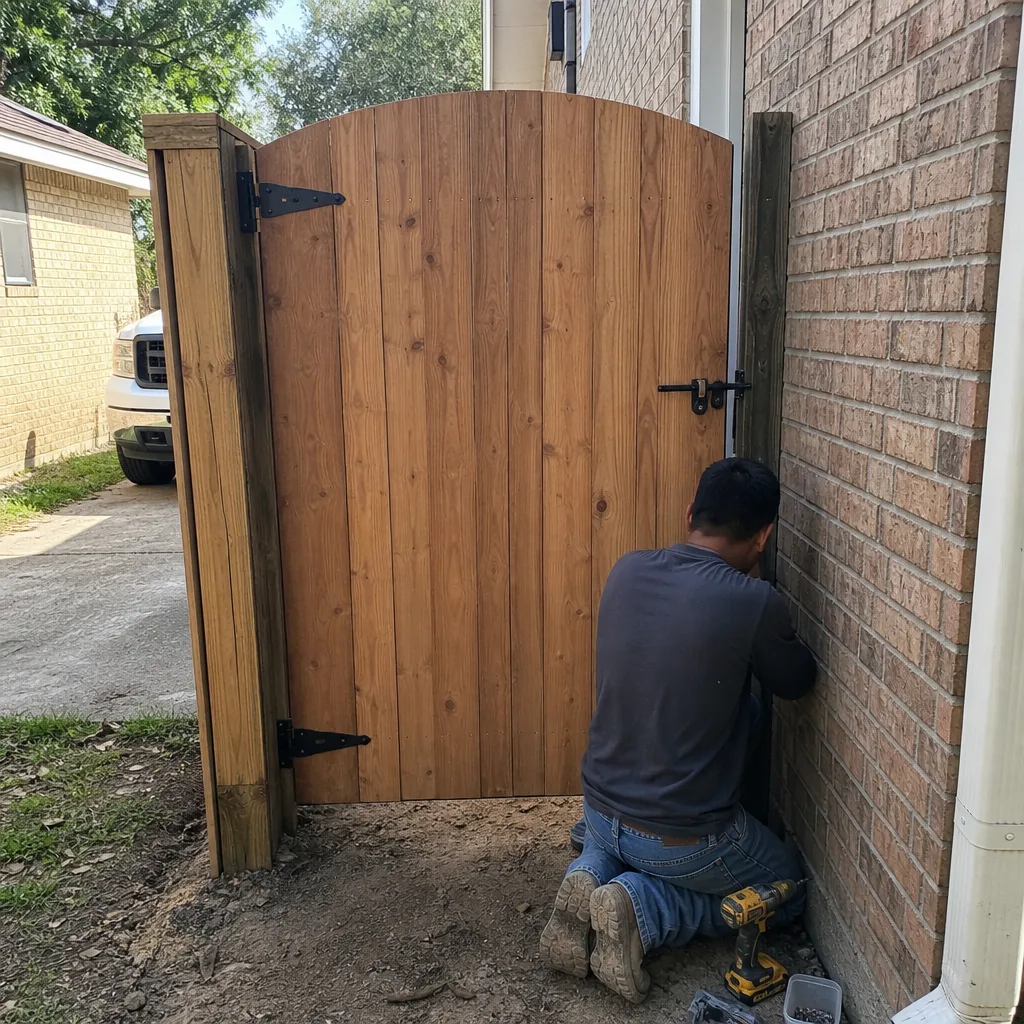 After
After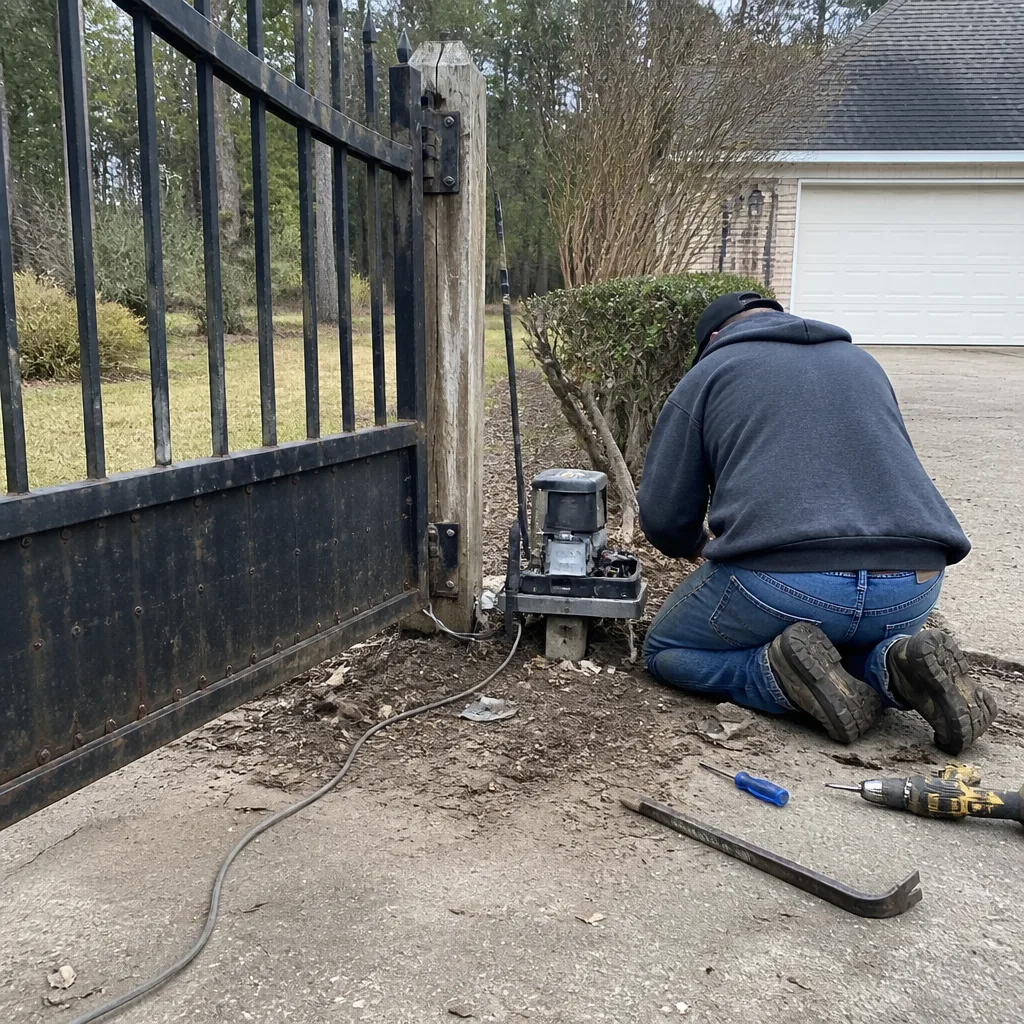 Before
 After
After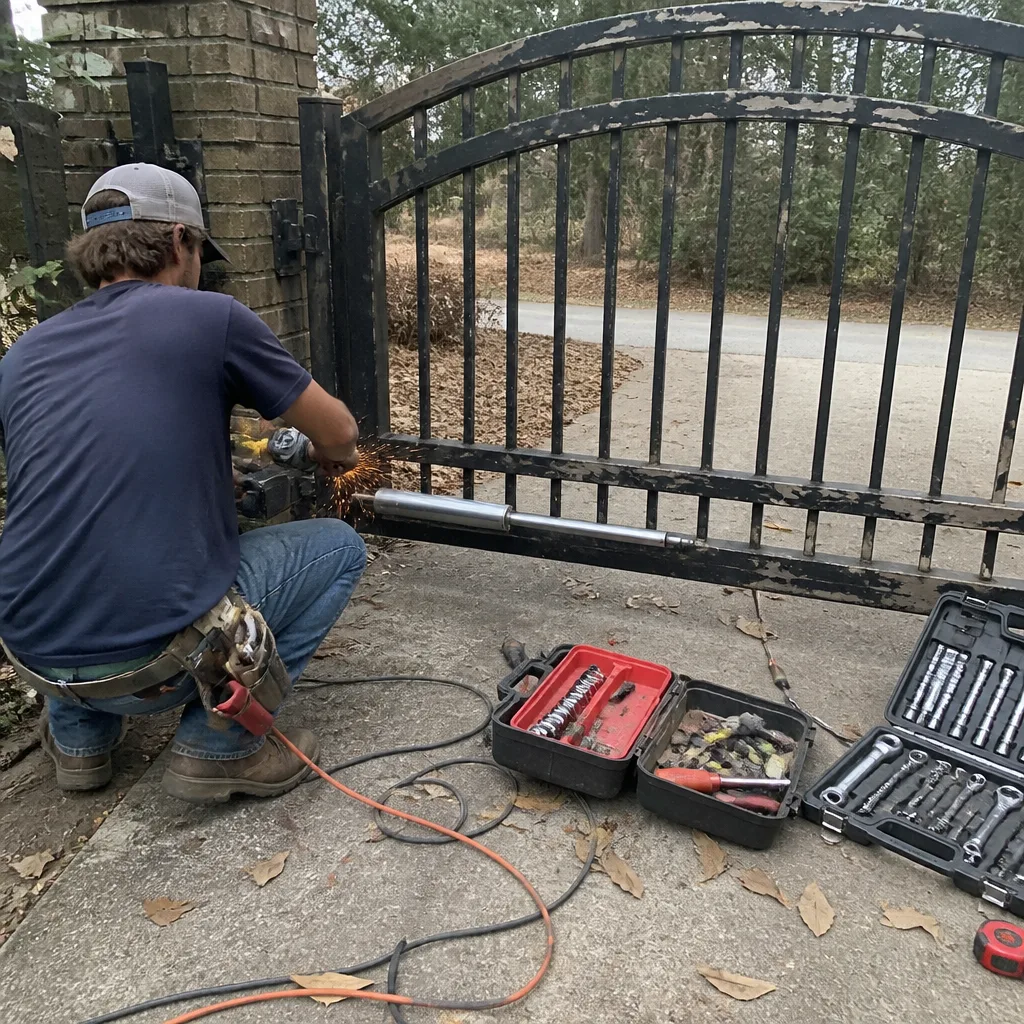 Before
 After
AfterThe Complete Guide to Gate Repair in Tomball
A gate that reverses before fully opening isn’t broken. It’s telling you a limit switch has drifted, and that single misread diagnosis costs Tomball homeowners an average operator replacement they didn’t need. Most gate failures trace back to one of four documented failure chains, not random bad luck, and knowing which chain you’re in determines whether a $90 adjustment prevents a $1,400 operator replacement. This guide maps every major gate system to its most likely failure sequence so you can recognize where you are in the chain before calling anyone.
What you’ll learn: the four failure chains and how to tell them apart, why Tomball’s clay soil creates a specific problem most gate companies misdiagnose, what a complete diagnostic visit should actually produce, and what repairs really cost in the Tomball market.
Quick Answer
Gate Repair services in Tomball typically cost between $90 and $1,400 depending on which failure chain you’re in: a simple limit-switch adjustment runs $90-$180, a replacement photo-eye or control board runs $350-$800, and a full operator replacement runs $1,100-$1,400. The most expensive repair is usually avoidable if the problem is caught before a misaligned gate burns out the motor. A legitimate diagnostic visit should end with you holding a written price, a photo log, and a documented explanation of what failed.
Table of Contents
- The Four Failure Chains Every Tomball Gate Fits Into
- Why Tomball Clay Soil Creates a Repair Problem Most Companies Miss
- What a Complete Diagnostic Visit Should Produce
- Single-Swing, Dual-Swing, and Slide Gate Repair Logic
- Tomball Gate Repair Cost Ranges by Repair Type
- Preventive Work That Keeps a $90 Fix From Becoming a $1,400 Replacement
- Common Mistakes to Avoid
- When to Call a Professional
- Frequently Asked Questions
BeforeAfterThe Four Failure Chains Every Tomball Gate Fits Into
In our experience, 22,000+ gates repaired since 2014, the overwhelming majority of failures in Tomball fit squarely into one of four chains. Each chain has a distinct starting point, a predictable sequence of symptoms, and a different price tag at the end. The key is recognizing which chain you’re in before someone quotes you for the wrong chain’s repair.
Chain 1: Mechanical Wear. This chain starts with a hinge that binds, a wheel that flat-spots, or a post that shifts. The gate begins to drag or lean, which puts strain on the motor. If the strain continues, the motor eventually burns out. But the motor wasn’t the original problem. Fixing the mechanical issue early costs $150-$600. Replacing the operator after the mechanical issue killed it costs $1,100-$1,400.
Chain 2: Electrical and Control Board Failure. This chain typically announces itself with intermittent symptoms: the gate works, then it doesn’t. The remote sometimes opens it, sometimes only opens it halfway. The keypad accepts the code but nothing happens. The common culprits are a failing capacitor, a corroded connection, a failing limit switch, or a control board that has accumulated moisture damage. Tomball’s humidity, which sits above 70% for much of the year, accelerates corrosion inside control boxes that aren’t properly sealed.
Chain 3: Operator Motor Failure. When the motor itself fails, it’s almost always because one of the other chains was ignored. Motors rarely fail on their own in the first five years. They fail because a gate was dragging, a post was leaning, or a control board was sending partial voltage. By the time the motor quits, the underlying cause is still there, waiting to kill the next motor too. This is why a written diagnostic matters: replacing a motor without addressing the binding hinge just means you’ll replace the motor again in 18 months.
Chain 4: Access-Control Integration Failure. This chain affects gates with keypads, intercoms, telephone entry, or vehicle sensor loops. The gate itself is fine. The motor is fine. But the access-control component, a keypad, a loop detector, a receiver, isn’t talking to the operator correctly. The symptom is usually a gate that works from the remote but not from the keypad, or a gate that opens but won’t close automatically. These failures range from a $120 receiver replacement to a $900 loop detector replacement if the vehicle loop in the driveway has been damaged.
The critical distinction: chains 1 and 2 are repairable early. Chains 3 and 4 are usually more expensive precisely because they’re the result of not catching chains 1 and 2. Recognizing the difference is the single most important skill for a Tomball homeowner with a misbehaving gate.
Why Tomball Clay Soil Creates a Repair Problem Most Companies Miss
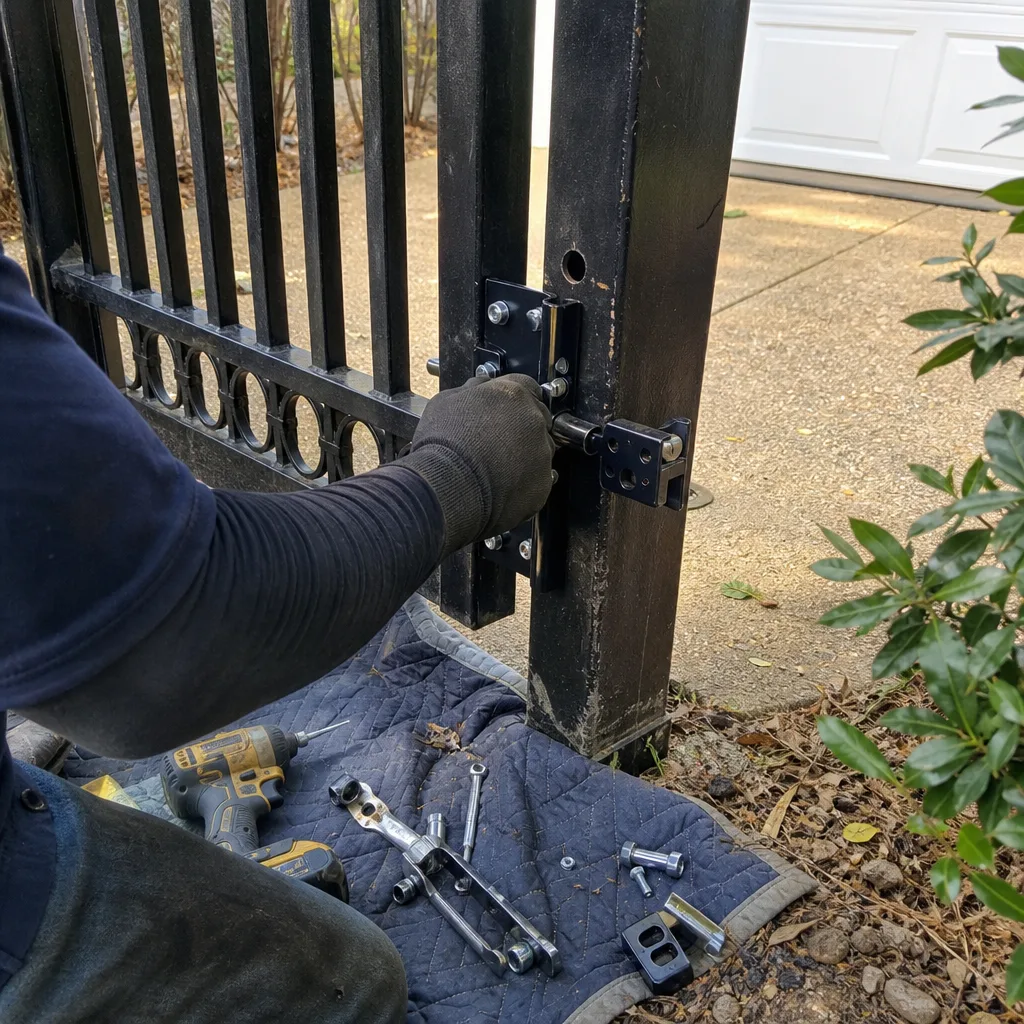
Tomball sits on clay-heavy soil, the kind that expands when wet and contracts during dry spells. Over a Texas summer, the soil around a gate post can shift enough to move the post a quarter of an inch. A quarter inch at the post is two to three inches at the free end of the gate. That’s enough to throw the gate completely out of geometry.
Out-of-geometry gates drag. They scrape the ground. They bind at the latch. And they strain the operator on every cycle, cycling the motor harder and longer than it was designed for. This is the single most common root cause we document in Tomball, and the single most misdiagnosed. The gate leans, the motor burns out, and a company replaces the motor without ever addressing the post movement. A year later, the new motor is dead too.
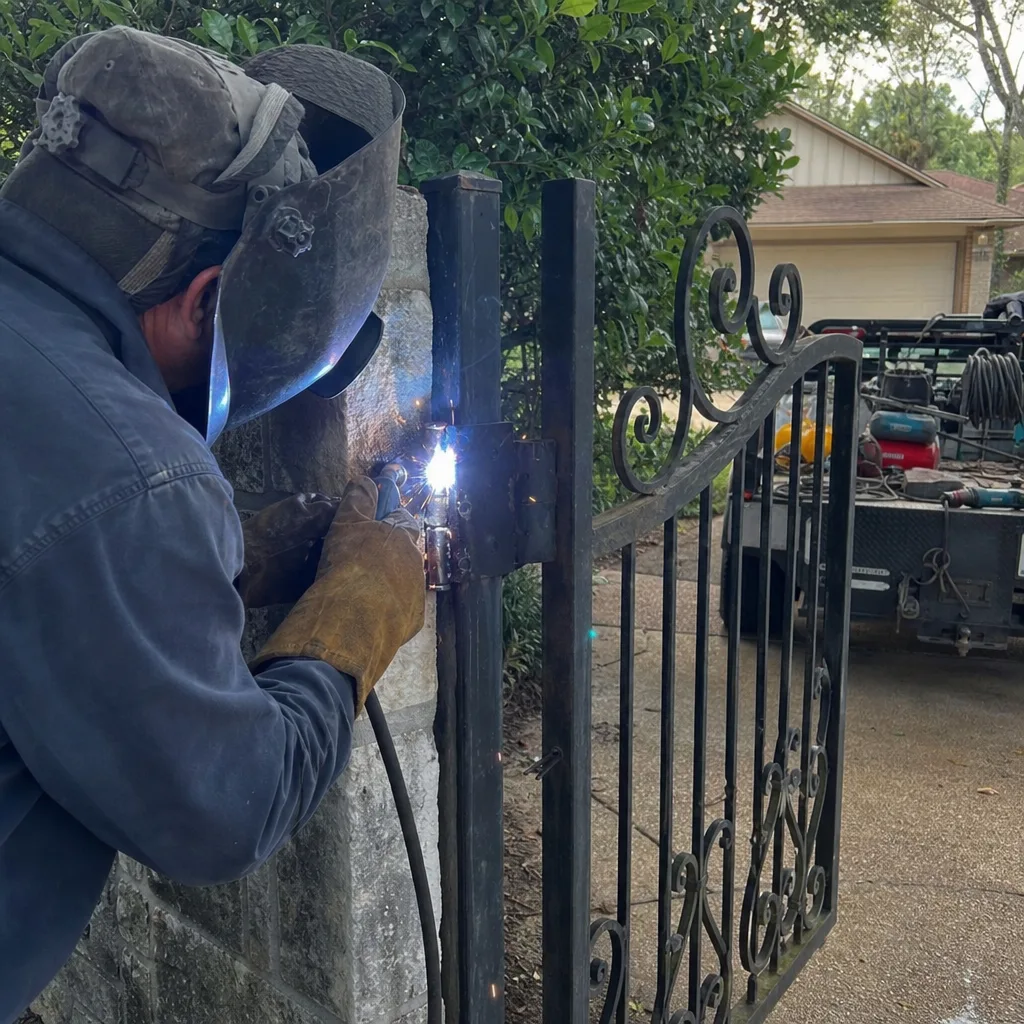
The fix depends on how far the post has moved. If the post has moved less than an inch, a gate-hinge adjustment and re-leveling often solves the issue for $200-$500. If the post has moved more than that, or if it’s loose enough to wobble, the repair involves digging out the post, re-setting it with a proper concrete base below the clay line, and re-aligning the gate. That’s a $600-$1,200 repair in Tomball depending on the post size and whether the gate is a single-swing or a heavy steel slide.
The lesson: if your gate operates but looks like it’s leaning, don’t wait for the motor to fail. The leaning gate is cheaper to fix today than the leaning gate plus a dead operator two years from now.
We document every post movement with photos and measurements. When we leave a Tomball property, the homeowner has a written record of exactly how far the post was out of plumb, what we did to correct it, and a photo of the finished alignment. Under our Haven Standard Clause 4 (Evidence on every job), that documentation is part of every single visit at no additional charge.
What a Complete Diagnostic Visit Should Produce
If you take nothing else from this guide, take this: a verbal diagnosis is not a diagnosis. A technician who spends ten minutes at the control box, tells you “the board’s shot,” and quotes a replacement over the phone hasn’t actually diagnosed anything. They’ve guessed. And in Tomball, guessing is expensive.
A complete diagnostic visit on a gate in Tomball should produce at least four things:
- A written scope of work. Before any tools are picked up, you should have a written scope that names the specific component, the specific failure, and the specific repair. Under Haven Standard Clause 1 (Have it in writing), our price is written and delivered before work starts, and no invoice ever exceeds it.
- A photo log. Every diagnostic visit should leave you with photos of what was found: the corroded terminal, the misaligned photo-eye, the leaning post, the limit-switch setting. If a technician can’t or won’t show you photographic evidence, ask yourself what they’re actually looking at.
- Limit-switch readings. For gate operators, the limit switches determine where the gate stops in the open and closed positions. A gate that reverses before fully opening is usually a limit switch that has drifted. A complete diagnostic includes the actual limit-switch readings, documented, so you and the technician both know whether the gate is stopping where it’s supposed to stop.
- A wiring diagram or a clear written description of the circuit. Not every homeowner wants a wiring diagram, but you should have a written record of what was connected where, what was changed, and what was left in place. This matters because two years from now, when a different technician opens the box, they should not have to guess what the last person did.
We’ve carried this documentation habit over from commercial access-control work, where a gate that doesn’t open isn’t an inconvenience, it’s a security incident and an operational loss. On a commercial site, nobody accepts a verbal-only diagnosis. Residential gates deserve exactly the same standard, and in our experience, Tomball homeowners who have been through one bad gate repair already understand exactly why.
Single-Swing, Dual-Swing, and Slide Gate Repair Logic
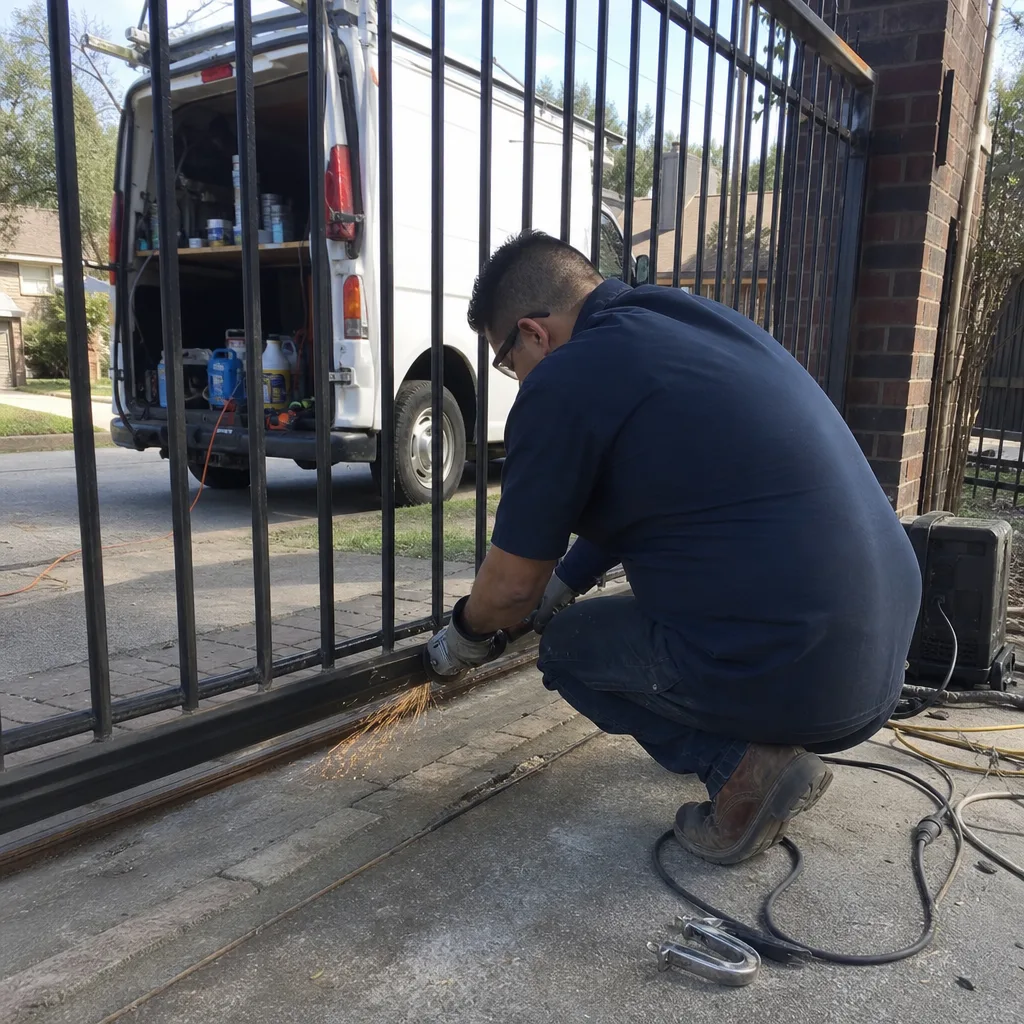
Not all gates are built the same way, and a repair quote for one type doesn’t translate to another. If a company gives you a price for a single-swing hinge replacement before looking at your dual-swing configuration, that price isn’t based on your gate. Here’s the logic for each type in Tomball.
Single-swing gates. The single-swing gate is the simplest and least expensive to repair. It hangs on two or three hinges, opens in one direction, and usually has a single operator. The most common failures are a bound hinge, a bent leaf, a sagging gate due to post movement, and limit-switch drift. Most single-swing repairs in Tomball run $150-$500. These gates are also the cheapest to replace if the frame is rotted or the steel is fatigue-cracked from years of Tomball clay shifting.
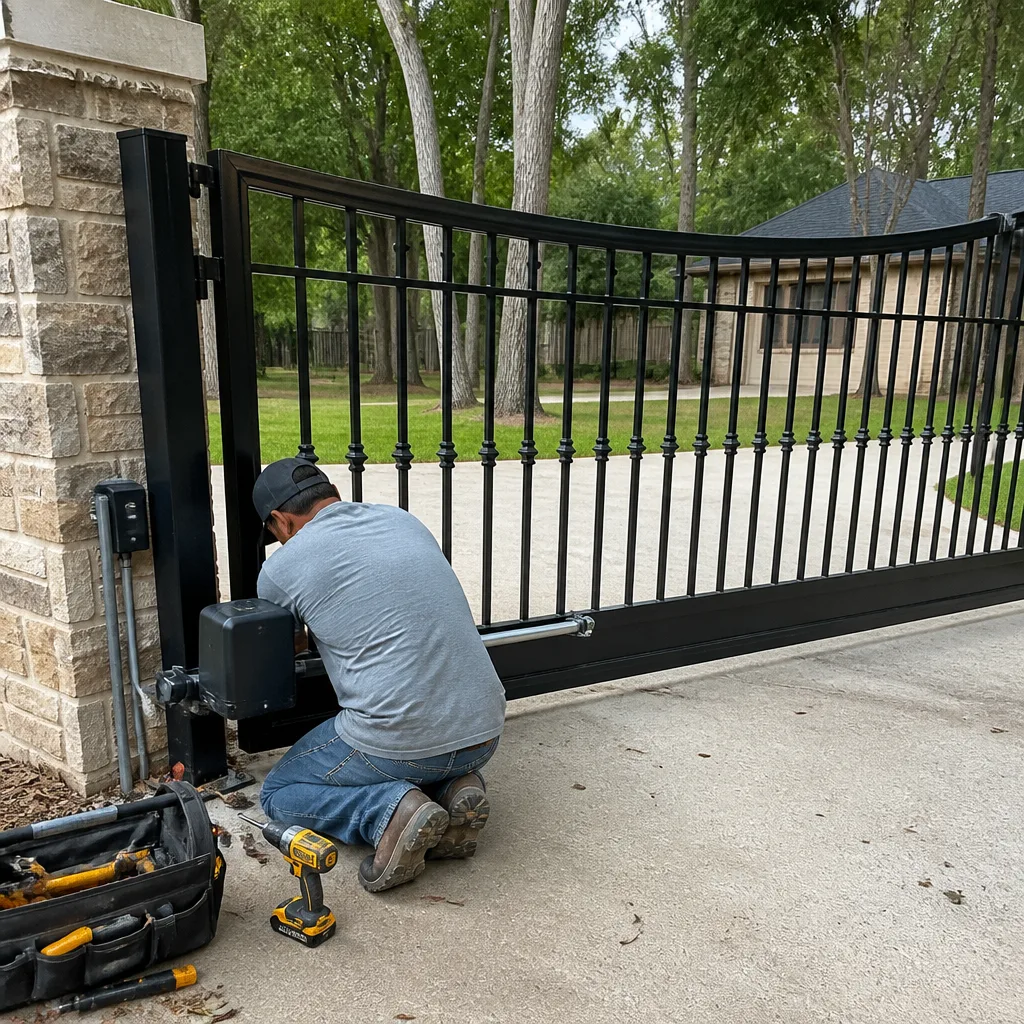
Dual-swing gates. A dual-swing (or bi-parting) gate is two leaves that meet in the middle. Everything on a single-swing gate is doubled: two sets of hinges, two operators, two sets of limit switches. The repair logic changes because the two leaves must stay synchronized. If one leaf drifts out of sync, it can stress the other, and you end up with a gate that opens unevenly or stops mid-cycle. Repair costs on dual-swing gates typically run 40-60% higher than single-swing because the labor is doubled and synchronization must be restored before the job is done.
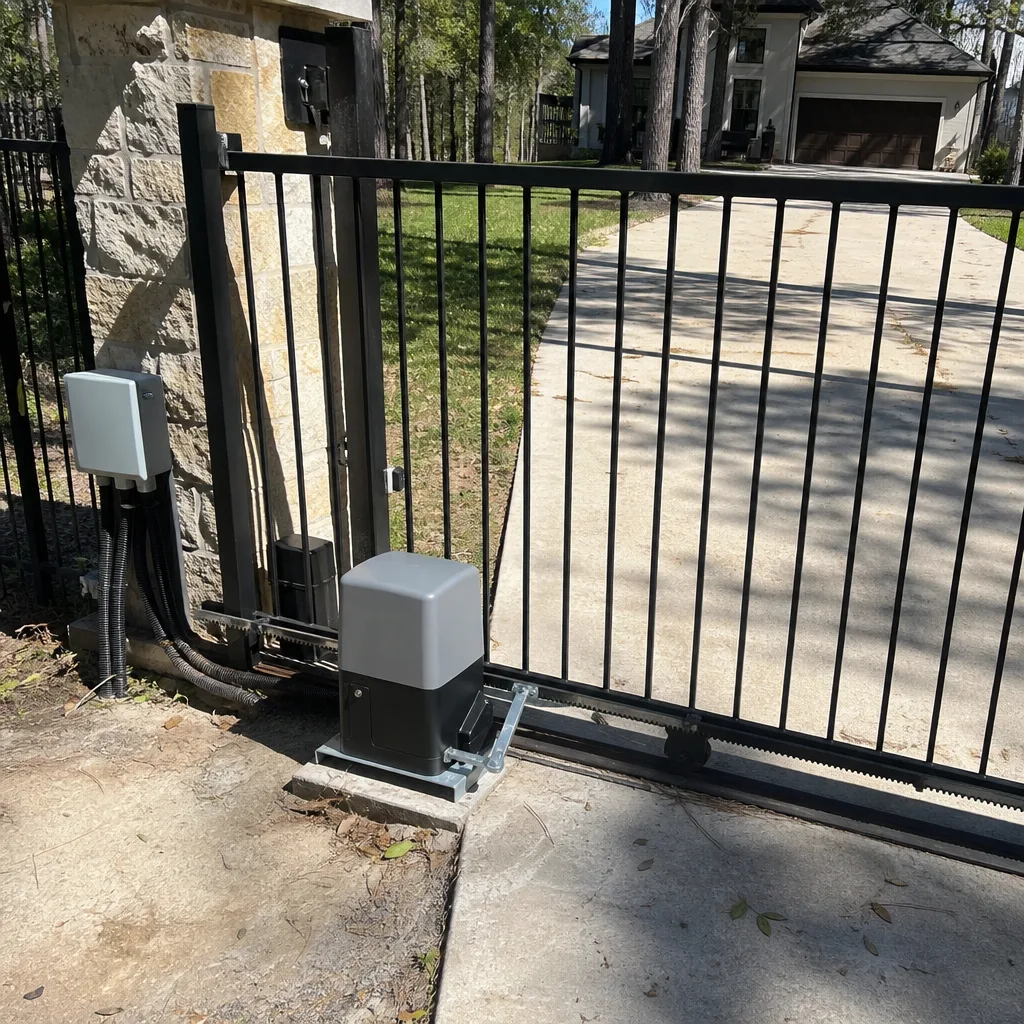
Slide gates. Slide gates run on a track or a cantilever rail. The big difference is that slide gates carry their weight differently: the gate rests on rollers, and those rollers fail. A flat-spotted roller, a worn track, or a misaligned cantilever system will make a slide gate grind, jerk, or stall entirely. The operator on a slide gate is often blamed for what is actually a track or roller problem. Slide-gate roller and track repair in Tomball typically runs $300-$800, and we’ve replaced more than a few slide-gate operators that died because the rollers had been grinding for a year.
If you’re not sure which configuration you have, a photo sent to a qualified gate company should be enough to tell them. And if a company quotes you a repair before knowing whether your gate swings or slides, that’s a sign the quote is generic, not diagnostic.
Tomball Gate Repair Cost Ranges by Repair Type
These are the actual price ranges we quote in Tomball for common gate repairs. They reflect what we’ve seen in thousands of gate repairs since 2014, and they assume a standard residential gate without unusual site conditions. Every job gets a written price before work starts, so the number on your invoice is the number you approved.
| Repair Type | Tomball Price Range | Notes |
|---|---|---|
| Limit-switch adjustment | $90-$180 | Single most common fix; usually same visit |
| Photo-eye (safety beam) replacement or realignment | $140-$300 | Critical safety component; do not bypass |
| Hinge replacement (single gate) | $200-$500 | Heavier steel gates cost more in labor |
| Post re-set and re-alignment | $600-$1,200 | Tomball clay movement is the usual culprit |
| Control board replacement | $350-$800 | Brand-dependent; we work on 9 brands |
| Operator motor replacement (single-swing) | $1,100-$1,400 | Must address underlying cause or it fails again |
| Roller / track repair (slide gate) | $300-$800 | Often misdiagnosed as operator failure |
| Access-control receiver / keypad replacement | $120-$500 | Depends on brand and integration |
These ranges are specific to the Tomball market. A gate that needs multiple repairs, such as a post re-set plus a hinge replacement plus a motor replacement, will land at the higher end or beyond. The point of the table is to give you a reference point before you pick up the phone, so that when a company quotes you $2,200 for a control board, you know that’s out of market and you should ask why.
If you have a written estimate from another company, we’ll review it at no cost. Bring the paperwork and we’ll tell you whether the diagnosis and the price line up. It’s a free second opinion, and it’s built into how we work.
Preventive Work That Keeps a $90 Fix From Becoming a $1,400 Replacement
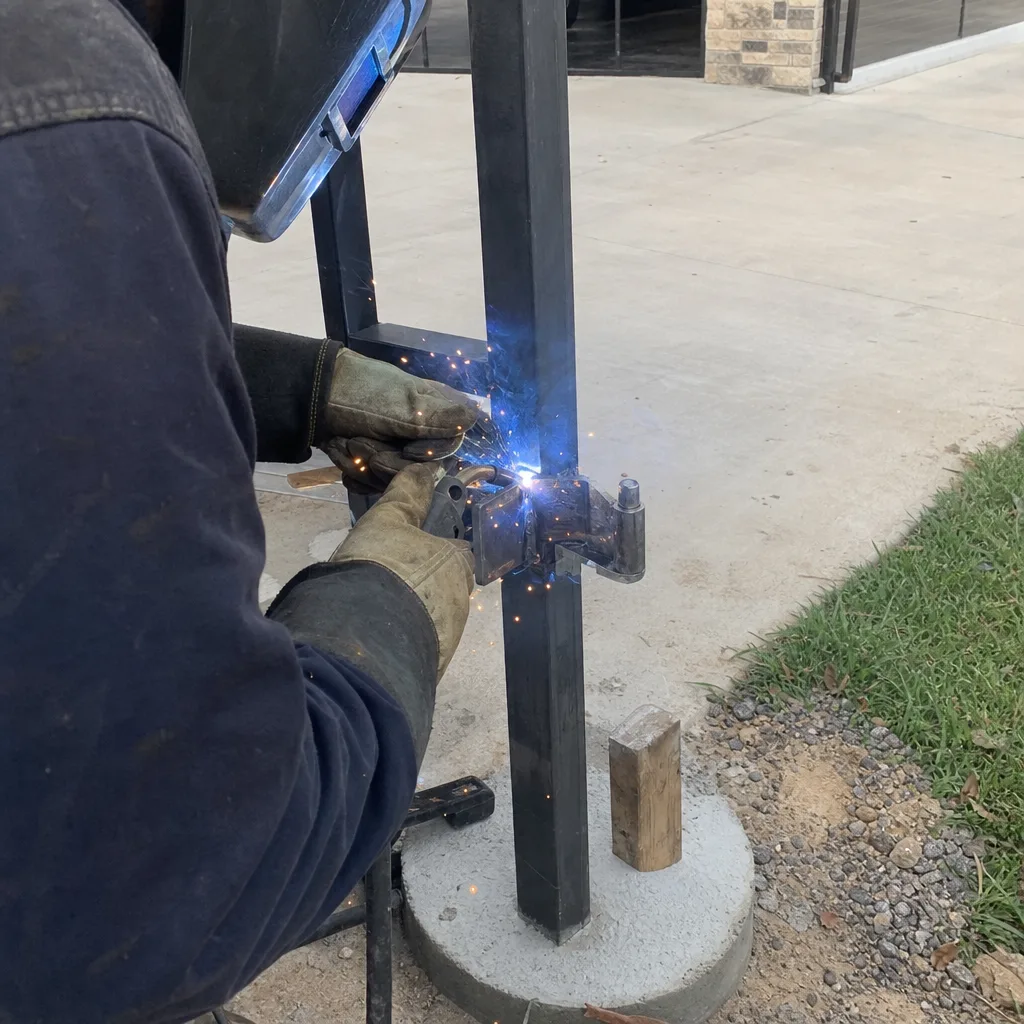
The economics of gate repair in Tomball are simple: a $90 limit-switch adjustment today prevents the motor from cycling 20 extra times a day against a bound gate, for months, until the motor burns out and the repair is $1,300. Here’s the preventive work that stops the failure chain before it reaches the operator.
- Check hinge lubrication twice a year. A hinge that moves freely is a hinge that doesn’t make the motor work harder. Use a heavy silicone or lithium grease on all hinge points. This is a five-minute job you can do yourself.
- Inspect the gate for lean or drag every quarter. Walk out and look at your gate. Does it sit level? Does it scrape anywhere? If the gap between the gate and the post is visibly unequal top to bottom, the post is moving or the hinge is wearing. Call before the drag becomes a motor load.
- Keep the track clean on slide gates. Tomball’s clay soil gets into everything. Slide-gate tracks fill with dirt, leaves, and clay sediment. A track that’s not cleaned regularly will wear rollers prematurely and overload the operator.
- Check the photo-eye alignment after any extreme weather. A hard thunderstorm, a lawnmower bump, or a settling post can knock the photo-eye out of alignment. You’ll know because the gate will refuse to close or will reverse for no visible reason. A misaligned photo-eye is the safety system doing its job.
- Look at the control board once a year. Open the control box. Look for corrosion, moisture, ants (they’re drawn to warm electronics in Texas), or anything that doesn’t look clean. If you see white crust or green oxidation on a terminal, that connection is deteriorating and will eventually fail.
We’ve seen all of these in Tomball homes across the area, from older acreage properties off FM 2920 to newer subdivisions near the Grand Parkway. The gates that last the longest are the ones that got a ten-minute inspection twice a year. The gates that die young are the ones nobody looked at until they stopped opening.
Common Mistakes to Avoid
- Replacing the operator before fixing the underlying cause. A dead motor is a symptom, not a disease. If the post is leaning or the hinge is binding, a new operator will die on the same schedule as the old one. Ask for the root cause in writing before you approve any replacement.
- Bypassing the photo-eye instead of replacing it. A photo-eye is the infrared beam that stops the gate when something crosses its path. It’s a safety device, not a convenience feature. If a technician suggests bypassing it rather than replacing it, you’re accepting a gate that could close on a person or a vehicle without stopping.
- Accepting a verbal quote. In Tomball, a verbal quote and a handshake is how a $300 repair becomes an $800 invoice. The written price before work starts is the entire point. If a company won’t put the number in writing, call someone who will. For more on what a complete repair should include, see our Gate Repair in Tomball page.
- Ignoring a gate that reverses randomly. A gate that reverses before fully opening is in the early stages of a limit-switch or photo-eye problem. It will not fix itself. It will get more expensive. Call before the motor damage is done.
- Choosing a company based on a phone quote without an on-site visit. Every gate problem looks the same from a photo. A limit-switch drift and a failing control board can produce identical symptoms. A repair quote given over the phone without a site visit is not a diagnosis, it’s a sales call.
- Not asking whether the company works on your brand. A company that installs only one brand of operator will steer you toward replacing your existing equipment with their brand, even when a repair on the old motor would be cheaper. We service nine major automation brands including DoorKing, LiftMaster, and Elite, so the diagnosis is based on what’s already on your property, not on what’s easiest to sell.
When to Call a Professional

Call a professional when the gate drags, scrapes, binds, or leans noticeably, when the operator runs but the gate doesn’t move, when the gate reverses for no reason, when you hear grinding or clicking from the motor, or when a keypad stops responding. Call right away if the gate won’t close at all, because an open gate is a security gap that can’t wait a week.
Also call if you have a written estimate from another company and want a second opinion. A second set of eyes on a $1,200 repair is worth the hour. Vance Gate Repair Tomball home has been serving Tomball since 2014 with written pricing and documented evidence on every job. We offer free estimates in Tomball. Call (346) 248-7685.
Frequently Asked Questions
Gate repair in Tomball ranges from $90 for a limit-switch adjustment to $1,400 for a full operator replacement, with most repairs landing between $200 and $800 depending on the type of gate and the component that failed. Every repair should come with a written price before work starts, so you know the number before you approve it. Call (346) 248-7685 for a free written estimate.
In many cases, yes, a limit-switch adjustment, a photo-eye realignment, or a hinge repair can be completed the same day. A live person answers our phone 24 hours a day at (346) 248-7685, so you’ll never leave a voicemail and wait for a callback.
A full gate installation includes site measurement, post setting below the clay line (critical in Tomball to prevent future post movement), gate fabrication or supplied gate installation, operator mounting, limit-switch calibration, photo-eye installation, and a documented photo record of the finished job. We provide a written scope and price before any work begins. See our Gate Installation in Tomball page for details.
A gate that reverses before fully opening is usually dealing with a drifted limit switch, a misaligned photo-eye, or a dragging gate that’s triggering the overload protection in the operator. The limit switch tells the gate where to stop, and when it drifts, the gate stops early and reverses. This is a $90-$180 fix in Tomball if caught early, and a $1,100-$1,400 fix if ignored long enough to burn out the motor.
Yes, we handle the complete electrical circuit from the panel to the operator, including the safety edges and the photo-eye system. We leave a written record of every connection, so the next technician who opens the box knows exactly what was done and why. For motor-specific work, see our Gate Motor & Opener in Tomball page.
A motor that burns out in two years in Tomball was almost certainly working against a mechanical problem the whole time: a dragging gate, a leaning post, or a binding hinge. The motor in that scenario is a victim, not a failure. The underlying mechanical issue must be fixed before the new motor is installed, or the replacement will fail on the same schedule. We identify and document the root cause in writing before we replace any operator.
The Bottom Line
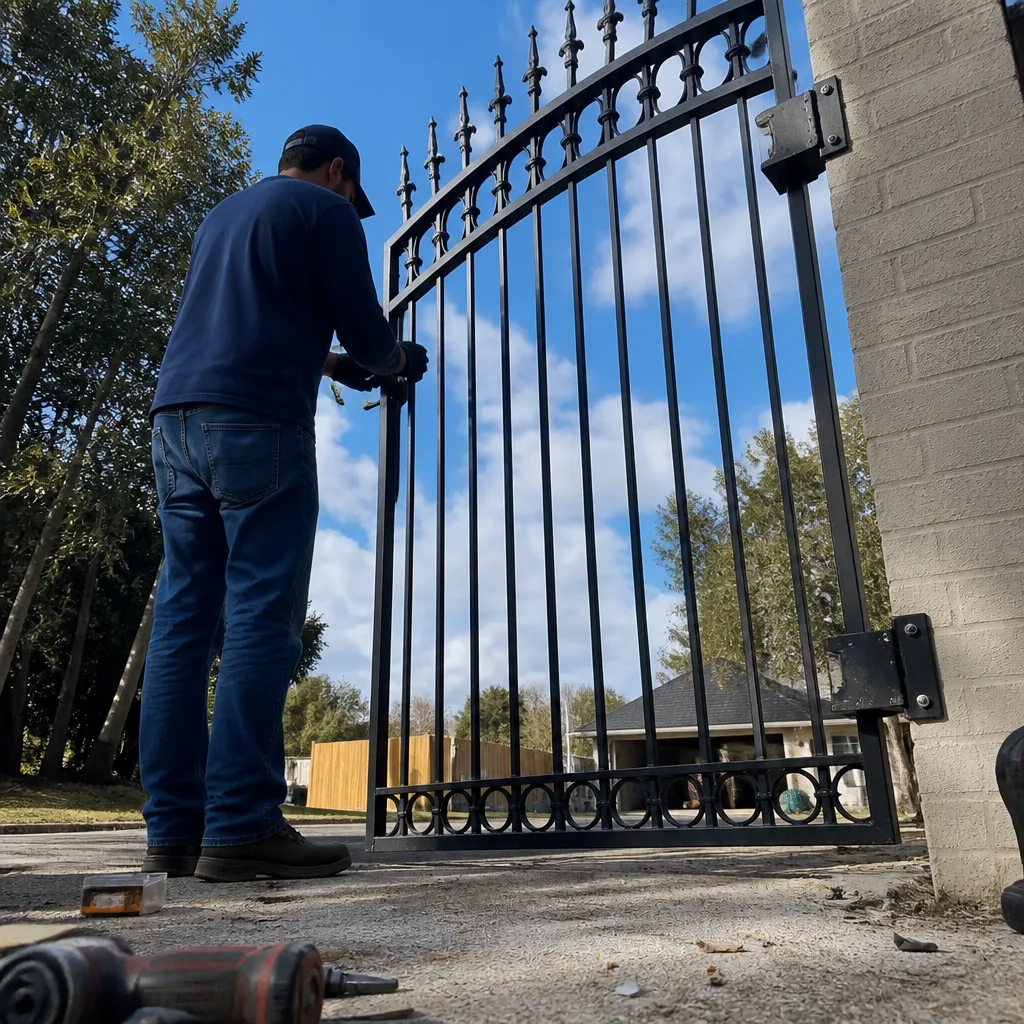
Most gate failures in Tomball follow a predictable chain. Mechanical wear leads to drag, drag leads to motor strain, motor strain leads to operator failure. The chain can be broken at any point, and the earlier you break it, the cheaper the repair. A $90 limit-switch adjustment is the cheapest repair in gate work. A $1,400 operator replacement is the most expensive, and it’s usually preventable. The difference between the two is a diagnostic visit that produces written evidence: a written price, a photo log, and a documented root cause. If a gate company won’t or can’t produce those, you’re not getting a diagnosis. You’re getting a guess. Call (346) 248-7685 for a free estimate, written and documented, in Tomball.
Written by Adrian Vance, Owner at Vance Gate Repair Tomball, serving Tomball since 2014.