
Last updated September 20, 2026
Free on-site gate assessment - hinges, posts, and your LiftMaster or Nice gate operator checked before anything is quoted
The assessment is free and the quote is the invoice.

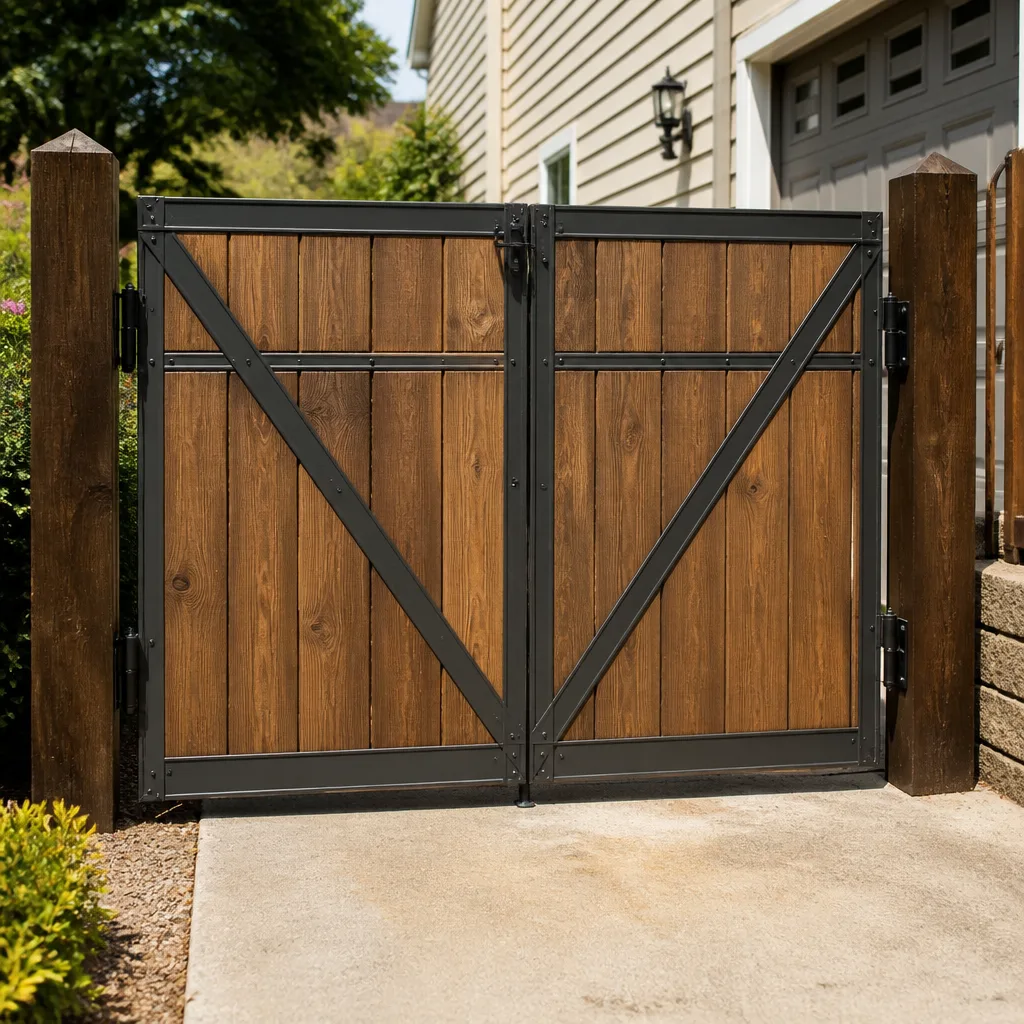

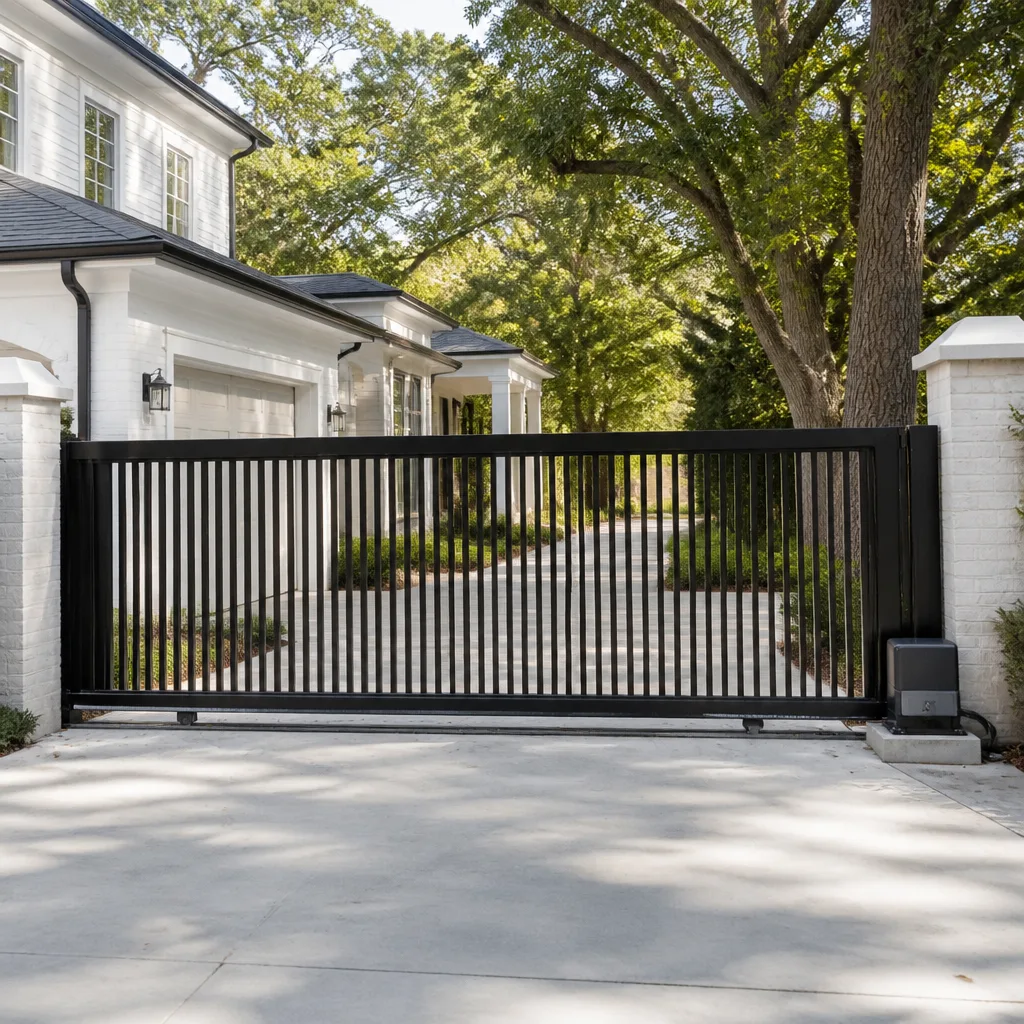
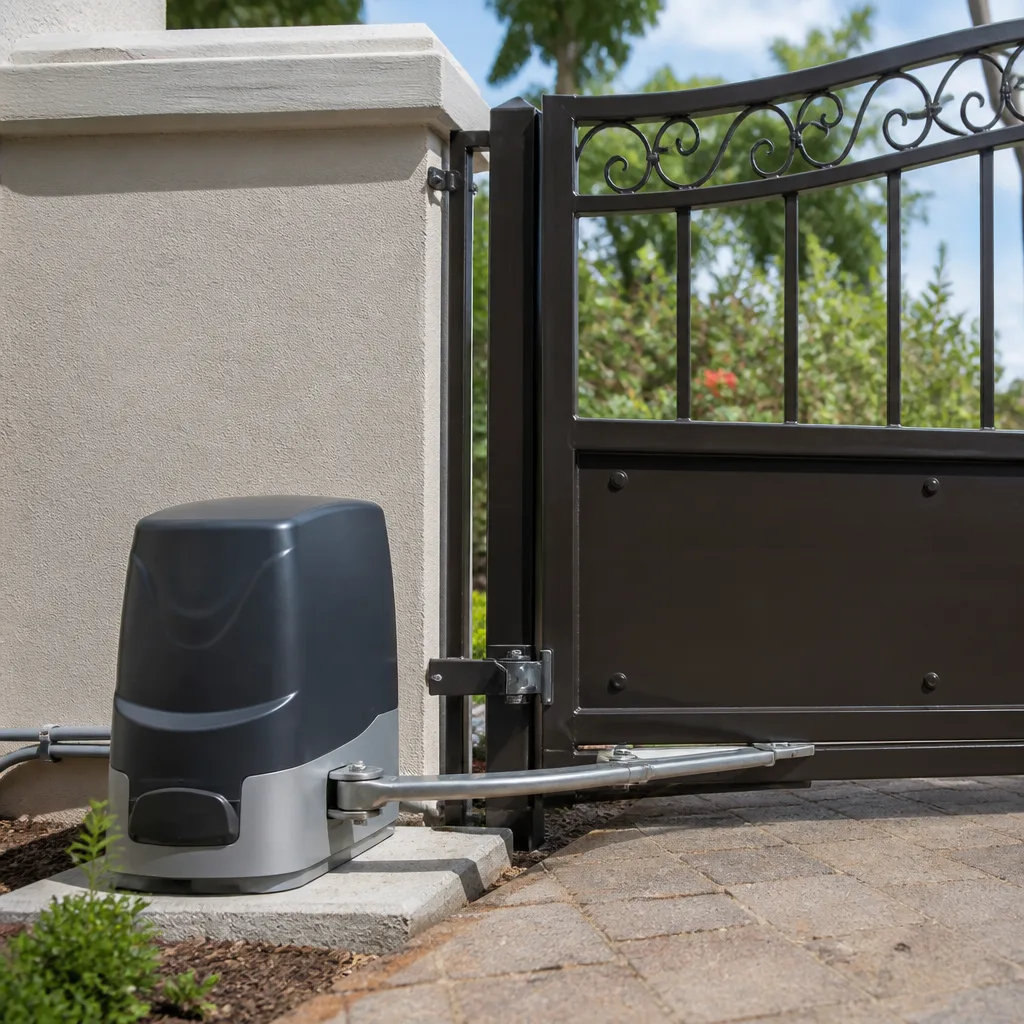
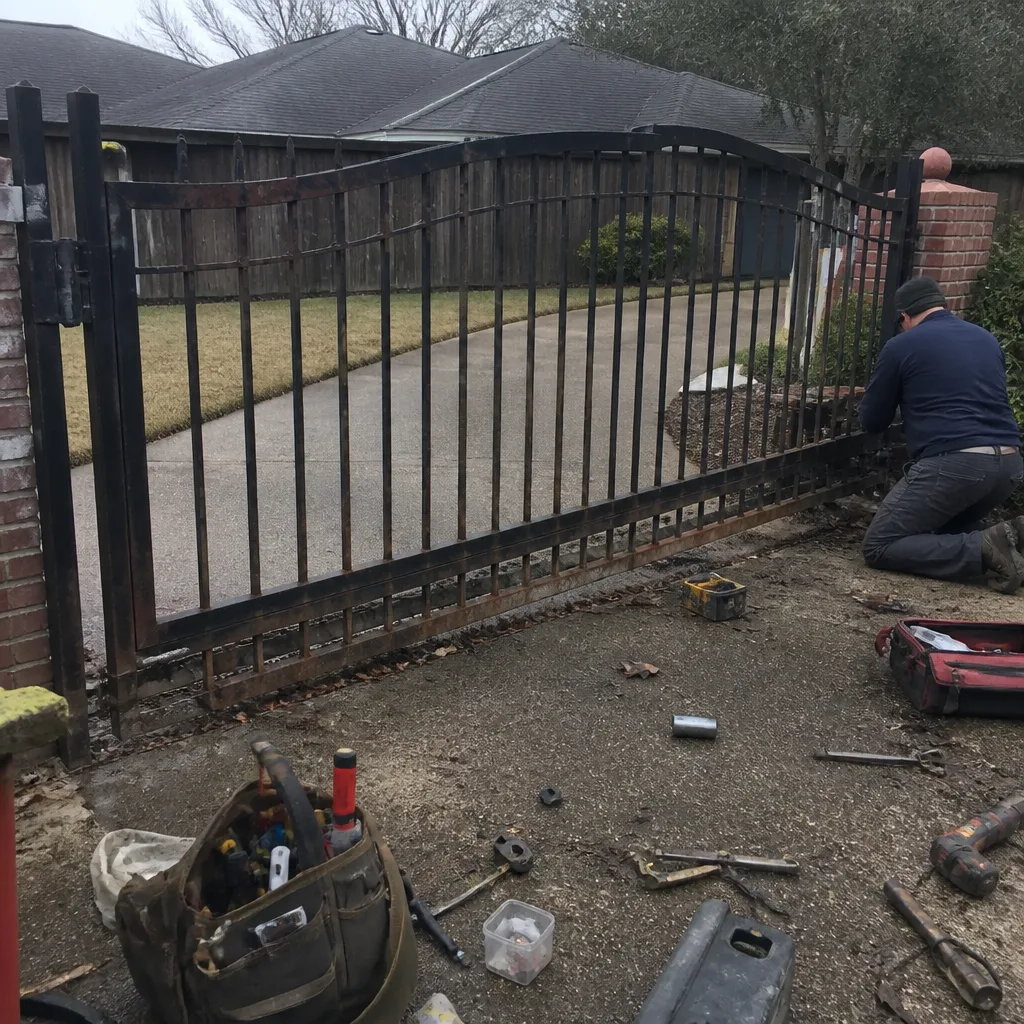 Before
 After
After Before
 After
After Before
 After
AfterGate Repair Permits, Codes & Inspections in TX: What You Need to Know
In Tomball, a homeowner recently paid $240 to reinstate an expired permit and schedule a follow-up inspection after a buyer’s inspector flagged low-voltage gate wiring that had been run without documentation. The gate itself operated perfectly. The repair had been done three years earlier. What makes this story worth your time is that the original contractor told the homeowner no permit was needed, and for the motor replacement itself, that was true. The problem was the two feet of conduit attached to a new post. Texas gate work sits inside a regulatory gray zone where the trigger word is “structural,” and most people, contractors included, read that word wrong in both directions. Some pull permits for simple operator swaps that don’t need them, adding weeks and fees to an afternoon repair. Others skip permits on foundation-adjacent work that absolutely requires them, and the bill arrives later, usually during a sale. This guide maps the actual line as it runs through Harris County and Montgomery County, which matters more in Tomball than almost anywhere else, because our city limit splits down the middle of two jurisdictions with different rules.
Quick Answer
Replacing a gate motor or operator on existing posts in Texas generally requires no permit. You do need a permit when the work involves structural modification to the gate or posts, new electrical service or a new circuit run, or installing new posts that support a gate and operator system. In Tomball specifically, the answer depends on which side of the county line the property sits, and whether an HOA adds its own overlay requirements on top of municipal code.
Table of Contents
- What Actually Triggers a Permit for Gate Work in Texas
- Harris County vs. Montgomery County: Why Tomball Splits the Difference
- The HOA Overlay: Deed Restrictions That Override Municipal Code
- When Unpermitted Gate Work Gets Discovered During a Home Sale
- What a Proper Permit Pull Should Look Like From Your Contractor
- Electrical Code Requirements Specific to Gate Operators in Texas
- Common Mistakes to Avoid
- When to Call a Professional
- Frequently Asked Questions
- The Bottom Line
BeforeAfterWhat Actually Triggers a Permit for Gate Work in Texas
Texas does not have a statewide building code that uniformly applies to every municipality. Instead, each city and county adopts its own code package, typically modeled on versions of the International Residential Code (IRC) with local amendments. That means the permit answer for gate work varies not just by county but by which code edition the local jurisdiction has adopted and how its building officials interpret specific language. With that caveat in place, the practical triggers are consistent enough to describe with confidence.
A permit is generally required when any one of the following is true:
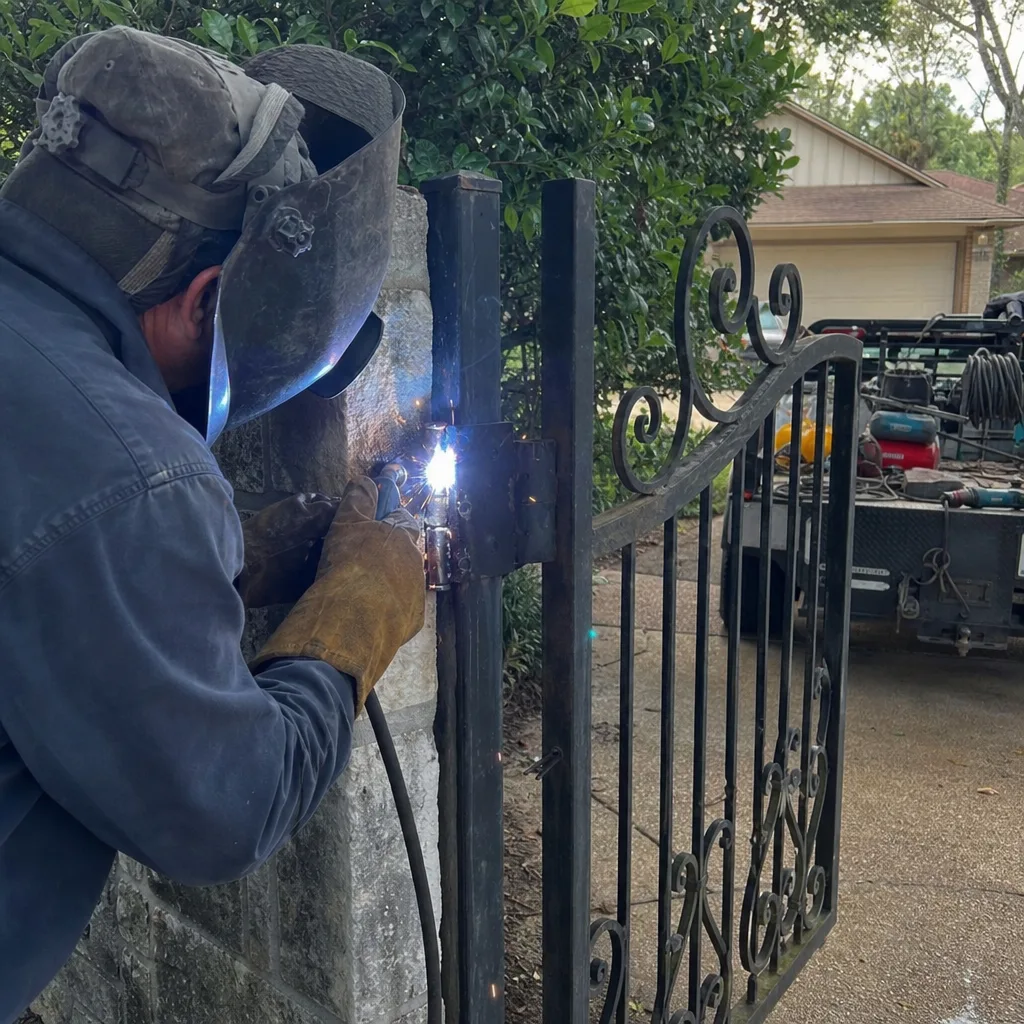
- Structural modification: the work changes the load-bearing path of the gate, the posts, or the foundation that anchors the posts. Adding a heavier gate leaf, extending a gate’s height, or replacing posts with a different embedment depth or footing size is structural work.
- New post installation: setting new gate posts that support a gate and operator system involves excavating and pouring concrete footings. Most municipalities treat this as a footing or foundation inspection item, which means a permit.
- New electrical service or a new circuit: if the gate operator requires power that is not already present in a compliant, dedicated circuit, and an electrician must pull a new circuit from the panel, the electrical work itself requires an electrical permit, even when the gate motor installation does not.
- Conduit and wiring runs that are attached to structures: running new low-voltage wire through conduit attached to a fence post, a wall, or a foundation may be classified as “installing electrical raceway,” which some jurisdictions interpret as electrical work requiring a permit, particularly in Harris County.
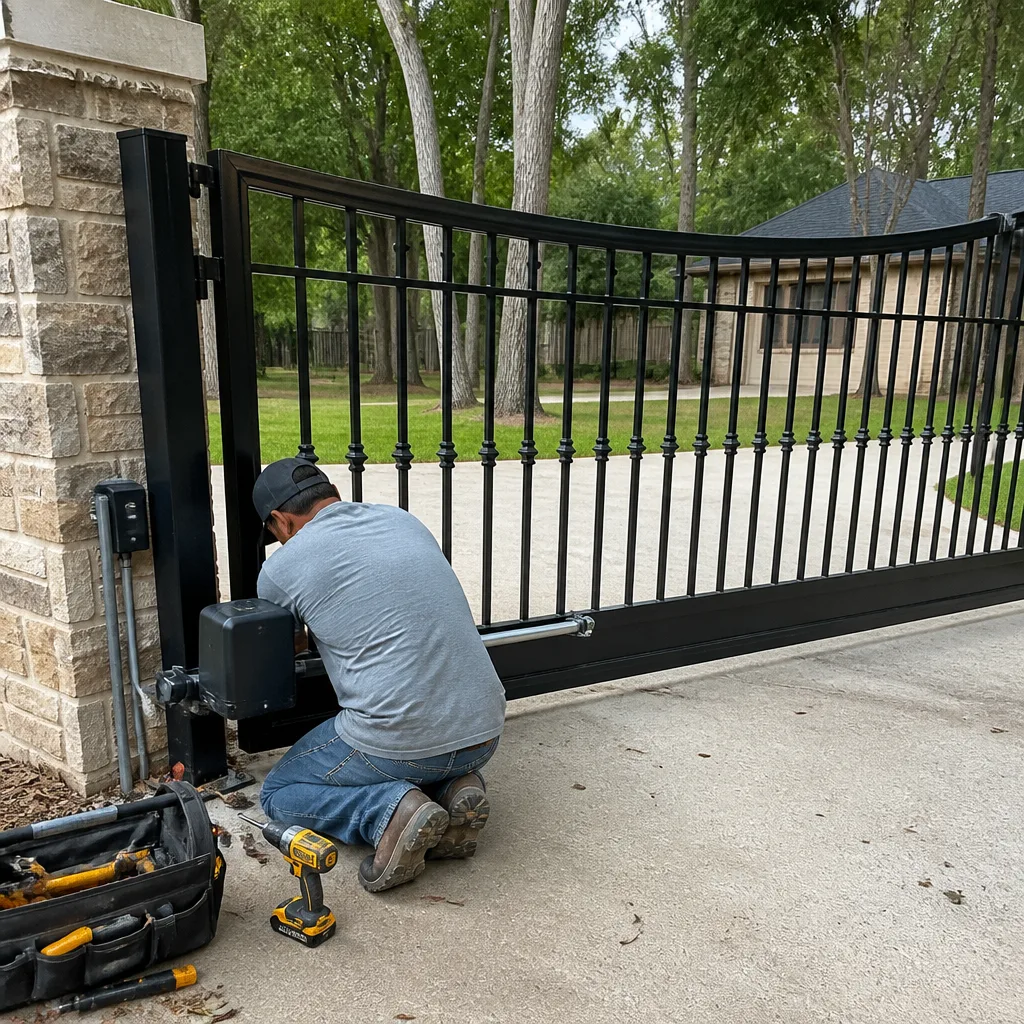
What does not require a permit, in nearly every Texas jurisdiction, is a one-for-one swap of a gate operator on existing posts with existing power. Replacing a LiftMaster arm with a compatible LiftMaster arm on a gate that already has a working circuit and intact posts is treated as a repair, not an alteration. The same applies to replacing a damaged circuit board inside an existing operator housing, swapping photo-eyes, adjusting limit switches, or replacing wheels and hinges on a sliding gate. These are repair operations, and in both Harris and Montgomery counties, repair work does not require a building permit provided the repair does not change the gate’s structural behavior or its electrical demand.
The confusion in Tomball typically arises on middle-ground work. A homeowner wants to replace an old Mighty Mule operator with a new DoorKing, and the new motor draws a different amperage. The posts stay. The circuit stays. The motor mounts to the same location. No permit. But if that same homeowner asks for an extra keypad on the opposite side of the driveway, and the technician must trench a new conduit run from the operator to the new keypad location, the electrical portion may require permit review depending on the jurisdiction and the length of the run. This is the specific gray area, and it is exactly where contractors give conflicting advice.
Harris County vs. Montgomery County: Why Tomball Splits the Difference
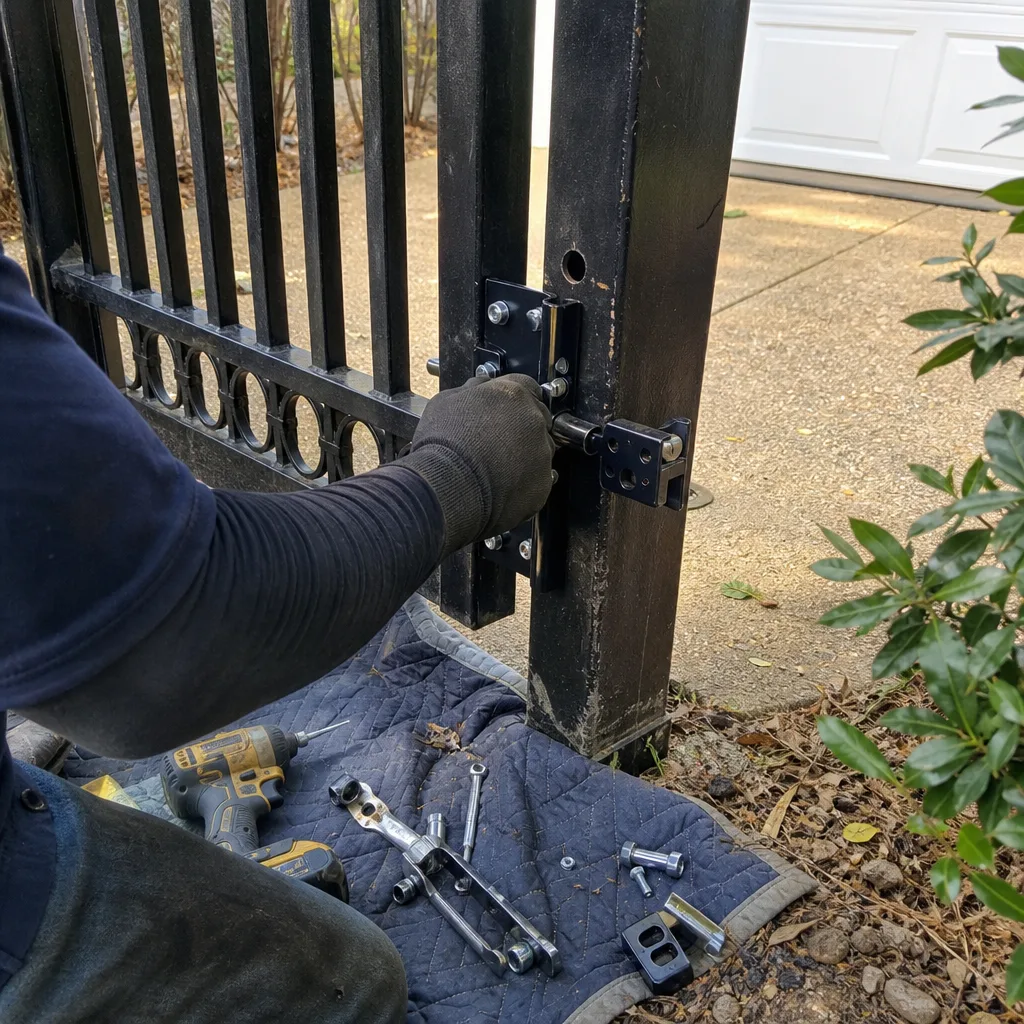
Tomball is one of the few cities in Texas whose corporate limits physically span two counties. The majority of the city sits in Harris County, but a meaningful portion of the northern edge falls inside Montgomery County. That geographical fact creates a recurring paperwork problem for homeowners: a contractor who works primarily in one jurisdiction gives a permit answer based on the rules they are used to, and the homeowner, who may not even know which county they live in for permitting purposes, receives the wrong information.
Harris County operates an unincorporated-area permitting system through the Harris County Engineering Department. For gate work, Harris County’s position is comparatively expansive on what it considers regulated work. The county has, in our experience on gate repairs in Tomball, been the stricter of the two jurisdictions on low-voltage electrical runs. A technician who runs conduit along a fence and through a foundation penetration to reach an operator on the far side of a driveway is performing work that Harris County may classify as electrical, not repair. The practical test we use is simple: if the work involves conduit, wire, or a circuit that did not exist before the service call, check with Harris County before starting.
Montgomery County’s approach is generally narrower on gate repairs. The county has historically treated gate operator replacement and most low-voltage gate automation work as exempt from building permit requirements when the work is performed by a licensed contractor and does not alter the structure. However, Montgomery County still requires permits for structural post replacement and any new footing work. If your Tomball property sits north of the county line and you are replacing a sagging post with a deeper embedment or a larger footing, you need a permit before the hole is dug, not after.
The jurisdiction split becomes even more relevant inside incorporated Tomball. The city of Tomball issues its own permits, and for properties inside city limits, the city’s building official is the authority, not the county. The city generally follows a hybrid approach that leans closer to Montgomery County on repair exemptions but closer to Harris County on electrical scrutiny. If you live in Tomball proper, the correct question is not “Harris or Montgomery?” but “what does the city of Tomball require for this specific scope?” The honest answer, which we give regularly, is that it depends on the three triggers outlined above, and the city is consistent about applying them.
One practical tip that saves time: find your property’s jurisdiction before calling a contractor. Your property tax statement, available from the Harris Central Appraisal District or the Montgomery Central Appraisal District depending on your side of the line, lists the taxing entities with jurisdiction over your parcel. That document will tell you whether you are inside Tomball city limits and which county has code authority. Bring that to the conversation, and you eliminate the most common source of wrong permit advice from the start.
The HOA Overlay: Deed Restrictions That Operate Indepently of Municipal Code
In Texas, a homeowner’s association has the legal right to impose restrictions that are stricter than municipal code. That principle shows up in the enabling language of the Texas Property Code and in decades of case law interpreting it. For gate work, the practical result is that a gate modification that requires no permit whatsoever from Harris County, Montgomery County, or the city of Tomball can still be a deed-restriction violation with fines, mandatory-remediation clauses, and lien exposure.
We see this constantly in master-planned communities around Tomball where the governing documents include architectural control language that predates most residents’ ownership. Many of these communities require advance written approval from an architectural control committee (ACC) for any change to a fence, gate, or gate operator that is visible from the street or from a shared amenity. The approval obligation is contractual, not statutory, and it exists independent of any permit waiver. A homeowner who swaps a rusted swing gate for a new sliding gate without ACC approval can find themselves subject to a demand letter requiring them to restore the original gate style, even though the city would have signed off on the change.
Before any gate modification in Tomball, you should pull three documents:
- The recorded deed restrictions for your lot. These are on file with the county clerk. Harris County and Montgomery County both offer online search portals. You want the original restrictions and every amendment.
- The current HOA governing documents, if applicable. Deed restrictions establish the HOA’s authority; the bylaws and design guidelines contain the specific approval procedures and standards.
- The ACC application form, if your community has one. Many Tomball-area HOAs require drawings or photos before work starts. Some explicitly require that gates match the subdivision’s original fence and gate design language.
The timeline for HOA approval varies. Some communities process applications in two weeks. Others have quarterly meetings or a management company that adds weeks of routing time. Plan for this. A gate replacement in a deed-restricted community should be scheduled around the approval calendar, not the other way around. If you skip this step and the HOA flags the work later, the correction cost can dwarf the original project cost.
When Unpermitted Gate Work Gets Discovered During a Home Sale
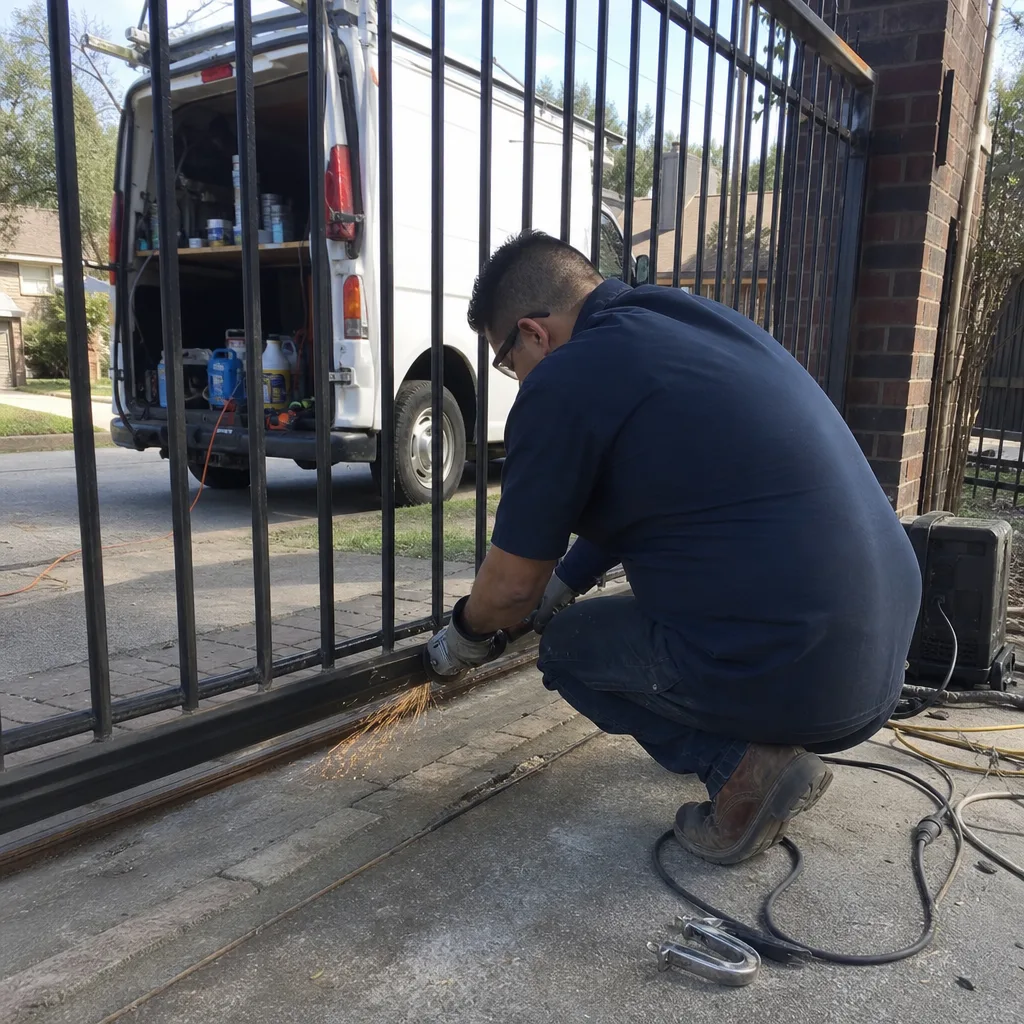
This is the scenario that brings most of the urgency to the permit conversation: a buyer’s inspection report flags a gate operator installed without a permit, and the seller has two weeks to resolve it without delaying closing. It happens routinely in Tomball’s resale market, particularly on homes built in the 2000s that have had multiple owners and multiple rounds of fence and gate work. The inspector does not have to prove the work is unsafe; they only have to note that the work appears to have been installed without a record. The seller then carries the burden of producing documentation or fixing the deficiency.
The specific remediation steps look like this:
- Determine what, specifically, the inspector flagged. Is it the operator, the conduit, the post footings, or all three? Each item has a different permit path. A flagged operator with existing posts and existing power is the easiest to resolve, often with a letter from a licensed contractor certifying that the work is a like-for-like repair.
- Pull the permit retroactively, if required. Both Harris County and Montgomery County allow after-the-fact permits, but they come with additional fees, and some require the work to be exposed for inspection before the permit is closed. A post footing that was never inspected may require partial excavation to verify embedment depth and concrete condition.
- Schedule the inspection and address any correction notice. If the inspector finds a code violation, the seller must correct it and schedule a reinspection. This is where the $240 reinspection fee story from our opening comes from, and it is not unusual.
- Provide the buyer with a closed permit or a certification letter. Closing can proceed once the title company receives documentation that satisfies the buyer’s objection. In some cases, a credit in lieu of repair is negotiated, but that is a negotiation outcome, not a permit outcome.
The cost exposure on unpermitted gate work discovered at sale ranges from a few hundred dollars for a simple retroactive permit on an exempt repair to several thousand dollars if a footing must be exposed, re-poured, inspected, and re-landscaped. The time exposure is the larger risk in a competitive closing window. A retroactive permit on electrical work can take two to three weeks in Harris County depending on inspector availability, and that timeline does not compress because a closing date is approaching.
Our recommendation for anyone selling a Tomball home with gate work done in the last ten years is to pull the permit history for the property before listing. If you cannot find a record for the gate work and you believe one was required, resolve it now, when you control the timeline, rather than during escrow, when you do not.
What a Proper Permit Pull Should Look Like From Your Contractor
A contractor who knows Texas gate permitting follows a specific sequence, and the sequence itself is evidence of competence. When you contract for work that requires a permit, the permit pull process should follow these steps:
- Scope confirmation in writing first. Before any permit application is filed, the contractor should provide a written scope of work that identifies exactly what is being built, replaced, or altered. This is the document that determines whether a permit is needed at all.
- Jurisdiction identification. The contractor confirms the permitting authority: city of Tomball, Harris County, or Montgomery County, depending on the property location. If the contractor cannot tell you which jurisdiction applies after looking at your address, that is a red flag.
- Permit application and fee payment. Whoever pulls the permit, contractor or homeowner, pays the fee and receives a permit number. The permit should be posted or available at the job site during the work.
- Inspections at the required stages. Footing work is typically inspected before concrete is poured, if the footings are part of the scope. Electrical work is inspected after the wiring is run but before it is permanently covered. The contractor should schedule these inspections, not leave them to the homeowner.
- Final inspection and sign-off. The contractor schedules the final inspection, walks it with the inspector, and resolves any correction notice. The closed permit, not the contractor’s verbal assurance, is the proof that the work is complete.
The responsibility for permit closure belongs to whoever pulled the permit, and that detail should be in the contract. In Texas, a homeowner who pulls a permit as owner-builder takes on liability that would otherwise rest with the contractor, and many buyers’ inspectors look more carefully at owner-built work for exactly that reason. Our strong recommendation is to have the contractor pull the permit under their license. If a contractor tells you to pull the permit yourself “to save money,” that is a conversation worth ending.
At Vance Gate Repair Tomball, we handle the permit application and all inspection scheduling for any job that crosses the permit threshold, and we leave the homeowner with a closed permit document and a written record of the work, including photos. That documentation habit is not standard practice for every local company, and we would encourage you to ask any contractor you are considering what their documentation package looks like before you sign anything.
Electrical Code Requirements Specific to Gate Operators in Texas
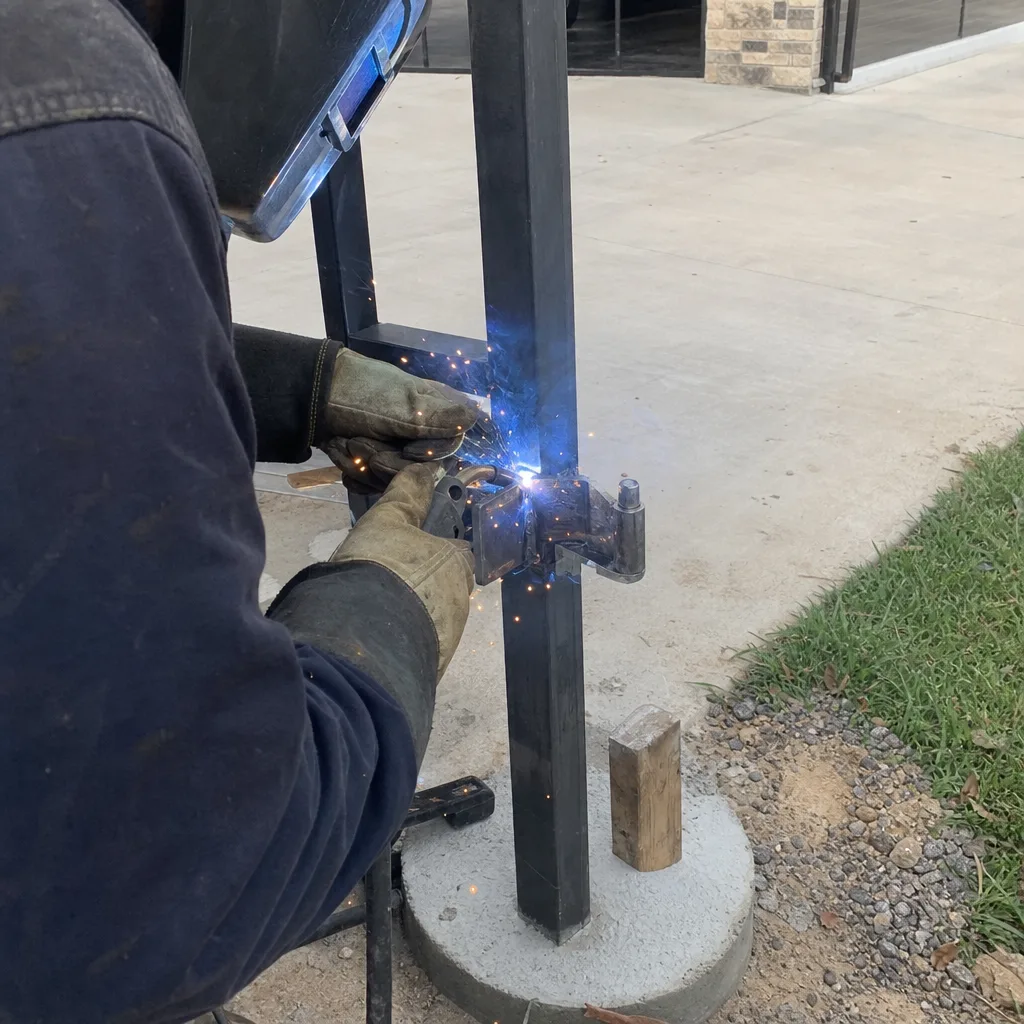
Gate operator electrical work in Texas is governed by the National Electrical Code (NEC) as adopted by the local jurisdiction, and for swing and sliding gate applications, Article 430 covers motors and motor circuits. The requirements that cause the most field problems are the ones homeowners never see, because they live inside the operator’s wiring compartment and the trench between the operator and the power source.
- Dedicated circuit: most residential gate operators require a dedicated circuit rated for the motor’s amperage draw plus a safety margin. Sharing a circuit with landscape lighting or a pool pump creates nuisance tripping and violates code in many jurisdictions. In the field, we frequently see operators wired into a general-purpose outdoor outlet circuit that was never intended for motor load.
- Low-voltage class: the control wiring that runs from the operator to keypads, photo-eyes, edge sensors, and vehicle detection loops is typically Class 2 low-voltage wiring under the NEC. Class 2 wiring has specific separation requirements from line-voltage conductors. When both are run in the same conduit without a listed divider, that is a code violation, and it is one that shows up on inspection reports in both Harris and Montgomery counties.
- Photo-eye and safety-edge connectivity: the operator’s entrapment protection devices, the photo-eyes and contact edges, must be wired in series with the motor’s control circuit and monitored, not looped in a way that permits a short to bypass the safety function. A technician who bridges out a photo-eye rather than replacing it is creating both a safety hazard and an inspection failure.
- Bonding and grounding: metallic gate frames and operators must be properly grounded, and the grounding connection must be accessible for inspection. On sliding gates, the rolling gate itself is considered a conductive mass that requires a bonding jumper in some installations, particularly where the gate slides past a metallic operator post.
For gate motor and opener work in Tomball, the electrical portion is where we see the widest gap between contractor quality. A technician can install an operator that runs perfectly on day one and still leave a code violation inside the wiring compartment, and the homeowner will not know until an inspector opens it or a buyer’s inspector photographs it. That is why our documentation package includes photos of the completed wiring compartment with the cover off and the cover on. The photo record is not a vanity item; it is the thing that answers the inevitable question, “what did they actually do in there?”
Common Mistakes to Avoid
- Assuming all gate work is permit-exempt. This is the most expensive mistake, and it usually surfaces during a sale. A motor swap on existing posts may be exempt, but if the job also included a new post or a new circuit, the permit obligation attached to the post or the circuit, not the motor.
- Pulling a permit for work that is clearly a repair. The opposite mistake is less costly but still wasteful. Some cautious Tomball homeowners apply for permits on like-for-like operator replacements, then wait weeks for an inspection that was never required. Ask the jurisdiction first, or ask a contractor who does this work every week.
- Taking HOA rules as optional. HOA deed restrictions are enforceable contracts, not suggestions, and in Tomball’s deed-restricted subdivisions, the ACC approval requirement is often more procedurally strict than the city permit process. A gate style change that requires HOA approval cannot be undone easily.
- Assuming the county that contains your mailing address is the permitting authority. Tomball mailing addresses cross county lines, and the city’s own limits complicate the picture further. Your zip code does not determine your permitting authority. Your parcel’s legal description does.
- Letting the seller’s disclosure stand as your only evidence. A seller may disclose gate work that was done “with all required permits” without actually providing permit numbers. If you are buying a Tomball home with recent gate work, ask for the closed permit document, not the disclosure language.
- Treating low-voltage work as automatically exempt. Harris County has flagged low-voltage conduit runs that most contractors assumed were exempt, and the discovery happens at inspection, not before it. When in doubt on any conduit or circuit work, confirm before the trench is dug.
- Skipping the photo record. Unpermitted work is easier to defend when you can produce a photographic record of what the previous technician found, changed, and left behind. Without that record, the new homeowner is left to re-discover the same problems at their own cost.
When to Call a Professional

You should call a professional gate contractor when the work involves any structural change to posts or footings, any connection to electrical service, any operator installation that will be part of a future home sale, or any work inside a deed-restricted community where HOA approval is required. You should also call if you have inherited a gate system from a previous owner and cannot document when the operator was installed or by whom, because that is precisely the situation that becomes a closing-day permit problem. A professional evaluation on the front end costs less than a retroactive permit and reinspection on the back end. Vance Gate Repair Tomball offers free estimates for Tomball homeowners, and we will tell you honestly whether your job crosses the permit threshold. Call (346) 248-7685 and we will walk the property, identify the jurisdiction, and give you a written answer before you spend a dollar.
Frequently Asked Questions
No permit is required in Harris County, Montgomery County, or Tomball for a one-for-one gate motor or operator replacement on existing posts with an existing dedicated circuit, provided the replacement does not change the gate’s structural loading or electrical demand. If the new motor is a different brand with different mount points, such as replacing an Elite operator with a LiftMaster, you may need to modify the post bracket, and that modification can cross into structural territory. Confirm the scope before starting, and if the mounting surface changes, treat the job as permit-eligible. For a precise answer on your gate, call (346) 248-7685 and our Gate Repair team will tell you based on the model and the post condition.
Gate-related permit fees vary by jurisdiction and project valuation. Residential electrical permits for low-voltage gate work in Harris County typically run in the low hundreds of dollars, and footing permits are comparable. Montgomery County’s fee schedule is similar but not identical. The larger cost is usually the inspection scheduling time and any correction work required, not the permit fee itself. A contractor who pulls permits regularly can give you the exact fee for your scope before the application is filed.
Either party can pull the permit, but Texas law discourages homeowner-pulled permits when a contractor is performing the work. If the homeowner pulls the permit, the homeowner assumes the legal responsibility of an owner-builder, including liability for workmanship and code compliance. We recommend the contractor pull the permit under their license, and we do exactly that for our Tomball customers, with the permit number provided in writing before any work starts.
An HOA denial is a contractual outcome, not a code outcome, and it is appealable through whatever appeal process the HOA’s governing documents specify. Most Tomball-area HOAs allow a hearing before the board or a written appeal to the architectural control committee. An HOA cannot authorize work that violates municipal code, and a municipality cannot override an HOA’s stricter design restrictions. If the HOA denies a gate style change, you are generally limited to repairing the existing gate rather than replacing it with a different design.
For a simple electrical or footing permit, the permit issuance is usually same-week, and the inspection can often be scheduled within a few business days. A full permit cycle from application to closed permit typically runs two to four weeks in Harris County and Montgomery County depending on inspection volume and whether any corrections are required. HOA approval, when it is required, usually adds two to four weeks on top of the municipal timeline and should be started first, not last.
It can be, particularly in a buyer’s market where inspectors are competing to demonstrate thoroughness. A buyer’s inspector who flags an unpermitted gate operator shifts the burden to you to produce a retroactive permit or a repair certification, and that process takes time you may not have during escrow. If you have gate work on your property from a previous owner and no permit record, the time to resolve it is before you list the house, not after you are under contract. Call (346) 248-7685 and we will evaluate what the work actually involved and whether a permit was ever required in the first place.
The Bottom Line
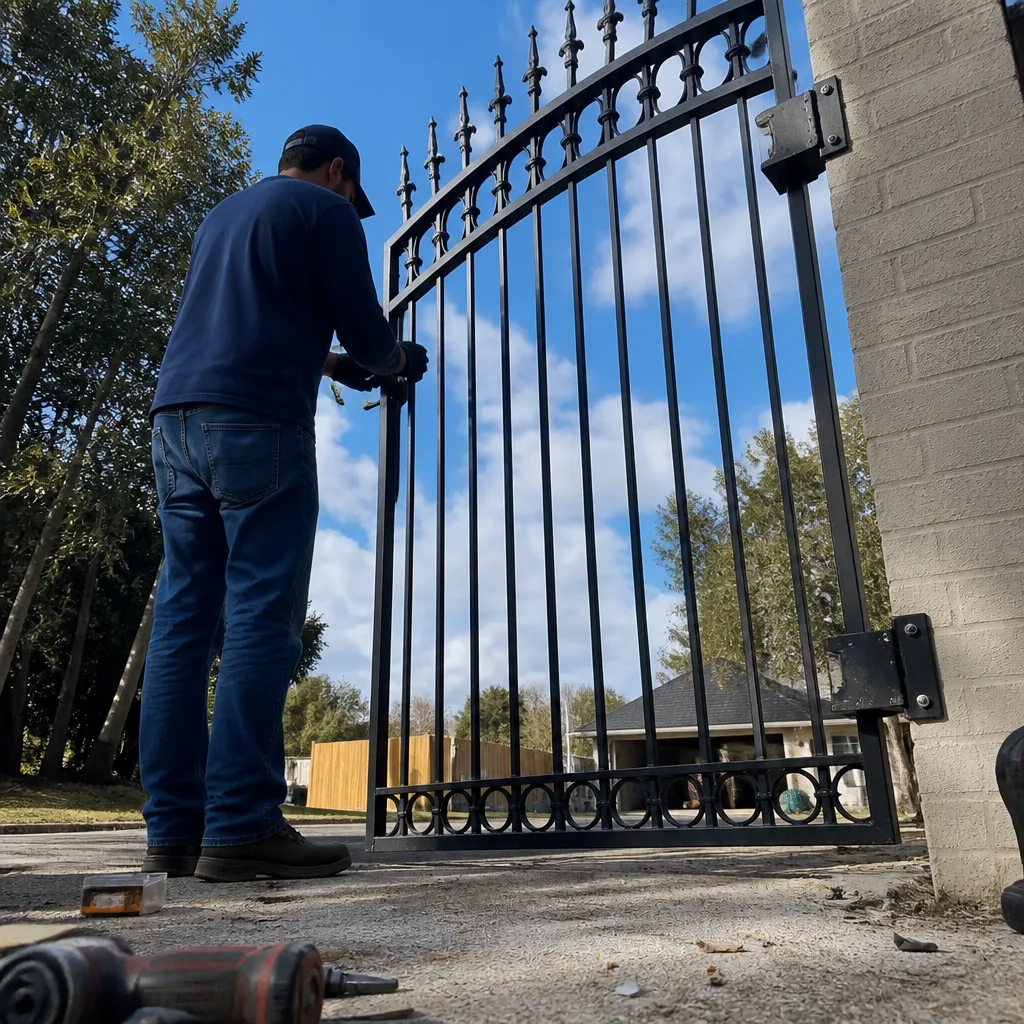
Texas gate permit requirements hinge on three triggers: structural change, new electrical service, and new posts. A like-for-like motor replacement on existing posts with existing power is exempt in every jurisdiction that touches Tomball. Everything else deserves a phone call to the permitting authority or a contractor who answers honestly, and you can find more guides & resources on our site to help navigate the process. Homeowners in Tomball carry an extra layer of complexity because the city straddles two counties and because deed-restricted subdivisions impose contractual obligations that municipal code cannot override. The safest position is the simplest one: know your jurisdiction, know your HOA obligations, keep written documentation of what was done and when, and never accept a verbal permit assurance from a contractor who cannot produce a permit number. When gate work is done correctly, it is boring, and boring is what you want. Written price, written scope, written permit, closed inspection, photo record. That is the entire discipline, and it protects the homeowner on every sale and every service call that follows.
Written by Adrian Vance, Owner at Vance Gate Repair Tomball, serving Tomball since 2014.