
Last updated September 20, 2026
Free on-site gate assessment - hinges, posts, and your LiftMaster or Nice gate operator checked before anything is quoted
The assessment is free and the quote is the invoice.
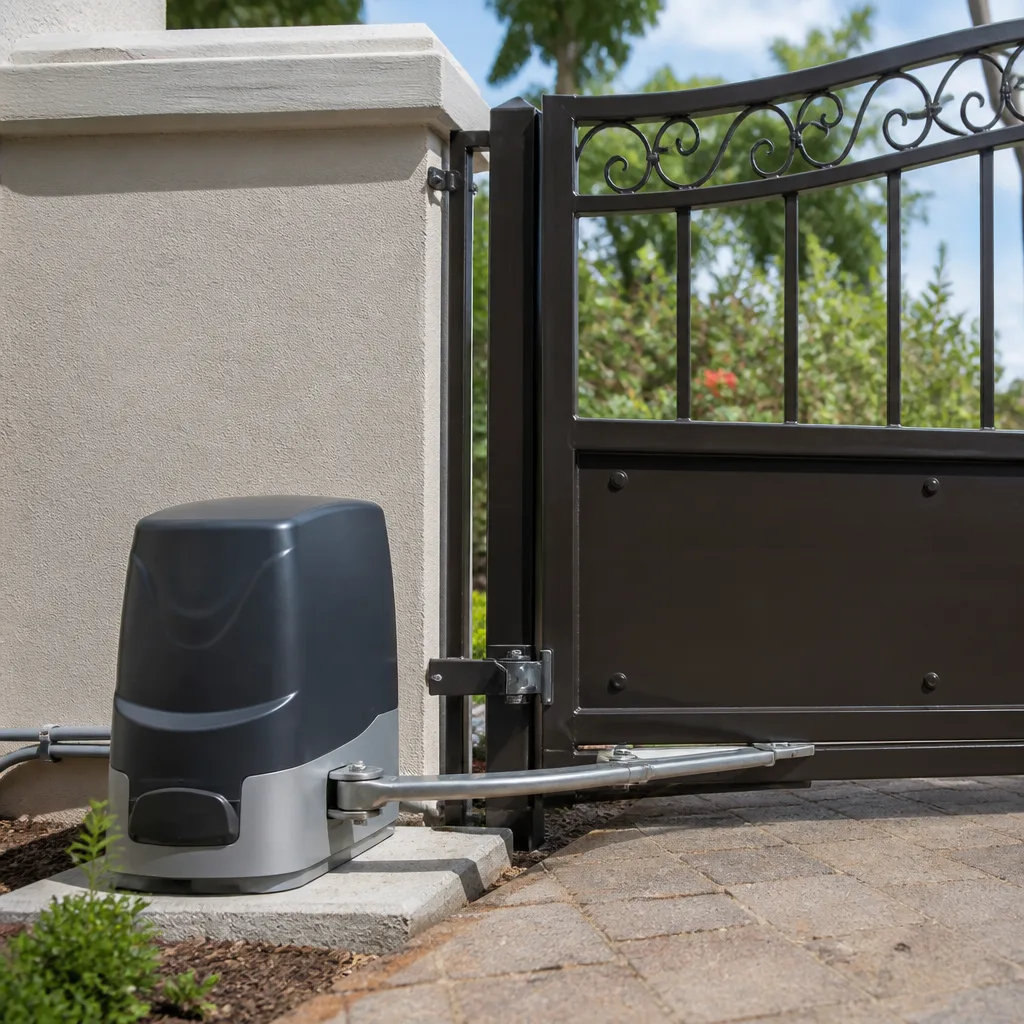
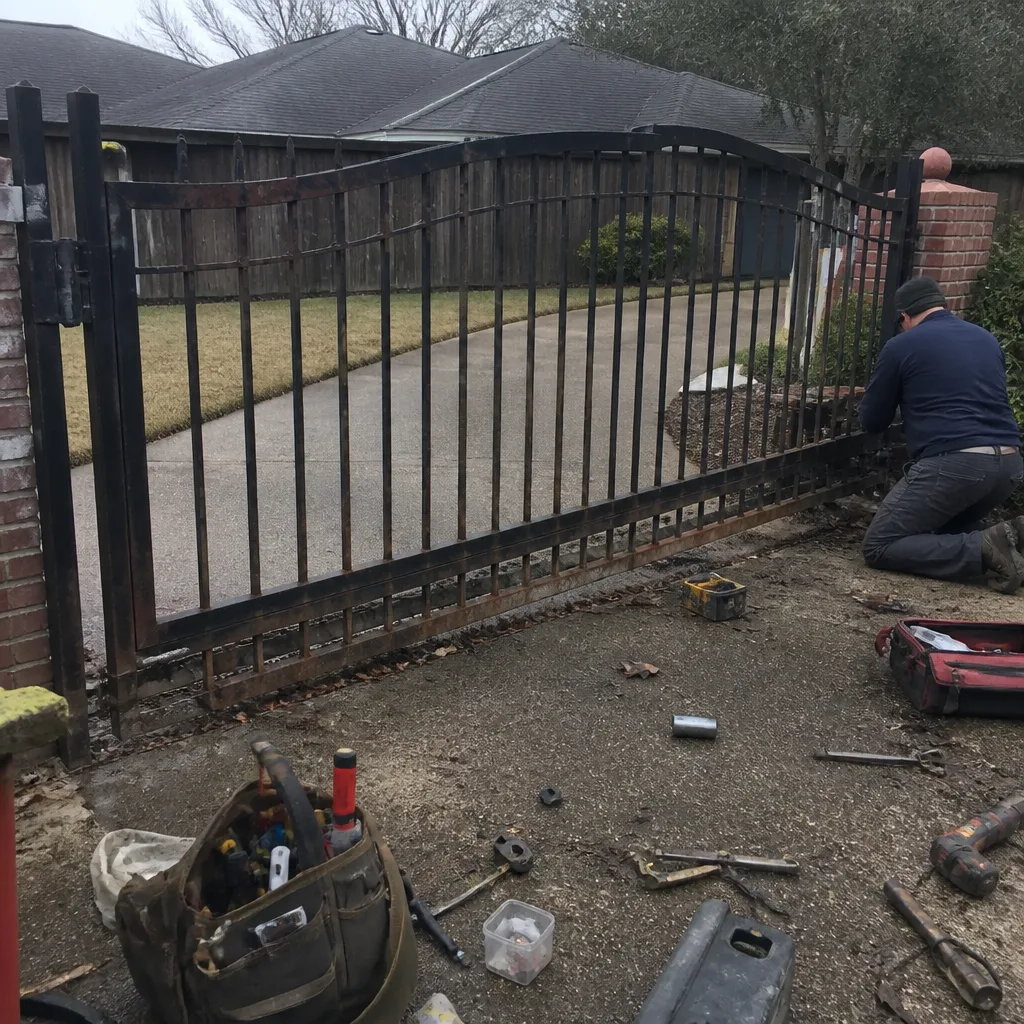 Before
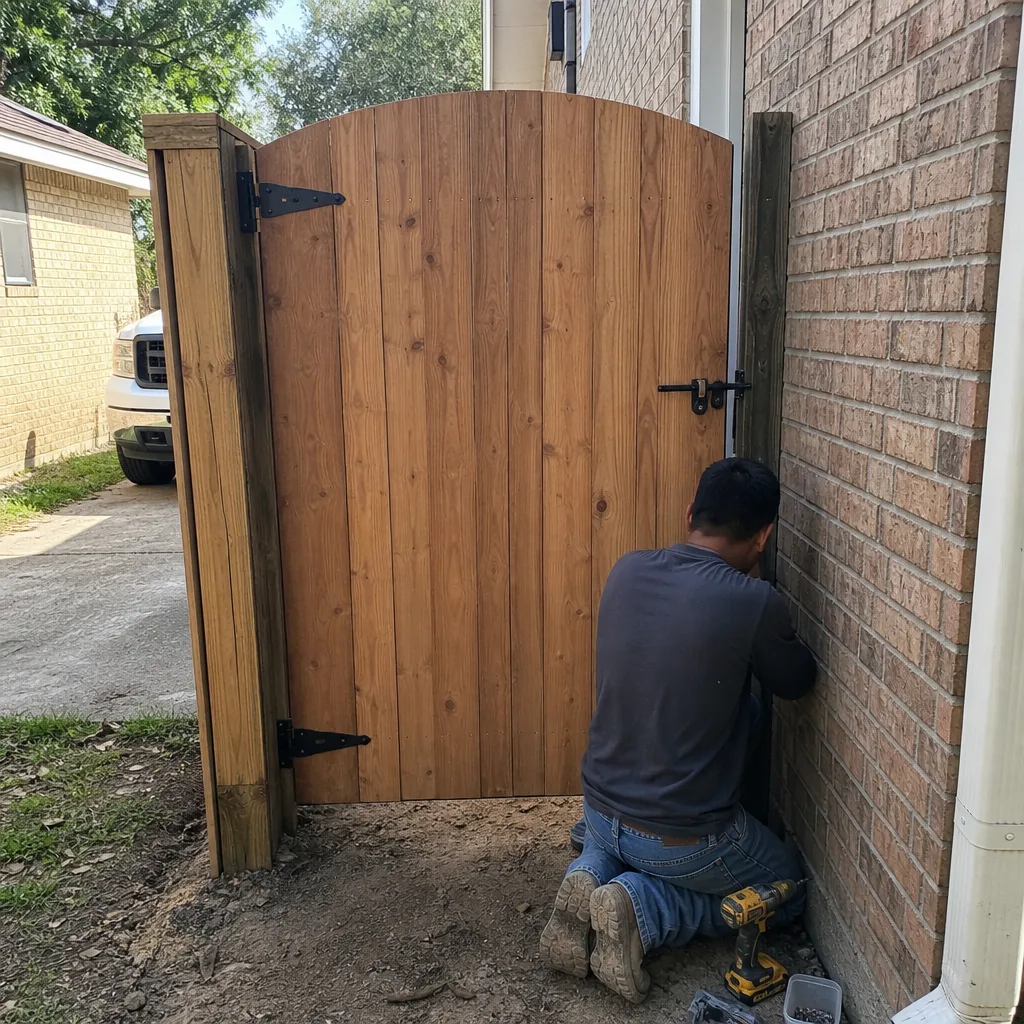 After
After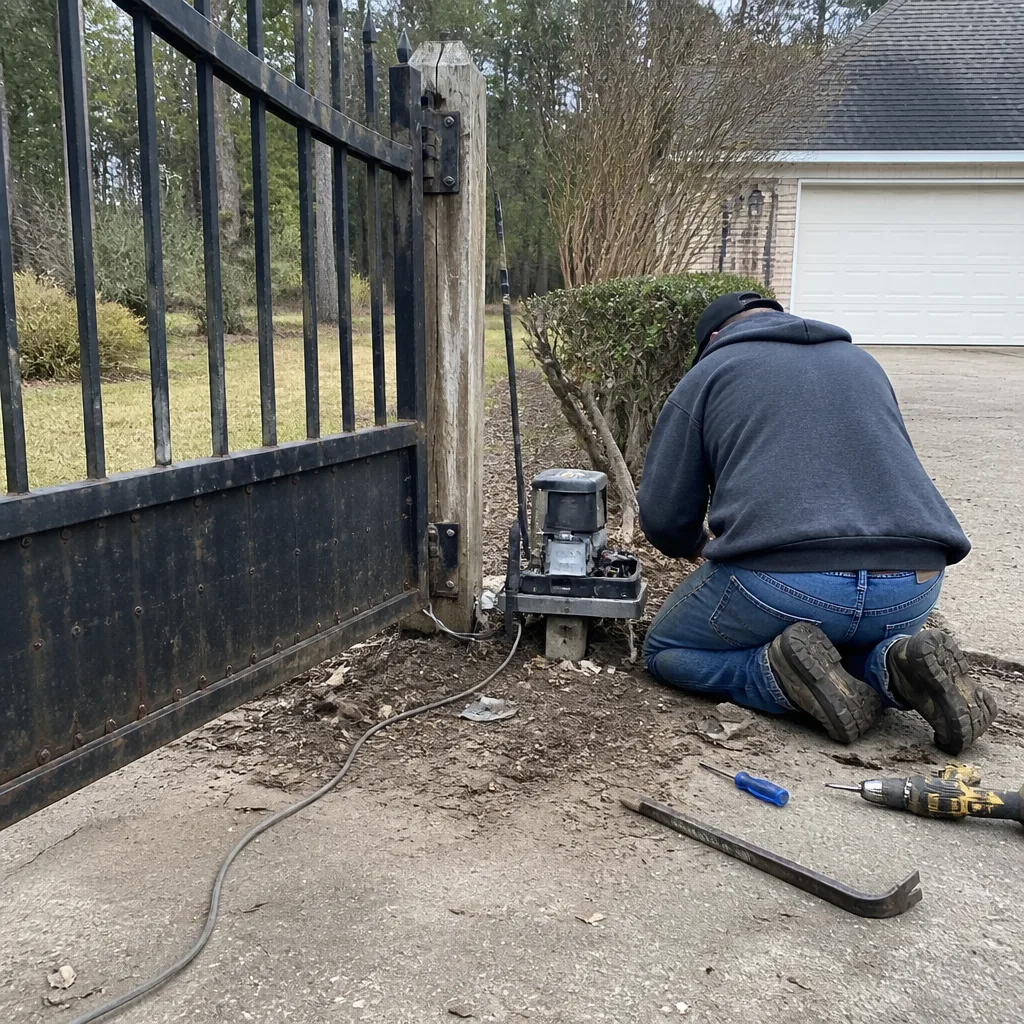 Before
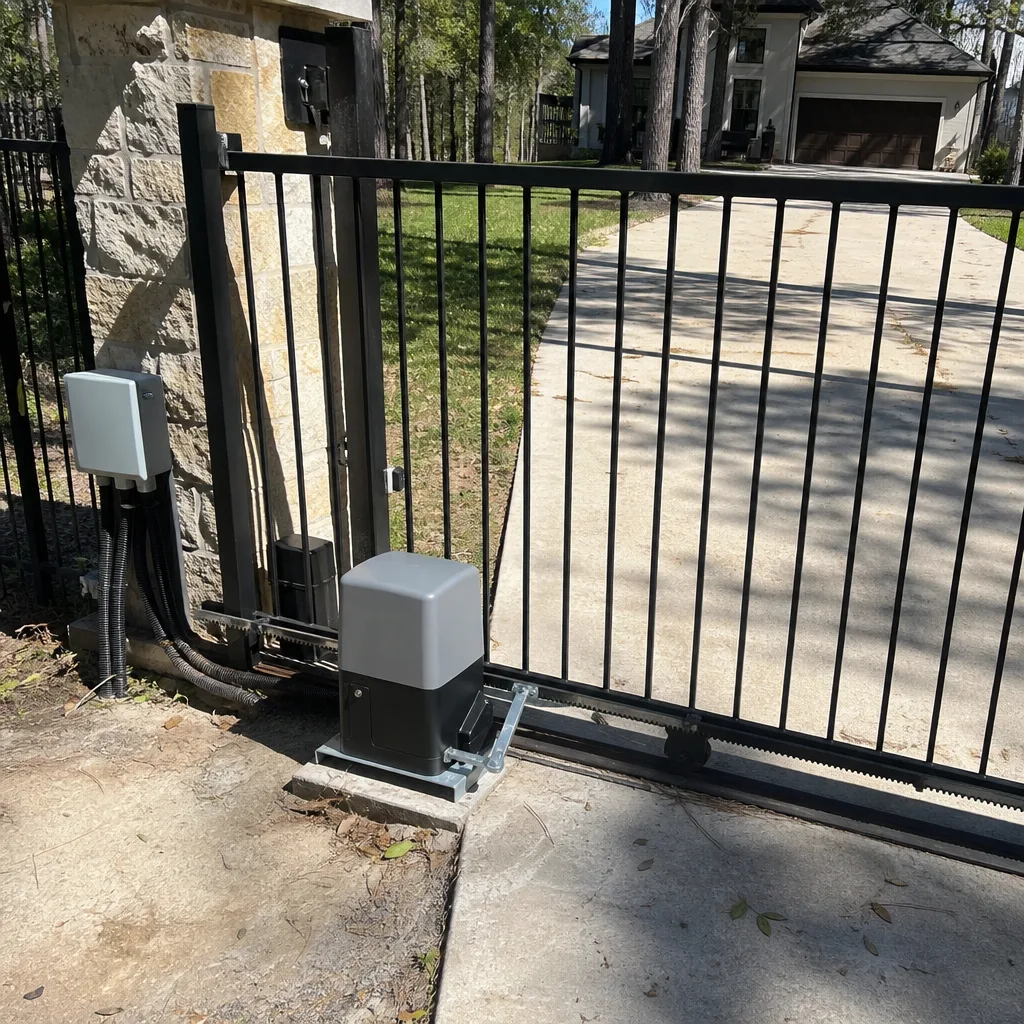 After
After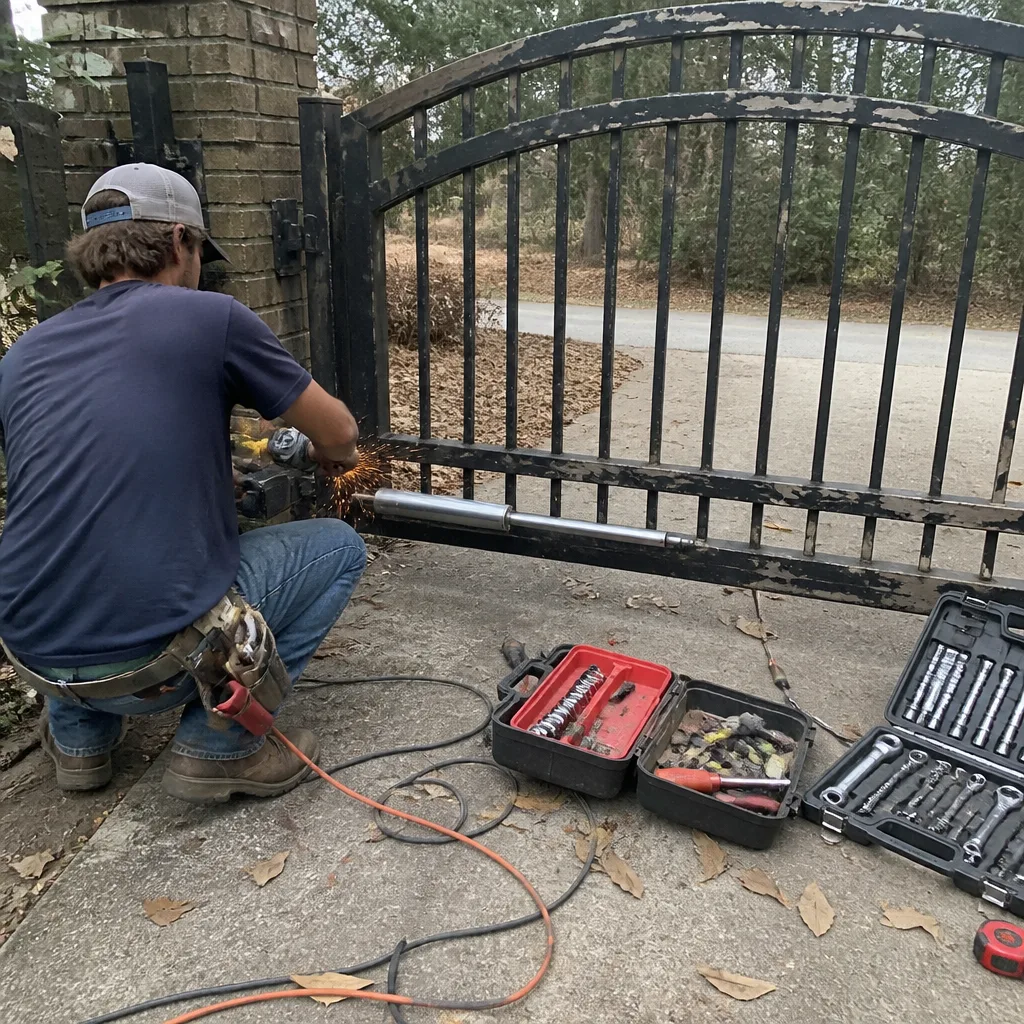 Before
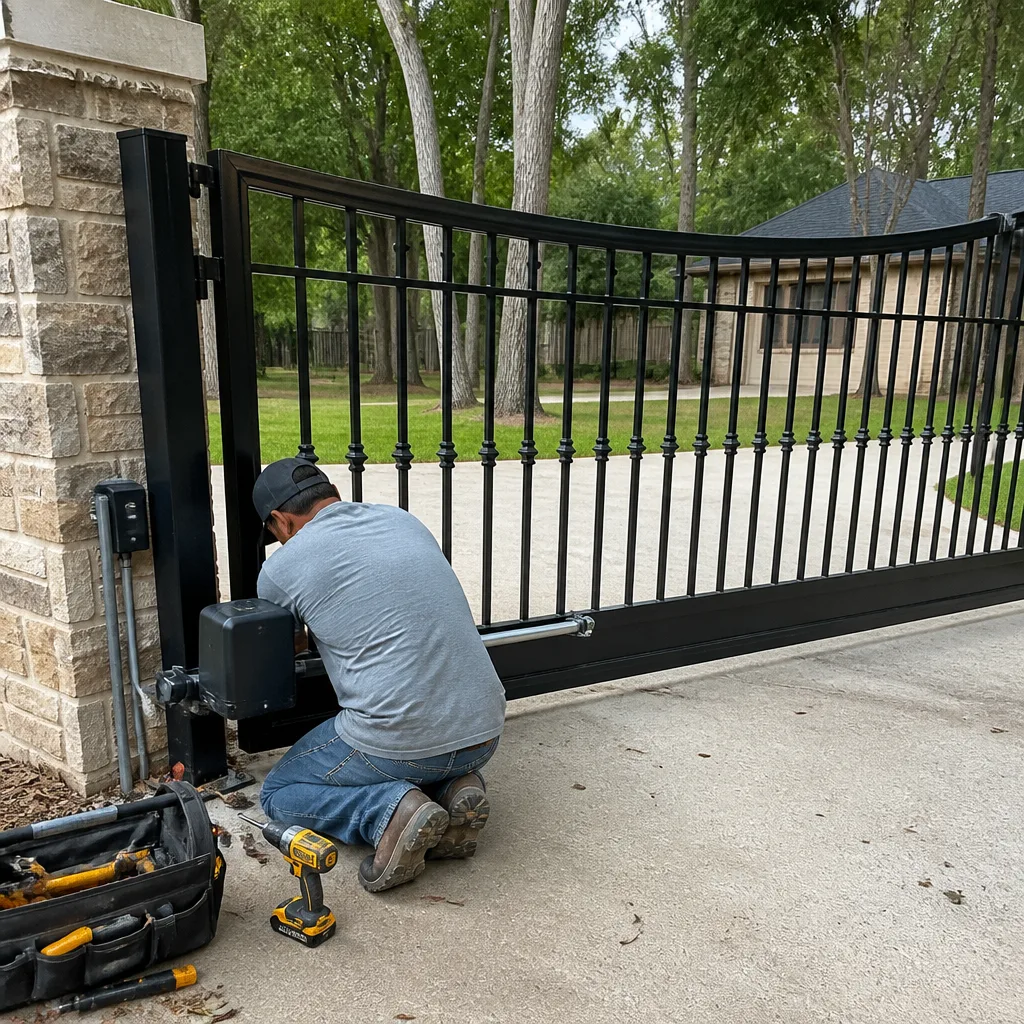 After
AfterSeasonal Gate Repair Care for Tomball: Year-Round Homeowner’s Guide
Tomball’s clay soil expands when wet and contracts when dry, and that movement is what misaligns most residential gates here, not the hardware failing on its own. A gate that swings perfectly in October can drag across the driveway by March, and the reason rarely has anything to do with the hinges wearing out. What changed is the ground underneath the posts. This guide walks through the two narrow stress windows that drive most Gate Repair services calls in Tomball, what to check each month, and the maintenance steps that prevent the expensive failures before they start. By the end, you’ll know exactly when to inspect, what to look for, and what can wait.
Quick Answer
Seasonal gate care in Tomball means servicing around two windows: the post-freeze thaw period from late January through February, and the soil-shrink cycle in late August when clay contracts and shifts post footings. Most gate failures here trace back to soil movement, not motor failure, and a homeowner who checks alignment, hinge wear, and operator duty cycles during those two periods prevents the bulk of repair calls that hit in October and March.
Table of Contents
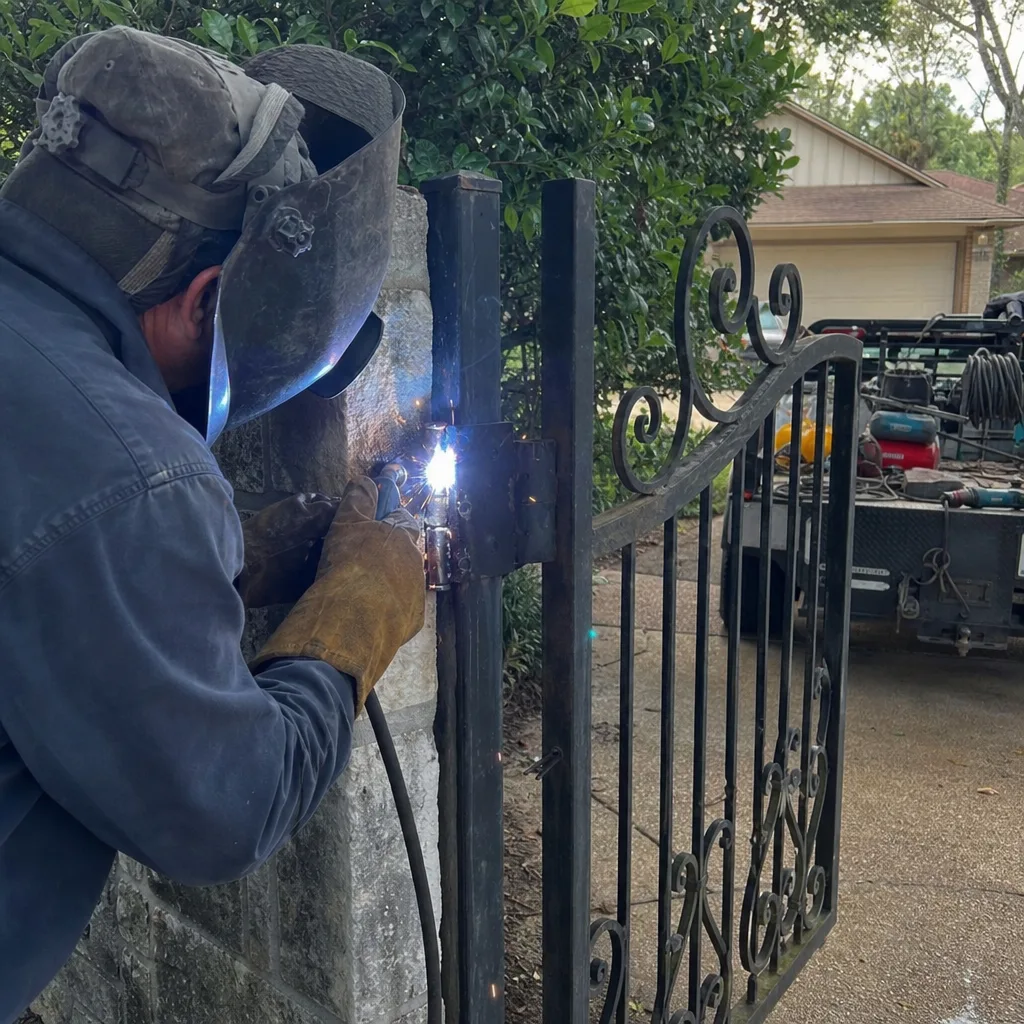
- Why Tomball’s Clay Soil Drives Most Gate Repairs
- Month-by-Month Maintenance Triggers for Tomball
- The Freeze-Thaw Cycle: Why November Gates Fail in February
- Summer Heat and Gate Operator Duty Cycles
- The Three Most Common Seasonal Repair Calls and What Prevents Them
- Seasonal Inspection Checklist: What to Check and When
- What Seasonal Gate Maintenance Costs in Tomball
BeforeAfterWhy Tomball’s Clay Soil Drives Most Gate Repairs
Tomball sits on a band of expansive clay soil that behaves differently from the sandy loam found closer to the coast. Expansive clay absorbs water and swells during wet periods, then shrinks and cracks when it dries out. The movement isn’t subtle. In a typical Tomball year, the soil surface can shift by several inches between the wettest spring month and the driest point in late summer.
What does that mean for a driveway gate? The posts are set in concrete footings, but those footings sit inside soil that is actively moving. When the ground swells after heavy rain, it pushes upward and outward against the footing. When it contracts during drought, it pulls away and leaves voids. The post doesn’t have to move much to create a visible problem at the gate leaf. A quarter-inch of post lean translates to an inch or more of sag at the latch end of a twelve-foot gate.
We see the evidence on nearly every alignment call in Tomball: the gate was installed level, worked fine for a season or two, then started dragging or failing to latch. The homeowner assumes the hinges bent or the gate warped. More often, the post moved. In neighborhoods like Lakewood Grove and Wildwood at Northpointe, where properties back up to drainage channels or retention ponds, the soil moisture swings are even more pronounced because the water table rises and falls with each rain cycle.
The practical takeaway is this: before you replace hardware, check whether the posts are still plumb. A level placed against the post tells the story in ten seconds. If the bubble is out, the hardware didn’t fail. The ground did.
Month-by-Month Maintenance Triggers for Tomball
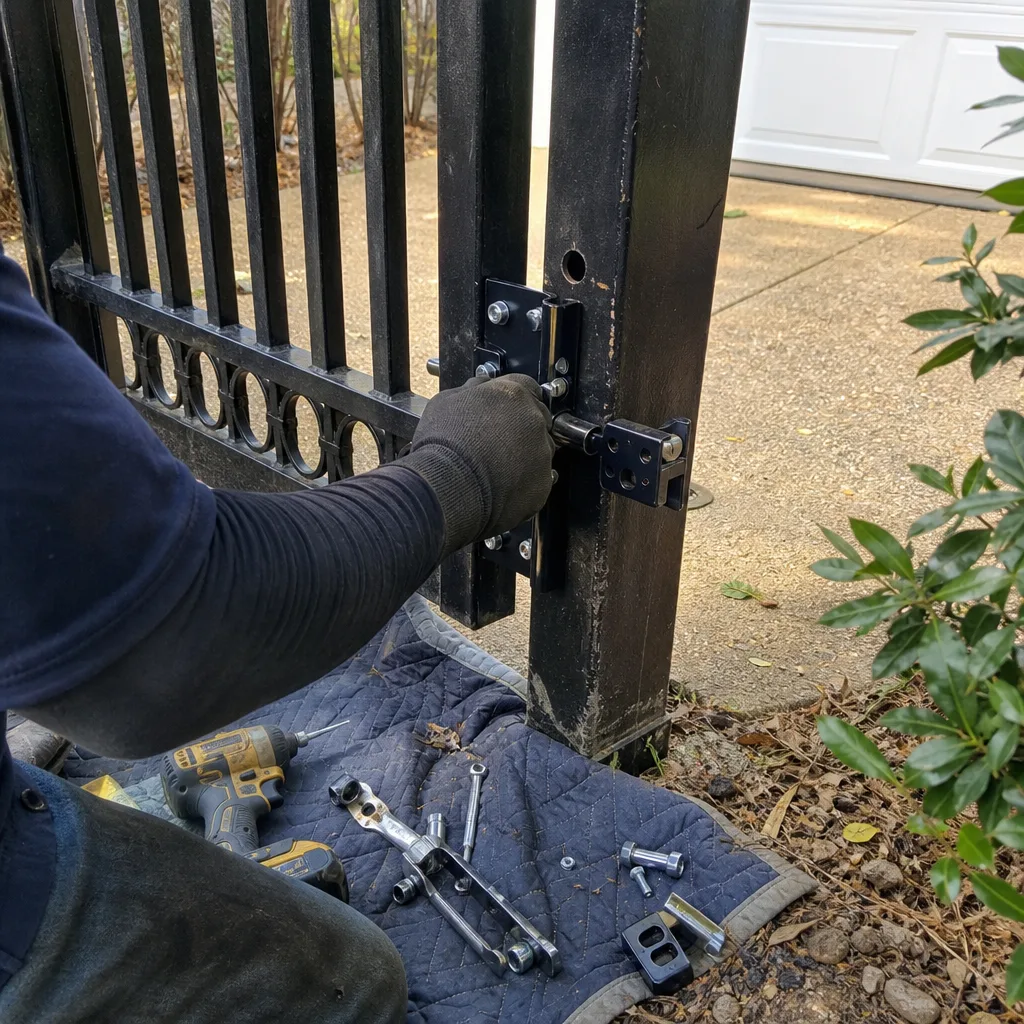
Tomball’s climate doesn’t follow the neat four-season model that generic maintenance guides assume. The average high hits 94°F in August and drops to 63°F in January. Rainfall peaks in May and June, then nearly disappears by late July and August. Those patterns create predictable stress points on gate hardware. Here’s what to watch, month by month.
January
Average low hovers around 43°F, and the soil is typically at its wettest after the fall rains. The gate is usually operating normally this month because the swollen soil is holding posts tight. Check the gap at the latch post. If the gate still latches cleanly in January, the post alignment is sound. If it doesn’t, the problem has been developing for months and the freeze-thaw cycle in February will make it worse.
February
This is the month Tomball gate companies get flooded with calls. The freeze-thaw sequence, covered in detail below, loosens post footings and exposes every pre-existing alignment problem. Walk the gate through a full open-close cycle after each freeze event. Listen for grinding, watch for hesitation, and check whether the gate still seats fully in the closed position.
March
Soil begins drying, but gradually. The gate may start to feel slightly different: a little more resistance when opening, a latch that needs a nudge. This is early post movement. Catching it now means a post re-set or hinge adjustment instead of a full realignment later in the year.
April
Spring rains start in earnest. The wet-dry cycling accelerates, which stresses welds and hinge bolts. Inspect all hinge bolts for looseness, especially on the top hinge of swing gates. A loose top hinge under a heavy gate leaf will wallow out the bolt holes within weeks.
May
Tomball’s wettest month, with rainfall typically exceeding five inches. Soil is fully saturated, and gates may actually start operating better again because swollen soil has re-seated the posts. Don’t mistake that for a fix. The binding you felt in March is likely to return, worse, once the ground dries.
June
Heat arrives, and so does thermal expansion of the gate leaf itself. Steel gates expand in direct sun, which can change the gap at the latch by a noticeable margin. A gate that latched at 8 a.m. may not latch at 3 p.m. on a 95-degree day. This is normal, but it’s worth noting because the same symptom in cooler weather points to something structural.
July
Peak heat. Gate operators run hotter, duty cycles shorten, and thermal overload protection starts tripping on aging motors. If your opener refuses to run in the afternoon but works fine in the morning, that’s a thermal limit, not a dead board. More on this in the heat section below.
August
The second critical window. Rainfall drops to near zero, soil dries deeply, and clay contracts hard. Posts shift. Gaps open. Gates that were fine in May start sagging or refusing to close all the way. This is the month to re-check post plumb and latch alignment, even if February was uneventful.
September
Usually the peak of post-shift problems. If the August check turned up movement, schedule the repair now before the holidays. Waiting until October or November means competing with every other homeowner in Tomball who discovered the same issue.
October
First cool fronts, and the soil begins slowly rehydrating. Gates may temporarily improve again as soil swells. The danger is that homeowners cancel repairs because “it fixed itself.” It didn’t. The underlying post movement remains, and the next dry cycle brings it right back.
November
Rain returns and so does stable gate operation. This is the best month for preventive maintenance because the gate is behaving normally and problems are easiest to spot. Check hinge wear, operator force settings, and safety sensor alignment while everything is working correctly.
December
Cold snaps start, and the freeze-thaw threat begins. Verify that the gate operator’s force settings aren’t set too high. High force settings on a LiftMaster or FAAC operator can mask a binding gate until the stress breaks something more expensive. A properly adjusted operator should reverse on contact with firm resistance.
The Freeze-Thaw Cycle: Why November Gates Fail in February
Houston-area winters rarely produce extended hard freezes, but the shallow freezes Tomball does get are enough to cause real damage when the soil is already wet. Here’s the sequence that plays out every year in the northwest Harris County area.
In November and December, rain saturates the clay soil around gate post footings. Then a cold front drops temperatures below freezing for six to twelve hours, the standard duration in Tomball. The top few inches of soil freeze and expand. As the soil expands, it pushes against the concrete footing from all sides. A wet, clay-heavy soil can exert considerable lateral pressure when it freezes.
Then the thaw comes, usually within a day or two. The soil contracts, the pressure releases, and the footing settles back, but not always perfectly. Each freeze-thaw event allows microscopic movement, and after a winter with five or six such cycles, that movement becomes measurable. Gates that were perfectly aligned in November start binding in February, not because anything broke, but because the post shifted a fraction of an inch in a direction that multiplies across the gate leaf’s length.
What to check during the thaw:
- Post plumb: Put a four-foot level on the hinge post and the latch post. Any deviation from plumb tells you which way the ground moved.
- Gate leaf clearance: With the gate closed, look at the gap between the bottom of the leaf and the driveway. A gap that’s wider on one end than the other indicates post lean.
- Latch alignment: Close the gate and watch whether the latch seats fully without assistance. A latch that catches on the edge or requires a shove is the earliest sign of post movement.
- Hinge bearing wear: Lift the gate at the latch end. Any vertical play in the hinges means the bearings are wearing unevenly, usually because the post is no longer supporting the leaf squarely.
We’ve inspected gates in Tomball’s older subdivisions, like Tomball Terrace and Pine Trace, where repeated freeze-thaw cycles over a decade have shifted posts enough that the gate leaf no longer closes within the operator’s travel limits. The motors were fine. The ground was the problem.
Summer Heat and Gate Operator Duty Cycles
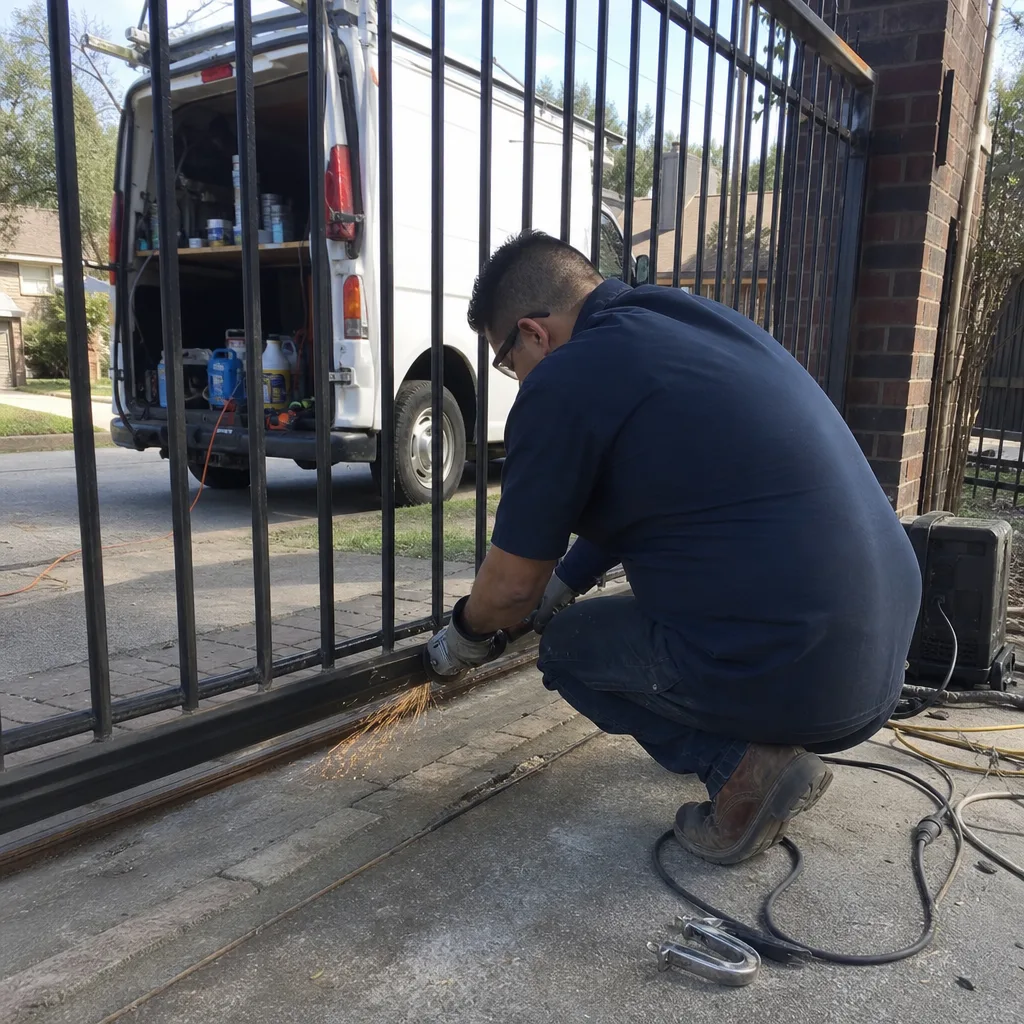
Tomball’s July and August heat does more to gate operators than most homeowners realize. Every gate motor, whether it’s a LiftMaster, FAAC, BFT, or Linear, carries a duty cycle rating. That’s the percentage of time the motor can run in a given period before it must rest. A typical residential operator is rated for intermittent duty, meaning it’s designed for a few open-close cycles per hour, not continuous operation.
When ambient temperatures climb past 95°F, two things happen. The motor runs hotter at baseline, which shortens the effective duty cycle. And the thermal overload protection built into the control board becomes more sensitive. The result is an operator that works fine in the morning and shuts down in the afternoon. The board isn’t failing. It’s doing its job, protecting the motor from cooking itself.
Signs of thermal stress to watch for in Tomball’s summer months:
- Afternoon shutdowns: The gate operates normally before noon and refuses to move at 3 p.m. This is the classic thermal limit pattern.
- Slow cycle speed: The gate moves noticeably slower in hot weather than it did in spring. Motor windings lose efficiency as they heat up.
- Humming without movement: The operator energizes, the motor hums, but the gate doesn’t move. This can indicate a capacitor failing under heat, a common failure mode on older LiftMaster and FAAC swing-arm operators in Houston-area summers.
- Breaker trips: The gate circuit breaker trips on hot afternoons, resets in the evening, and works fine the next morning. Heat is increasing amp draw beyond the breaker’s rating.
The preventive step is simple: reduce the number of unnecessary open-close cycles during peak heat. If the gate is on a timer or sensor that cycles it every time a car passes, adjust the settings so the gate stays open during high-traffic windows. Every avoided cycle gives the motor a chance to shed heat. It’s also worth having the operator’s force settings and limit positions checked before summer, since a misadjusted limit forces the motor to work harder on every cycle, compounding the heat problem.
The Three Most Common Seasonal Repair Calls and What Prevents Them
After a decade of gate repair work in Tomball, the seasonal pattern is consistent, as detailed in The Complete Guide to Gate Repair in Tomball. These are the calls that spike at the same time every year, and there’s an upstream maintenance step that prevents most of them.
1. Gate Dragging on the Driveway (Late Summer Peak)
By August, the clay soil in Tomball has contracted enough that hinge posts and latch posts have shifted. The gate leaf sags and the bottom corner scrapes the concrete. The repair involves re-setting or shimming the post, adjusting the hinge bracket, or replacing a wallowed-out hinge. The preventive step is checking post plumb and gate clearance every August before the sag becomes visible damage to the gate leaf or driveway surface.
2. Operator Burnout (July Peak)
When a gate binds because the post shifted, the operator fights that resistance on every cycle. The motor draws more amps, runs hotter, and eventually trips the thermal protection or burns out the capacitor. The operator didn’t fail on its own, it was killed by a gate that was working against it. Checking gate resistance monthly during the summer and keeping force settings at manufacturer spec prevents most motor failures. Force settings cranked up to “fix” a dragging gate just transfer the stress to the motor.
3. Latch and Strike Misalignment (October and March Peaks)
The two post-shift seasons produce the same symptom months later: a latch that no longer lines up with the strike plate, or a mag-lock that won’t hold. The repair is usually straightforward, but if the underlying post movement isn’t addressed, the alignment drifts again within a season. Checking latch alignment in February and August and correcting post plumb at the first sign of drift prevents the repeat call.
Seasonal Inspection Checklist: What to Check and When
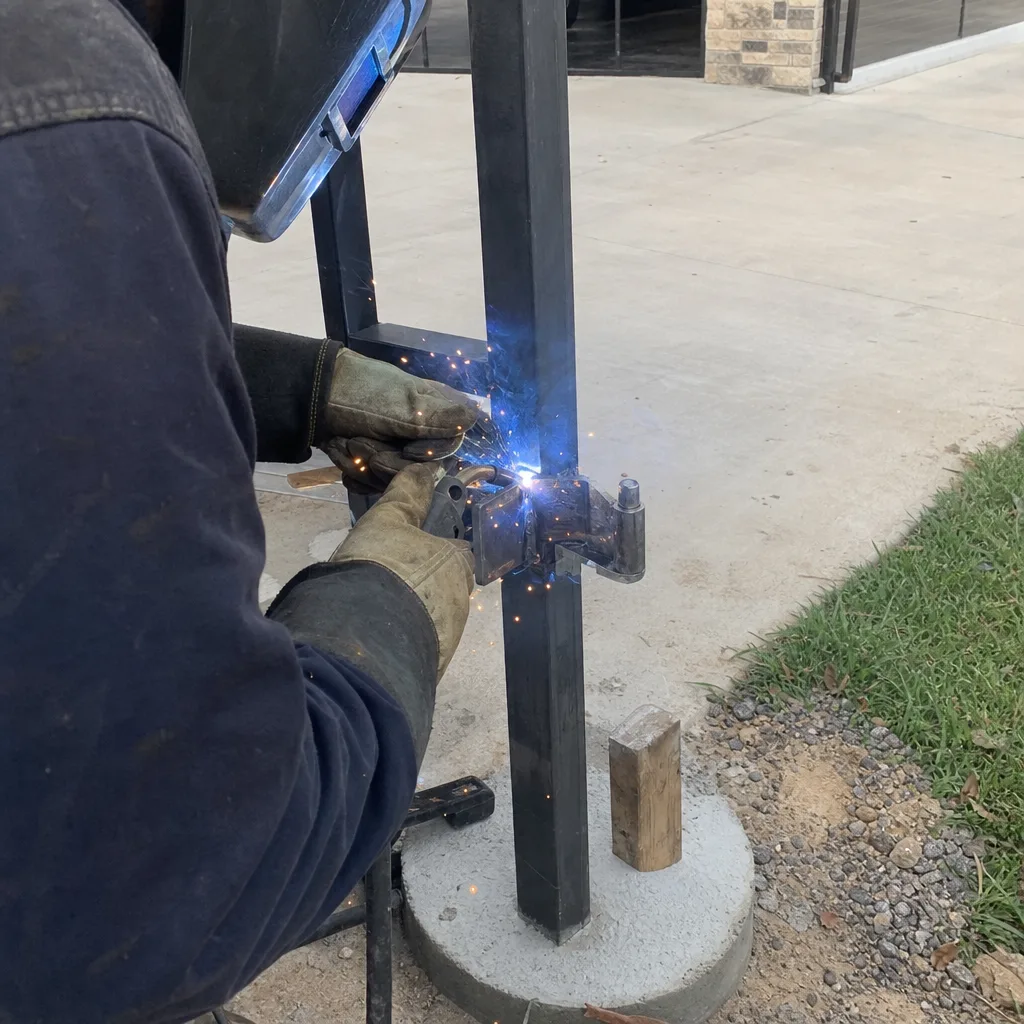
This is the field checklist we follow on a seasonal maintenance visit in Tomball, simplified for a homeowner who wants to do the basic version themselves-see our more guides & resources for deeper dives. Each item takes less than five minutes.
Late Winter (February)
- Post plumb check: Level on both posts. Any deviation, note the direction and amount.
- Gate clearance check: With the gate closed, measure the gap at the bottom of the leaf near the hinge and near the latch. A difference of more than half an inch across the leaf means post movement.
- Hinge bolt check: Try to wiggle the gate by lifting at the latch end. Any play means loose bolts or worn hinge bearings.
- Operator reversal test: Place a object in the gate path and close the gate. The operator should reverse before applying significant force. If it doesn’t, the force setting is too high.
Late Summer (August)
- Soil gap inspection: Look at the soil around the post footings. A visible gap between soil and concrete means the clay has contracted hard and the footing is loose in the ground.
- Latch alignment check: Close the gate and verify full latch engagement without assistance.
- Thermal behavior note: On a hot afternoon, run the gate through one full cycle and listen for hesitation or slowed speed compared to morning operation.
- Safety sensor cleaning: Wipe the photo-eye lenses clean. Houston-area dust and pollen coat the lenses and cause intermittent sensor faults, especially after dry spells.
Fall (November)
- Complete cycle test: Run the gate through five full open-close cycles back to back. If the operator stumbles or trips on any cycle, it’s time for service before winter.
- Battery backup check: If the operator has a battery backup, test it by cutting the main power briefly. Battery failures show up on the first cold night when the power flickers.
- Hinge lubrication: A dry silicone lubricant on hinge pins extends bearing life and quiets the gate. Don’t use grease, which traps grit in Tomball’s dusty stretches.
What Seasonal Gate Maintenance Costs in Tomball
Homeowners in Tomball typically pay between $125 and $250 for a seasonal gate inspection and tune-up, depending on the gate type and the number of operators. That includes checking post plumb, tightening hardware, cleaning and aligning sensors, testing operator force and limits, and lubricating moving parts. If the inspection turns up a problem, the repair is quoted separately, in writing, before any work starts.
For context, here are the common seasonal repair costs we see in Tomball:
- Post realignment or re-set: $350-$750 depending on whether the post can be shimmed in place or needs to be dug out and re-set in fresh concrete.
- Hinge replacement (swing gate): $180-$420 depending on gate weight (400 lb to over 1,000 lb leaves need different hinge classes).
- Operator capacitor replacement: $85-$180 including part and labor for LiftMaster, FAAC, BFT, and Linear residential operators.
- Latch or mag-lock realignment: $95-$220 depending on the hardware and access.
- Full operator replacement: $850-$2,400. A swing-arm operator on a standard 12-foot Tomball gate usually lands between $1,100 and $1,800 installed, while a heavy sliding gate runs higher.
These are market ranges for Tomball, not firm quotes. The price for your gate depends on the exact hardware, condition, and what the technician finds on site. What matters is that the price is written down and agreed to before the work begins. No surprises at the end. If you have a written estimate from another gate company, bring it in. We’ll review it at no cost and tell you honestly whether it’s fair or whether you’re paying for work that isn’t needed.
Seasonal maintenance costs less than the repairs it prevents. A $175 tune-up that catches a shifting post in August avoids a $1,400 operator replacement in October. The math works in the homeowner’s favor every time, which is why we’ve always recommend seasonal service on gate repair in Tomball as the first line of defense.
Common Mistakes to Avoid

- Cranking up operator force to fix a dragging gate. High force settings mask the binding and transfer the stress to the motor. By the time the operator fails, the fix is a motor replacement instead of a post adjustment. Match force settings to the manufacturer’s spec and fix the binding at its source.
- Skipping the August post check because the gate worked fine in spring. Tomball’s clay contracts hardest in late summer, and that’s when post movement shows up. A gate that was fine in May can be significantly out of alignment by September.
- Greasing hinge pins with heavy grease. Grease attracts the fine dust that hangs in the air during Tomball’s dry spells and turns the hinge into an abrasive paste. Dry silicone lubricant is the right product.
- Ignoring afternoon thermal shutdowns as a “false alarm.” A gate that won’t run at 3 p.m. in July is giving you an early warning. The thermal protection is doing its job, but the underlying cause, usually a binding gate or a failing capacitor, needs attention before fall.
- Waiting until October to call for an August problem. When Tomball cools down and every homeowner suddenly notices their gate is dragging, repair calendars fill up. Scheduling the repair in August or September means better availability and lower prices.
- Replacing hardware before checking the posts. If the post moved, new hinges will wear out in the same pattern as the old ones. Always verify post plumb first. We’ve seen homeowners in Tomball replace hinge sets twice before addressing a post that shifted in the August drought.
- Canceling a repair because the gate “fixed itself” in October. When rain returns and the soil swells, a shifted post temporarily realigns. The movement is still there. The next dry spell brings the problem back, usually worse.
When to Call a Professional
A homeowner with a level, a wrench, and a little patience can handle the monthly checks and basic lubrication. But certain conditions call for a technician. If the post is visibly out of plumb by more than a few degrees, the footing likely needs to be re-set, which means digging and concrete work. If the operator trips, hums without moving, or shows signs of thermal stress on multiple afternoons, the issue is likely electrical and not safely addressed with basic tools. If the gate is heavy enough to require two people to lift it off its hinges, that’s a job for a crew. And if you’re not sure whether the problem is the post, the hinge, or the operator, a professional diagnostic saves money compared to replacing parts on a guess.
Vance Gate Repair Tomball offers free estimates in Tomball, and the price is written down before any work starts. Call (346) 248-7685 to schedule a seasonal inspection or repair.
Frequently Asked Questions
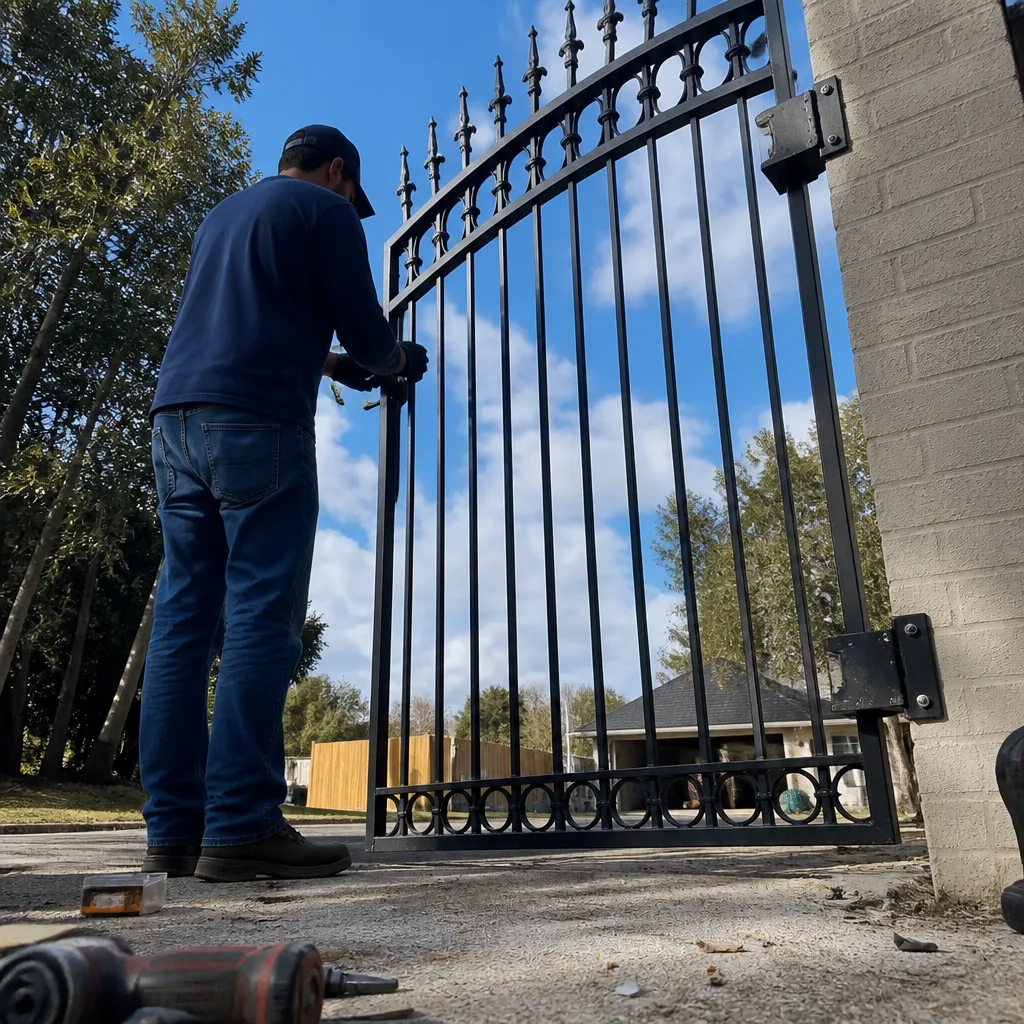
Seasonal gate maintenance in Tomball typically costs between $125 and $250 for a full inspection and tune-up, including post plumb checks, hardware tightening, sensor cleaning, and operator testing. If the inspection turns up a repair, the price is quoted separately in writing before work begins.
The operator’s thermal overload protection is tripping because the motor is running hotter in the afternoon heat, especially if the gate is binding slightly from post movement. This is common in Tomball from July through early September. Have the gate resistance and operator force settings checked before the problem becomes a full motor failure. Call (346) 248-7685 for an inspection, estimates are free.
The freeze-thaw cycle in Tomball’s clay soil pushed the gate post slightly out of alignment, so the latch no longer lines up with the strike plate. The fix is to re-set or shim the post and realign the latch, not to replace the latch hardware, which is usually still fine.
Only if the hinges are adjustable and the post is still plumb. Tension-type gate hinges can be adjusted to compensate for sag, but if the post has shifted in the soil, hinge adjustment is a temporary fix. Check post plumb with a level first. If the post is out, call a professional before the sag damages the driveway or gate leaf.
Twice a year, in late winter (February) and late summer (August), matching Tomball’s two stress windows. A spring service catches freeze-thaw damage while a late-summer service catches soil-shrink post shift and heat-related operator stress. The operator brand doesn’t change the schedule. LiftMaster, FAAC, BFT, and Linear units all benefit from the same seasonal rhythm.
We service nine major gate-automation brands including LiftMaster, FAAC, BFT, Linear, Viking, Ghost Controls, DoorKing, Elite, and Mighty Mule. If your operator is already on the property and repairable, we repair it. We don’t push replacements when a repair is the right call. Call (346) 248-7685 for a free estimate on any brand.
The Bottom Line
Tomball’s gate problems follow the soil, not the seasons. The two critical windows are the freeze-thaw period in late January through February, when wet clay freezes and shifts post footings, and the late August dry spell, when the ground contracts and posts move again. If you check post plumb, gate clearance, latch alignment, and operator behavior during those two windows, you’ll catch most problems before they become expensive repairs. A $175 seasonal tune-up beats a $1,400 operator replacement every time. And when you do need repairs, insist on a written price before the work starts. That’s how we operate at Vance Gate Repair Tomball, and it’s how every gate repair should be handled.
Written by Adrian Vance, Owner at Vance Gate Repair Tomball, serving Tomball since 2014.